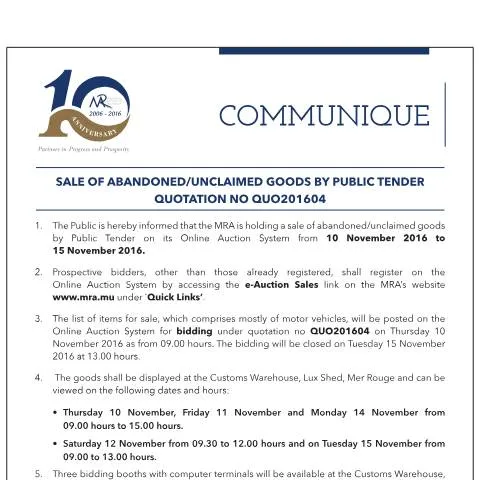
Understanding the Sale of Abandoned or Unclaimed Goods: A Detailed Insight
The Sale of Abandoned or Unclaimed Goods by Public Tender, referenced under QUO201604, stands as a crucial avenue for both the Mauritius Revenue Authority (MRA) and prospective bidders to facilitate the turnover of unclaimed items, primarily motor vehicles. This process, initiated by the MRA, does not only aim to clear inventory but also to provide citizens with the opportunity to acquire goods that are otherwise left unattended. Understanding this process is paramount for anyone eager to participate in the auction and secure a potential bargain.
The Regulatory Framework Behind the Sale
Historically, the governance surrounding abandoned and unclaimed goods is entrenched within Mauritian law, primarily operating under the Public Service Act of 1955 and subsequent amendments. This legal backdrop ensures transparency and fairness in the auction process, reflecting a blend of French civil law and English common law. The MRA meticulously outlines the conditions under which unclaimed goods are sold, ensuring bidders are well-informed and compliant with local regulations.
The auction itself is a public engagement, allowing individuals from various walks of life to participate, thus fostering inclusivity within the economic landscape of Mauritius. However, it is essential to recognize that the sale is not merely a transaction; it is a structured process that adheres to specific timelines, conditions, and legal stipulations.
Eligibility and Registration for Participation
Prospective bidders keen on participating in the auction must navigate through a registration phase. To engage in the bidding process, one must:
- Visit the MRA's Online Auction System via their official website.
- Access the e-Auction Sales link found under 'Quick Links'.
- If not already registered, complete the necessary registration form, providing accurate details aligned with your National ID.
This registration is pivotal as it allows the MRA to verify the identities of bidders, thereby fostering a safe and organized trading environment. Additionally, registered users can track their bids and receive updates regarding auction status in real-time.
Considerations for Foreign Bidders
For foreign individuals wishing to participate, the process may involve additional documentation. These bidders must present a valid form of identification, such as a passport, and may need to demonstrate proof of residency or a local representative to comply with MRA's regulations.
Critical Dates and Auction Dynamics
Timing is essential in the bidding process. The auction for the unclaimed goods will take place from 10 November 2016 to 15 November 2016, with specific schedules for both viewing and bidding:
- Viewings at Customs Warehouse:
- 10 November: 09:00 to 15:00
- 11 November: 09:00 to 15:00
- 12 November: 09:30 to 12:00
- 14 November: 09:00 to 15:00
- 15 November: 09:00 to 13:00
During these periods, potential bidders can inspect items physically, which is particularly important for ensuring the quality and condition of motor vehicles on offer.
The Procedure from Registration to Bidding
Once you’ve registered and familiarized yourself with the items listed for auction, the bidding process begins. Here’s a streamlined overview of what to expect:
- Registration Confirmation: Ensure you receive confirmation of your registration from the MRA.
- Reviewing Auction Items: Access the list of items available for auction under quotation number QUO201604.
- Bidding Process: Bids can be placed directly through the Online Auction System. Alternatively, for those lacking internet access, bidding booths equipped with computer terminals are set up at the Customs Warehouse.
This multi-channel approach ensures everyone has a fair opportunity to engage in the auction, irrespective of their technological capabilities.
Document Preparation and Submission Nuances
Preparing the necessary documentation ahead of time can streamline your experience. As a bidder, ensure you have the following:
- Identity Verification: National ID Card for local bidders or an equivalent document for foreigners.
- Proof of Registration: Confirmation email or message provided by the MRA.
- Financial Preparedness: Ensure you have the means to secure your bids, including the possibility of deposits for specific items if required.
What Happens After the Bidding?
Upon the culmination of the bidding period on 15 November 2016 at 13:00, successful bidders will be notified. The MRA initiates a process of verification to confirm bids and payment arrangements. Hence, it is crucial for bidders to be reachable and responsive during this stage to ensure timely completion of the transaction.
Handling Disputes and Missteps: Your Rights and Obligations
While the bidding process is designed to be straightforward, complications may arise. If a bid is mistakenly placed or if there is an error in the documentation, the bidder should promptly contact the MRA using the details provided in the auction notice. The contact information includes:
- Telephone: +230 202 0500
- Fax: +230 216 5946
- Email: [email protected]
In the event of a refusal to honor a bid, bidders have the right to seek clarification from the MRA regarding the grounds for such a decision, ensuring their voice is heard in the process.
Consequences of Non-Compliance and Missing Documentation
For bidders, failing to provide the required documentation or delaying responses can lead to significant repercussions, potentially resulting in the loss of bidding opportunities. It is advisable to verify all documents well in advance of the auction. Moreover, bidders should keep in mind that the MRA operates on strict deadlines, and any oversights on your part could lead to exclusion from the auction altogether.
Final Thoughts: Engaging in the Auction with Confidence
The Sale of Abandoned/Unclaimed Goods by Public Tender is an extraordinary opportunity for individuals to procure items that might otherwise remain unutilized. By thoroughly understanding the regulatory framework, eligibility requirements, and procedural nuances, bidders can confidently navigate the auction environment. The key to success lies in preparation, compliance, and active engagement throughout the bidding process.
Ultimately, this auction not only serves the purpose of revenue generation for the state but also caters to the community's needs in facilitating the acquisition of goods that hold potential value. As you prepare to participate, remember that diligence and vigilance will stand you in good stead on your auction journey.
Understanding the Legal Framework for the Sale of Abandoned Property
The sale of abandoned or unclaimed goods in Mauritius operates under specific legal provisions outlined in the Public Auctions Act and the Regulations concerning tendering processes. A clear understanding of these laws is essential for potential bidders, sellers, and interested parties alike. The legislative background provides a transparent framework for managing such sales effectively while safeguarding the interests of all stakeholders.
The key components of this framework stipulate that unclaimed goods may include items that have been in the possession of the authorities for a specified duration, typically not less than three months. The governing legislation requires that a public notice be issued to inform the public about the sale, including details such as the nature of the goods, the location of the sale, and the date of the auction.
This is crucial to ensure adherence to the principles of transparency and fairness, allowing all interested individuals ample opportunity to participate in the bidding process. Additionally, it is noteworthy that the regulations outline specific exceptions where goods may not be put up for public tender—these include items of a perishable nature or those that may pose a risk to public health if left unclaimed.
Furthermore, the role of the appointed auctioneer is pivotal. The auctioneer must abide by the guidelines set forth in the governing laws to facilitate the sale and maintain order during the process. They are responsible for ensuring that the bidding is conducted fairly, and that the sale proceeds are correctly managed. Interested bidders should also be aware of the methods of payment accepted during these auctions, which may include electronic payments facilitated through the government’s e-services platform.
Steps to Participate in a Public Tender for Unclaimed Goods
Engaging in a public tender for the purchase of unclaimed goods involves several clear steps that bidders must follow to ensure compliance with the regulations and a smooth bidding process.
Registering on the Government Portal: Prospective bidders are required to register on the Government of Mauritius' e-services platform (govmu.org), where they will create an account linked to their National ID Card. This step not only facilitates a streamlined bidding process but also enhances security and confidentiality during transactions.
Reviewing Auction Listings: Once registered, individuals should regularly check for announcements regarding upcoming auctions. Detailed listings of abandoned or unclaimed goods will be available, where bidders can evaluate the items up for tender. Each listing will include essential information such as photographs and descriptions, thereby enabling informed decision-making.
Fill in your form directly online
No printing: type your details into the boxes of the official form, tick, then download the PDF ready to send.
- 1Type into the form boxes
- 2Tick in one click
- 3Save and download the PDF
Submitting Bids: Bidders must submit their offers through the designated online auction platform associated with the Public Service Commission (PSC) or the relevant local authorities. Each bid submission must comply with the prescribed format, and bidders should pay careful attention to the bidding increments established for each auction item.
Making Payments: Upon successfully winning a bid, the next step involves making the payment as specified in the tender notice. Accepted payment methods will typically include online banking options aligned with the government’s digital payment systems. Timeliness in making payments is crucial, as failure to do so can result in forfeiture of the winning bid.
Collecting the Goods: Finally, after payment confirmation, bidders will receive instructions on collecting their purchased items. This often involves presenting identification and proof of payment at the designated collection point, which may vary based on the nature of the goods.
By following these steps diligently, potential bidders can navigate the process of purchasing unclaimed goods through public tender successfully, while ensuring compliance with all legal and procedural requirements.
Implications of Purchasing Unclaimed Goods
Buying unclaimed goods through public auction can be an attractive proposition; however, it is essential for bidders to understand the implications that accompany such transactions. These implications encompass both potential benefits and risks that may arise during the bidding process and after the acquisition of goods.
Potential Benefits: One of the primary advantages of participating in these auctions is the opportunity to acquire items at significantly reduced prices compared to retail value. This can be a compelling incentive for both personal and commercial buyers seeking to add to their assets or inventory. Additionally, the diverse range of available goods—from electronics to vehicles—means that bidders might discover unique and valuable items that are otherwise hard to find.
Risks and Considerations: Conversely, buyers should also be aware of the risks involved. Unclaimed goods may not come with warranties or guarantees, leaving buyers responsible for any repairs or maintenance required post-purchase. Moreover, the condition of these items can often be uncertain, which necessitates a thorough evaluation prior to bidding.
Another important consideration is the legal status of the goods. Bidders must ensure that they are aware of any potential restrictions or liabilities associated with the items they intend to purchase. For example, vehicles may have outstanding fines or ownership disputes that need to be resolved.
Additionally, public auctions may attract a competitive bidding environment, leading to price escalations that may exceed initial expectations. Bidders should set a budget beforehand, ensuring that they remain within their financial limits to avoid overextending.
In conclusion, while engaging in the sale of abandoned or unclaimed goods by public tender in Mauritius can offer a lucrative opportunity, it is paramount for bidders to proceed with due diligence. Understanding the legal framework, following the correct bidding procedures, and being aware of the implications of their purchases will foster a smoother experience and lead to more informed decision-making in the context of public tenders.