A Guideline to Navigating the Quotation No. QUO202204: A Key Step in Acquiring Unclaimed Goods
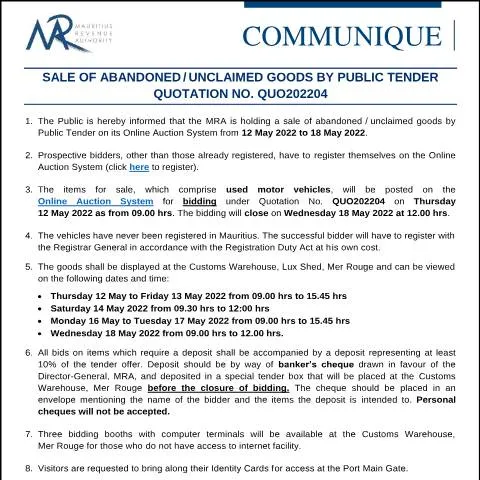
As citizens of Mauritius, the prospect of acquiring abandoned or unclaimed goods through public tender may arise from time to time. The process, particularly encapsulated in the Quotation No. QUO202204, is vital for potential bidders interested in the auctioning of goods such as motor vehicles. This auction is overseen by the Mauritius Revenue Authority (MRA) and represents a unique opportunity for those looking to obtain valuable assets at potentially lower prices. But the procedure requires diligence, understanding, and preparedness on behalf of the participant.
Understanding the Public Tender Process
The public tender process for abandoned or unclaimed goods is not merely a sale; it is a structured and regulated procedure set forth by the MRA. Here’s how it unfolds:
- Announcement of the Sale: The MRA announces the sale of the goods through public channels, as seen in the official communiqué from May 10, 2022. This communication includes essential details such as auction dates, items up for bid, and necessary steps for participation.
- Registration Requirement: Prospective bidders who are not already registered on the MRA’s Online Auction System must undertake the registration process. This ensures that only legitimate bidders participate in the auction.
- Bidding Process: Bidders are required to place their bids within a specified timeframe, during which the items are displayed for viewing. It is crucial to prepare adequately and understand the specifics of each item before bidding.
Key Dates and Viewing Opportunities
Timing is critical in the bidding process. The items for auction are available for viewing at specific times. Potential bidders should mark their calendars accordingly to take advantage of these viewing opportunities:
| Date | Viewing Hours |
|---|---|
| Thursday 12 May to Friday 13 May 2022 | 09:00 hrs to 15:45 hrs |
| Saturday 14 May 2022 | 09:30 hrs to 12:00 hrs |
| Monday 16 May to Tuesday 17 May 2022 | 09:00 hrs to 15:45 hrs |
| Wednesday 18 May 2022 | 09:00 hrs to 12:00 hrs |
During these designated times, bidders can inspect the items physically, including the motor vehicles available at the Customs Warehouse, Lux Shed, Mer Rouge. Understanding the condition of these items before bidding is crucial, as the successful bidder will have responsibilities post-purchase, notably the registration of the vehicle.
The Importance of Deposits in the Bidding Process
When placing a bid, it is necessary to accompany the tender offer with a deposit. This deposit serves as a guarantee and demonstrates the bidder's commitment to the auction process. Here are some key points about the deposit:
- Deposit Amount: A deposit of at least 10% of the tender offer must be submitted.
- Payment Method: The deposit should be made via a banker’s cheque drawn in favor of the Director-General of the MRA. Personal cheques are not accepted, emphasizing the importance of adhering to the prescribed payment methods.
- Submission Instructions: The cheque must be placed in a sealed envelope marked with the bidder's name and the item for which the deposit is intended. This must be deposited in a special tender box located at the Customs Warehouse before the end of the bidding period.
Accessing Online Bidding: For the Tech-Savvy and the Conventional
The MRA has made strides in facilitating the bidding process by introducing an Online Auction System. However, there remains a provision for those without internet access. Understanding these avenues can be crucial for successful participation:
- Online Registration: Bidders must register on the Online Auction System to participate in the auction. This online platform is designed to ensure a smooth bidding experience.
- Physical Bidding Booths: For those who may not have internet access, the MRA provides bidding booths with computer terminals located at the Customs Warehouse. This inclusivity ensures that all interested parties have the means to participate.
Who Can Bid: Eligibility Criteria and Special Considerations
Bidding in public tenders for abandoned goods is generally open to all, yet certain considerations may arise depending on the bidder's profile:
- Individuals: Any adult above the age of 18 can register and place bids. However, it is advisable to bring valid identification, such as a National Identity Card, for verification purposes at the Port Main Gate.
- Foreign Nationals: Foreigners interested in participating must ensure they comply with any additional documentation or registration processes that may be required. Consulting with the MRA beforehand can provide clarity.
- Minors: Bidding rights are generally limited to adults; however, guardians may need to be involved in the bidding process on behalf of minors.
Post-Bid Responsibilities: Understanding the Next Steps
After submitting bids and successfully winning an item, bidders must navigate the post-bidding obligations that come with their purchase:
- Registration of Vehicles: The MRA emphasizes that successful bidders must register any motor vehicles acquired through the auction with the Registrar General. This is in accordance with the Registration Duty Act and is at the bidder's cost.
- Payment of Outstanding Fees: Beyond the winning bid, successful bidders may find additional fees associated with registration or transfer of ownership, further reiterating the importance of budgeting for these expenses.
- Adherence to Regulations: Bidders must ensure compliance with all local laws and regulations governing vehicle ownership in Mauritius to avoid any future legal complications.
Tracking Your Bid: Keeping Tabs on Your Tender Submission
Once a bid is placed and submitted along with the required deposit, it is essential for participants to stay informed about the status of their submission. The MRA typically provides a structured approach to track and follow up on tender submissions:
- Online Tracking: Participants can use the Online Auction System to monitor the status of their bids and check for any updates regarding the auction.
- Direct Communication: For any inquiries or clarifications, participants are encouraged to contact the MRA directly through available channels such as email or phone.
- Feedback Loop: Bidders may also receive notifications about the outcome of their bids via email or through the auction platform, ensuring they are promptly updated on the results.
Conclusion: A Pathway to Acquiring Unclaimed Goods
The process surrounding the Sale of Abandoned / Unclaimed Goods by Public Tender as outlined in Quotation No. QUO202204 offers a unique avenue for Mauritius residents to acquire valuable items, whilst navigating a structured bidding process. Understanding each phase of this procedure, from registration to post-bid responsibilities, is crucial for ensuring a successful and compliant experience. Bidders should remain engaged throughout the journey, utilizing available resources and support from the MRA to make informed decisions and ultimately secure the goods they seek.
Understanding the Framework for Sale of Abandoned Goods
The sale of abandoned or unclaimed goods in Mauritius is a nuanced process governed by specific regulations and procedures. These procedures are articulated within the context of the Public Procurement Act and relevant local government rules. Under Qu. 04 of 2022, the Mauritius Police Force, as well as local councils, are authorized to conduct public tenders for the disposal of goods that remain unclaimed or abandoned for a specified duration, typically exceeding six months. This period allows for a reasonable notification to the original owners through published notices or direct communication.
The initial step involves a thorough assessment to classify goods as abandoned. Items may include vehicles, personal belongings, or any other property deemed unclaimed after the lapse of the stipulated timeframe. Authorities must ensure a fair evaluation process and maintain transparent records of all items intended for sale. It is advisable for potential bidders to familiarize themselves with the terms and conditions surrounding these sales, which can often differ based on the nature and type of goods.
Furthermore, those interested in participating in the public tender must be aware of the legal obligations imposed by the authorities. Prospective buyers are encouraged to regularly monitor official issuance from the Mauritius Police Force or their local council to remain informed about upcoming sales. A thorough understanding of the local auction dynamics, including bidding processes and payment requirements, is essential to successfully navigate this landscape.
Documentation Required for Participation in Public Tender
Participating in public tenders for the sale of abandoned or unclaimed goods requires specific documentation that potential bidders must prepare in advance. As per the guidelines set forth in Qu. 04 of 2022, bidders are typically required to submit a completed tender application form, known as PSC Form 7, which must be duly signed and accompanied by proof of identity. Acceptable forms of ID include a national identification card or any official document issued by the government, reflecting the applicant's full name and address.
Fill in your form directly online
No printing: type your details into the boxes of the official form, tick, then download the PDF ready to send.
- 1Type into the form boxes
- 2Tick in one click
- 3Save and download the PDF
Furthermore, bidders should also provide a financial guarantee, often in the form of a bank draft or a certified cheque equivalent to a percentage of the estimated value of the goods being auctioned. This financial provision serves as a commitment to the tender process and assures the authorities of the bidder's seriousness. It is paramount for bidders to ensure that their guarantees are valid for the duration of the tender process, as any discrepancies may lead to disqualification.
In addition to financial guarantees, detailed descriptions of the intended usage of the purchased goods may also be required in certain cases. Authorities seek to understand the bidder’s plans, especially for items that may have regulatory restrictions attached to their sale or usage. This comprehensive documentation enables a smooth bidding process, fostering transparency and fairness in the transaction.
Post-Tender Process: Responsibilities and Commitments
Once the public tender has concluded, and bids have been accepted, successful bidders are obligated to fulfill certain responsibilities that ensure compliance with applicable laws and local guidelines. As stipulated in Qu. 04 of 2022, the successful bid must be settled within a specified timeframe, often within 7 days post-acceptance, to facilitate the transfer of ownership of the purchased goods. Failure to comply with payment deadlines can result in penalties, including forfeiture of the financial guarantee provided during the bidding process.
Furthermore, it is the bidder's responsibility to arrange for the collection of goods promptly after payment has been made. Local councils or the Mauritius Police Force usually provide instructions on collection methods, timelines, and locations. Bidders should also be aware that they may be liable for any costs associated with the transportation and storage of the acquired goods following the auction.
Moreover, successful bidders must ensure that they adhere to any restrictions or conditions applied to the goods purchased. For instance, if the items bought are subject to regulatory oversight or specific licenses, the bidder must comply fully with those requirements. Non-compliance may result in legal action or penalties imposed by local authorities. As part of their commitment, bidders should also maintain accurate records of their transactions, as these documents may be required for future reference or audits by the relevant authorities.