Navigating the Sale of Abandoned Goods: A Comprehensive Look at Quotation No. QUO202221
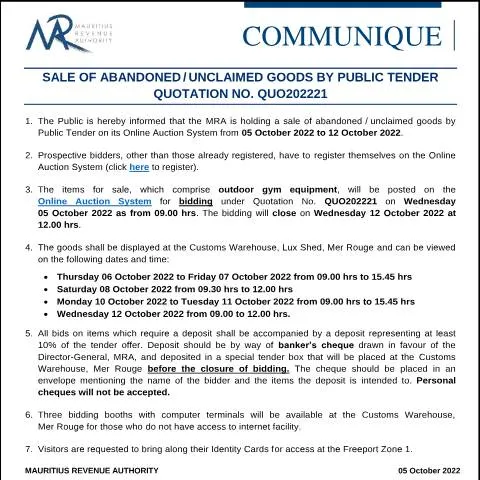
The public tender for the sale of abandoned and unclaimed goods by the Mauritius Revenue Authority (MRA) under Quotation No. QUO202221 is not just a routine auction; it represents an essential mechanism for reclaiming lost assets within the community. This auction, which shines a spotlight on items that have languished unclaimed, offers an opportunity for citizens to acquire goods while also clearing out backlogs for the MRA. Understanding the nuances of this tender is pivotal for prospective bidders, whether seasoned auction participants or first-time entrants.
Understanding Who Can Participate
Participation in this public tender is open to a wide range of bidders. However, specificity in your profile might influence your eligibility or the requirements you face:
- Registered Bidders: Those who have previously registered on the MRA's Online Auction System can dive directly into the bidding process without additional steps.
- New Bidders: Prospective bidders who have not registered must complete the registration process prior to the auction. This involves providing identification and basic personal details, which play a crucial role in ensuring the transparency and integrity of the auction.
- Businesses vs. Individuals: Both individual bidders and business entities are welcome. However, businesses may need to provide additional documentation to affirm their registration and fiscal status.
The Regulatory Framework Behind the Auction
This auction is governed by specific regulations that ensure its legitimacy and fairness. The underlying legal structure stems from both French civil law and English common law, shaped by the Constitution of 1968 and the PSC Act 1955. These laws not only guide the auction process but also protect the interests of all participants. The necessity for a regulated auction is underscored by the need to manage public assets responsibly and to create a transparent platform for buyers.
Furthermore, the MRA's commitment to transparency is reflected in their practice of advertising the auction details widely, ensuring that all potential bidders are aware of the goods available and the bidding process.
Steps to Complete the Auction Process
Engagement in the auction comprises several distinct phases, each requiring careful attention and adherence to guidelines.
Pre-Auction Registration
- Visit the MRA’s Online Auction System.
- Complete the registration form by providing your personal details and National ID number.
- Receive a confirmation email validating your registration, which permits you access to the bidding platform.
Viewing the Goods
Before placing bids, you have the opportunity to inspect the items physically at the Customs Warehouse. The viewing period is crucial, allowing bidders to evaluate the condition of the goods firsthand.
- Dates for Viewing:
- October 6-7, 2022: 09:00 hrs to 15:45 hrs
- October 8, 2022: 09:30 hrs to 12:00 hrs
- October 10-11, 2022: 09:00 hrs to 15:45 hrs
- October 12, 2022: 09:00 hrs to 12:00 hrs
Bidding Process
On October 5, 2022, the bidding for the goods officially opens. Bidders must submit their offers by the time indicated for the closure on October 12, 2022, at 12:00 hrs. Each bid must be accompanied by a deposit, which serves as a commitment to the offer made.
Deposit Requirements
Bids for items requiring a deposit must include a payment that represents at least 10% of the tender offer, submitted via a banker's cheque. The specifics are:
| Deposit Type | Details |
|---|---|
| Banker's Cheque | Must be made out to the Director-General, MRA. |
| Personal Cheques | Will not be accepted. |
| Special Tender Box | Deposits must be placed in a designated tender box at the Customs Warehouse. |
Channels for Submission: Online vs. In-Person
While the MRA emphasizes online participation, recognizing the necessity for digital engagement in today's environment, alternative channels exist for those less comfortable with technology:
- Online Submission: The primary method through the MRA’s Online Auction System, which simplifies registration and bidding processes.
- In-Person Bidding: Booths equipped with computer terminals are available at the Customs Warehouse for individuals without internet access. This ensures inclusivity in the bidding process, allowing all interested parties to participate.
Addressing Special Circumstances
Unique situations warrant special consideration:
- Foreign Bidders: Non-residents must ensure that they have proper identification and comply with local regulations to participate. This may involve additional documentation, such as a passport and proof of residence.
- Minors: Individuals under 18 years of age must have a legal guardian accompany them. The guardian must also register and bid on behalf of the minor.
- Complex Situations: Instances such as disputes over ownership or previous claims on goods may complicate the bidding process. Bidders are encouraged to clarify these situations with MRA representatives ahead of the auction.
Post-Auction Procedures: What Comes Next?
Following the close of the auction, several critical steps determine the final outcome of your bidding experience:
- Auction Results: Successful bidders will be notified through the contact details provided during registration, while unsuccessful bidders will also be informed.
- Payment of Remaining Balance: Successful bidders must settle the remaining amount for their bids promptly. Payment instructions will be communicated after the auction concludes.
- Collection of Goods: Upon completion of payment, arrangements for the collection of purchased items will be outlined, including location details and times.
Handling Issues: Navigating Refusals and Errors
If complications arise—be it a rejected bid, an error in documentation, or missing pieces—there are established pathways to address these challenges:
- Refusals: If your bid is refused, the MRA will typically provide a reason. You can appeal the decision or seek clarification through their contact avenues.
- Documentation Issues: In the case of missing or incorrect documentation, it is advisable to reach out to MRA officials as soon as possible. Timely communication is key in resolving such matters efficiently.
In conclusion, understanding the intricacies of the MRA's public tender for abandoned and unclaimed goods under Quotation No. QUO202221 empowers prospective bidders. By grasping the regulatory framework, meticulously preparing for each step of the process, and addressing potential complications preemptively, participants can navigate this auction with confidence and insight.
Understanding the Legal Framework for the Sale of Abandoned Goods
The sale of abandoned or unclaimed goods in Mauritius is governed by a specific legal framework that aims to ensure a transparent and equitable process. According to the Public Procurement Act and regulations issued by the Ministry of Finance, abandoned or unclaimed goods that have been in possession of a government agency for a period exceeding six months may be sold via public tender. It is crucial for potential bidders to familiarize themselves with the legal definitions of what constitutes "abandoned" or "unclaimed" goods to avoid confusion. Typically, these goods might include items left in public places or goods not collected by their rightful owners. The distinction between the two categories is critical, as it influences the procedures that must be followed.
Moreover, the procedures for notification and advertisement of such sales must meet stringent requirements outlined in the relevant procurement regulations. Government bodies are required to publish notices of the upcoming tender in a widely circulated newspaper and on the official government website, ensuring maximum visibility. This obligation is in place to protect the interests of potential buyers and to promote a fair bidding process. The notices must detail the nature of the goods, the terms and conditions of sale, and the deadline for bids, allowing sufficient time for interested parties to prepare their submissions.
Potential bidders should also be aware of the appeals process available should any disputes arise regarding the sale. If an interested party believes that the process was not conducted according to the established regulations, they may raise their concerns with the Public Procurement Review Board, which will investigate the matter and provide a resolution. Understanding these legal frameworks and processes is essential for anyone looking to engage in the sale or purchase of abandoned goods.
Steps for Participating in the Tender Process
Participating in the tender process for the sale of abandoned or unclaimed goods involves several clear steps that potential bidders must follow to ensure compliance with local regulations. First, interested parties must regularly check for announcements on the official government procurement portal or in local newspapers. These announcements will provide essential details about upcoming sales, including the specific goods available, the location of the sale, and instructions for participation.
Fill in your form directly online
No printing: type your details into the boxes of the official form, tick, then download the PDF ready to send.
- 1Type into the form boxes
- 2Tick in one click
- 3Save and download the PDF
Once a tender notice is published, potential bidders should take the time to review the terms and conditions carefully. It is advisable to gather all necessary documentation beforehand, which may include identity verification documents, proof of residence, and any relevant business registrations if bidding as a corporate entity. The efficiency of the application process can significantly impact a bidder's chances of success.
The next step involves the actual submission of a tender application. Bidders will typically need to complete a designated form, such as Tender Application Form 2022, available through the relevant government department or procurement portal. When completing the form, it is imperative to provide accurate information and adhere to all specified guidelines, as any discrepancies may lead to disqualification.
After submission, bidders must await the outcome of the tender process. Successful bidders will receive notification regarding the acceptance of their bids, after which they will be required to pay an upfront fee along with any applicable taxes. Payment must be made through designated government channels, and proof of payment will be necessary for the collection of the goods. It is essential for bidders to retain all documentation related to the tender for future reference and in case of any disputes that may arise post-sale.
Common Challenges and Solutions in the Tender Process
While the tender process for the sale of abandoned and unclaimed goods is designed to be straightforward, potential bidders may encounter several challenges. One common issue is the lack of clarity in the tender documents. Bidders often find that the descriptions of the goods available for sale are vague or insufficient. To mitigate this risk, it is advisable to attend any pre-tender briefings or information sessions organized by the relevant authorities. These events provide an opportunity to ask questions and seek clarifications directly from officials.
Another challenge faced by bidders is the competitive nature of the tender process. With numerous parties often vying for the same goods, it is crucial for bidders to do thorough research and make well-informed offers. To stand out, bidders should ensure that their applications are complete, documents are in order, and any additional requirements set forth in the tender notice are addressed.
Moreover, bidders may also experience issues relating to payment methods. Given that payments must be made through official government channels, delays or complications can arise. To avoid such issues, bidders should familiarize themselves with the different payment options available and ensure that they have sufficient funds accessible at the time of bidding.
Lastly, after the acquisition of goods, successful bidders may face logistical challenges related to the transport and storage of their purchases. It is advisable to plan ahead, arrange transport in advance, and consider storage solutions that comply with local regulations. By addressing these common challenges proactively, bidders can enhance their chances of a smooth and successful transaction.