Understanding the Sale of Abandoned / Unclaimed Goods
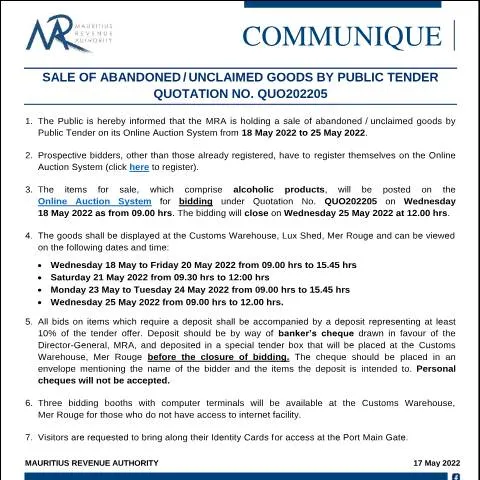
The Mauritius Revenue Authority (MRA) regularly engages in the sale of goods that remain unclaimed or abandoned, allowing citizens and businesses to bid for these items through a public tender process. The official document titled Sale of Abandoned / Unclaimed Goods by Public Tender - Qu. 05 of 2022 (17.05.22) outlines the necessary steps for interested bidders, ensuring transparency and adherence to the regulations governing such auctions. This document is crucial for understanding the entire process involved in the bidding for unclaimed goods.
Who Can Participate in the Tender Process?
The tender process is open to all individuals and organizations, except for those already registered in the MRA's Online Auction System. However, bidders must meet certain conditions, including:
- Being of legal age (18 years or older).
- Possessing a valid National Identity Card for verification purposes.
- Having the financial capacity to place a bid, which includes making a deposit as specified.
Special provisions may apply to foreign bidders or those representing a company, requiring additional documentation to validate their status.
Process Timeline for the Tender Auction
The bidding for the abandoned goods will take place within a specified period. Here’s a concise breakdown:
| Event | Date | Time |
|---|---|---|
| Start of Online Bidding | 18 May 2022 | 09:00 hrs |
| End of Online Bidding | 25 May 2022 | 12:00 hrs |
| Viewing of Goods | 18-20 May & 23-25 May 2022 | 09:00 hrs - 15:45 hrs |
| Special Viewing | 21 May 2022 | 09:30 hrs - 12:00 hrs |
Understanding this timeline is essential for effective planning, ensuring that potential bidders do not miss critical opportunities to view and bid on items.
Completing Your Bidding Registration
To take part in the tender, prospective bidders must register on the Online Auction System. This registration is a straightforward process, but it requires accurate completion to avoid issues later. Here’s how to ensure a smooth registration:
- Visit the MRA’s Online Auction System portal.
- Fill out the necessary fields with your personal and identification information, ensuring accuracy.
- Submit your application and await confirmation from the MRA regarding your registration status.
- Receive your bidder ID, which you will use during the bidding process.
For those who may lack internet access, the MRA provides computer terminals at the Customs Warehouse for registration. It is advisable to register as early as possible to avoid last-minute issues.
Understanding the Goods Available for Bidding
The items listed for sale can vary significantly, but during the auction covered by this document, the focus is particularly on alcoholic products. It is essential for bidders to be aware of what they may be purchasing:
- Goods may include a range of alcoholic beverages, which have been abandoned or remain unclaimed.
- Condition and quality of goods may vary; bidders are encouraged to inspect items during the viewing period.
- All sales are final; once a bid is accepted, there are no returns or exchanges.
By understanding the nature of the goods, bidders can make informed decisions about their bidding strategies.
Requirements for Bidding: Deposits and Payment
To participate in the bidding process, it is crucial to understand the financial commitments involved, particularly regarding the deposit required:
- A deposit of at least 10% of the tender offer must accompany bids on certain items.
- The deposit must be in the form of a banker’s cheque made out to the Director-General, MRA.
- Ensure the cheque is placed in a sealed envelope detailing your name and the items you are bidding on.
- Personal cheques or cash are not accepted.
This deposit serves as a demonstration of the bidder's serious intent, ensuring only committed participants engage in the bidding process.
Viewing and Inspecting the Goods
Before making a bid, potential buyers have the opportunity to inspect the items available for auction. This is a critical step in the bidding process:
- Viewing dates are designated from 18 to 25 May 2022, with specific hours outlined for each day.
- Inspections occur at the Customs Warehouse, Lux Shed, Mer Rouge.
- It is essential to bring a valid Identity Card for access to the viewing area.
Taking the time to carefully inspect the items can help avoid misunderstandings about the goods' condition and value.
Post-Bidding: Following Up on Your Tender
After submitting a bid, participants must remain vigilant. The MRA will notify successful bidders accordingly:
Fill in your form directly online
No printing: type your details into the boxes of the official form, tick, then download the PDF ready to send.
- 1Type into the form boxes
- 2Tick in one click
- 3Save and download the PDF
- Notifications regarding the outcome of bids will be sent out shortly after the bidding period closes.
- Successful bidders will need to finalize payment and arrange for the collection of their items.
- In case of disputes or issues, bidders may contact the MRA directly using the provided contact details.
Bidders should keep records of all communications and transactions for their reference and protection.
The Regulatory Framework Behind the Tender Process
The Sale of Abandoned / Unclaimed Goods by Public Tender operates within a legal framework that ensures fairness and transparency. Established by various laws and guidelines, this framework includes:
- The Constitution of Mauritius (1968), which provides the foundational legal principles.
- The PSC Act (1955), which governs public service recruitment and procedures, indirectly influencing the tender process through proper governance practices.
- Specific regulations set forth by the MRA that dictate how such tenders are to be conducted.
This regulatory backdrop is essential for maintaining public trust and ensuring that processes are adhered to across the board.
Distinguishing This Document from Similar Tender Forms
While there are numerous forms and procedures associated with government tenders, the document related to the Sale of Abandoned / Unclaimed Goods stands out in several ways:
- Focus on specific types of goods (abandoned/unclaimed), which requires bidders to understand nuances that differ from typical procurement tenders.
- Use of an online auction system, differentiating it from traditional paper-based bidding processes.
- The requirement for a financial deposit, which may not be a standard practice in other types of tenders.
Understanding these distinctions is vital for bidders to navigate the tender environment effectively.