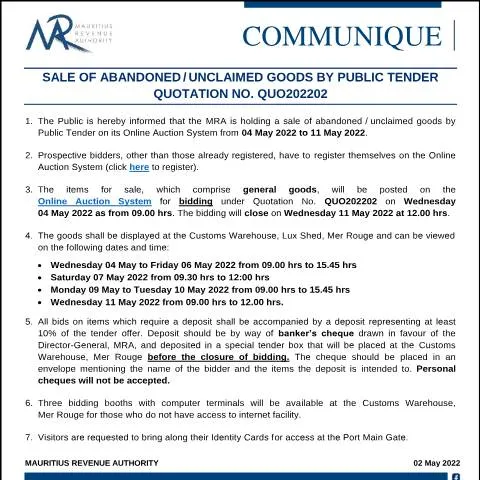
Understanding the Sale of Abandoned or Unclaimed Goods
When dealing with public tender sales of abandoned or unclaimed goods, it is essential to grasp the underlying procedures and requirements. The Mauritius Revenue Authority (MRA) has established a specific framework to facilitate these sales, ensuring that all interested parties can engage in a transparent and organized process. This initiative is particularly critical for those who might not be aware of the opportunities presented by unclaimed items that might otherwise go to waste.
Key Dates and Timeline for Bidders
The public tender for unclaimed goods occurs within a defined timeframe. For the current sale associated with Quotation No. QUO202202, the timeline is as follows:
- Registration for Bidders: To participate, prospective bidders must register on the Online Auction System.
- Viewing of Goods: Items available for bidding can be viewed from 4 May to 11 May 2022, with specific viewing hours detailed below:
- 4 May to 6 May 2022: 09:00 hrs to 15:45 hrs
- 7 May 2022: 09:30 hrs to 12:00 hrs
- 9 May to 10 May 2022: 09:00 hrs to 15:45 hrs
- 11 May 2022: 09:00 hrs to 12:00 hrs
- Bidding Period: Bidding opens on 4 May 2022 at 09:00 hrs and closes on 11 May 2022 at 12:00 hrs.
Detailed Instructions for Filling Out the Form
Filling out the relevant form for participation in the public tender is a critical step. While the document, specifically referenced as CommuniqueQUO202202, does not have a unique form number, the process is straightforward. Here are essential points to consider:
- Registration: Prospective bidders must provide personal details, including full name, contact information, and identification number. This information is crucial for verification purposes.
- Deposit Requirement: A deposit of at least 10% of the tender offer must accompany bids for specific items. Ensure that this deposit is in the form of a banker’s cheque made out to the Director-General, MRA.
- Envelope Submission: The cheque must be placed in an envelope labeled with the bidder's name and the items for which the deposit is intended.
Canvassing the Various Submission Channels
Submission of bids can occur through multiple channels, each offering distinct advantages. Understanding these can enhance your bidding experience:
| Submission Method | Description | Pros | Cons |
|---|---|---|---|
| Online Tender Submission | Directly through the MRA Online Auction System | Convenient, quick, and often the preferred method | Requires internet access |
| In-Person Submission | Using the designated booths at the Customs Warehouse | Assistance available on-site, no internet needed | Limited to specific hours and locations |
| Mail Submission | By sending documentation to the MRA | Can be done from anywhere, no need for physical presence | Potential delays and uncertainty in receipt |
Post-Submission: What to Expect After Bidding
After the bidding period concludes, bidders should be aware of the next steps. The MRA will review all bids received and notify bidders of their results:
- Bid Evaluation: The MRA evaluates each bid based on its conditions and criteria laid out in the tender announcement.
- Notification: Successful bidders will receive a notification regarding their winning status, while unsuccessful bidders will also be informed.
- Payment Process: Winning bidders must complete the payment for their items, which follows the deposit stage, and these payments are also handled through specified channels.
Addressing Issues: What Happens If Your Bid is Refused
In cases where a bid is not accepted, understanding the reasons and potential remedies is crucial:
- Documentation Errors: Ensure all documents are complete and correctly submitted. Missing or incorrect information can lead to refusal.
- Late Submissions: Bids submitted post-deadline will be disregarded. Always double-check submission times.
- Deposit Issues: If the deposit is insufficient or not in the required format, bids may be invalidated.
If you face any discrepancies or would like to challenge a decision, contacting the MRA promptly is advisable. They can provide details on how to initiate a review of your bid.
Who Can Participate? Highlighting Profiles of Interested Parties
The public tender for abandoned or unclaimed goods caters to a diverse range of participants. Understanding who qualifies is essential for potential bidders:
- General Public: Anyone over the age of 18 with a valid identification card can participate in the bidding.
- Registered Businesses: Companies looking to purchase goods for resale or other business operations may also engage.
- Non-Residents: Foreign individuals may participate as long as they meet the identification requirements and can present an acceptable form of payment.
Exceptions may apply regarding specific items depending on regulations surrounding ownership and previous claims. Always check with MRA for clarifications.
Consequences of Non-Compliance: Rights and Obligations When Bidding
Engaging in the bidding process comes with a set of rights and responsibilities that every bidder must understand:
- Right to Information: Bidders have the right to access information about the goods on auction, which includes descriptions, conditions, and starting prices.
- Obligation to Ensure Accuracy: It is the bidder's responsibility to ensure that their submissions are accurate and complete. Errors may lead to disqualification.
- Consequences of Default: If a winning bidder fails to complete the transaction post-award, they risk being banned from future tenders and may forfeit their deposit.
Understanding these rights and obligations is critical for a smooth and successful bidding experience. Ensuring compliance can enhance your chances of acquiring the desired items while maintaining good standing with the MRA.
Understanding the Legal Framework for the Sale of Abandoned Goods
The sale of abandoned or unclaimed goods by public tender in Mauritius is governed by a blend of legal principles rooted in both French civil law and English common law, primarily articulated through the Constitution of 1968 and the provisions laid out in the Public Tender Act. It's imperative for individuals and organizations interested in participating in such tenders to familiarize themselves with the legal context and the specific terms defined within the relevant legislation.
Under this legal framework, abandoned goods refer to items that have been relinquished by their owners without any intention of reclaiming them. This can include a wide variety of items such as vehicles, electronics, and personal property. The process begins with the identification and classification of these goods, which are often turned over to relevant authorities such as the Police Department or other statutory bodies tasked with managing unclaimed property.
Once the goods are officially classified as abandoned, a public tender is organized. This process involves advertising the sale through appropriate channels, often aligned with the requirements set forth by the Public Procurement Office. This ensures transparency and fairness in the tendering process, allowing interested parties to submit their bids. It is crucial to note that the public tender process is designed to maximize public interest and revenue generation for the government.
Moreover, prospective bidders must be aware of the applicable regulations concerning the condition and valuation of the goods being sold. This can include guidelines for the accurate assessment of property value, as well as stipulations for the disposal of goods deemed hazardous or unsellable. Understanding these factors is essential for participants to prepare competitive bids while adhering to legal and ethical standards.
Steps to Participate in the Public Tender for Abandoned Goods
Participating in the public tender for the sale of abandoned or unclaimed goods involves several distinct steps, each of which holds its own importance in ensuring a successful bid and purchase. Here is a detailed guide to navigate this process effectively:
Fill in your form directly online
No printing: type your details into the boxes of the official form, tick, then download the PDF ready to send.
- 1Type into the form boxes
- 2Tick in one click
- 3Save and download the PDF
- Research and Identification:Before engaging in the tender process, it is advisable to conduct thorough research to identify upcoming tenders related to abandoned goods. These announcements are typically posted on the official government portals such as govmu.org. Understanding the types of goods being auctioned can help bidders make informed decisions based on their interests and financial capacity.
- Review Tender Documents:Once a tender is identified, prospective bidders should obtain and review the tender documents meticulously. This documentation usually includes essential information regarding the auction date, items available, bidding procedures, and terms and conditions. Special attention should be given to any clauses regarding payment terms and conditions for collection of the goods post-purchase.
- Registration Process:Bidders must ensure that they are registered to participate in the tendering process. This often requires individuals or businesses to complete specific forms, such as the Tender Submission Form, and may include the submission of identification or business documents. Ensuring that all necessary paperwork is submitted accurately and on time is crucial to avoid disqualification.
- Preparation of Bids:In preparing bids, participants should consider the estimated value of the goods and their potential resale value. Bidding too low may result in loss of opportunity, while bidding too high may lead to financial strain. Participants should prepare a comprehensive pricing strategy that reflects market conditions and personal valuation of the items.
- Submission of Bids:Bids are typically submitted electronically via designated platforms or physically at designated government offices. Participants should adhere to the specified submission guidelines, including deadlines and formats, to ensure their bids are considered. It is also prudent to keep a copy of the submitted bid for personal records.
- Auction Day Participation:On the day of the auction, bidders must arrive prepared to engage actively. This may involve attending physically at the auction site or joining virtually, if remote participation is allowed. Staying informed about the bidding process and remaining composed during competition is key to securing a successful bid.
- Post-Auction Procedures:Once a bid is won, the bidder must follow through with post-auction procedures, which may include finalizing payment and arranging for the collection of goods. Ensuring compliance with all terms stipulated in the tender documentation is crucial to avoid any legal complications.
Challenges and Considerations in the Tendering Process
The tendering process for the sale of abandoned goods presents a unique set of challenges and considerations that bidders must navigate effectively. Understanding these challenges can significantly enhance a participant's chances of success and facilitate a smoother acquisition experience.
Market Volatility:One of the primary challenges faced by bidders is market volatility. The values of abandoned goods can fluctuate based on various factors including economic conditions, demand for particular items, and competing offers from other bidders. It is advisable for participants to stay updated with current market trends to ascertain a reasonable bidding strategy.
Conditional Purchases:Bidders should be aware that certain goods may be sold with conditions attached, such as the need for repairs or compliance with safety standards. This is particularly relevant for vehicles and electronics. Prospective buyers should conduct careful evaluations prior to bidding and factor the potential costs of any necessary post-purchase repairs into their bidding amounts.
Legal Compliance:Compliance with legal and regulatory requirements is paramount. Participants must follow all prescribed laws and regulations related to the sale and ownership transfer of abandoned goods. This includes understanding the implications of ownership rights and ensuring there are no outstanding liens or claims against the goods being purchased.
Risk of Goods Not Meeting Expectations:There is also an inherent risk associated with purchasing unclaimed goods, as they may not always be in the condition described in the tender documents. It is advisable for bidders to carry out due diligence, including onsite inspections whenever possible, to mitigate this risk and ensure satisfaction with the purchase.
In summary, while the sale of abandoned or unclaimed goods by public tender can offer lucrative opportunities for acquisition, prospective bidders must navigate a landscape filled with legal, financial, and practical considerations. By staying informed and prepared, participants can optimize their chances for success in this unique procurement arena.