Understanding the Sale of Abandoned and Unclaimed Goods: A Unique Opportunity
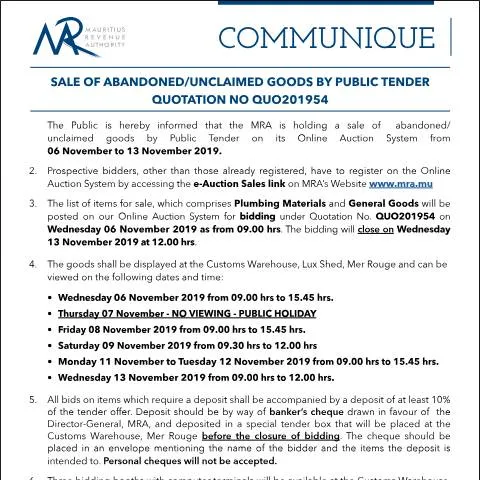
The Sale of Abandoned/Unclaimed Goods by Public Tender offers a unique chance for bidders to acquire various items that have been left unclaimed. This document, officially known as Communique54of2019, outlines the procedures, requirements, and timelines associated with this tender sale conducted by the Mauritius Revenue Authority (MRA). As many individuals may not be familiar with the intricacies involved in such a process, an in-depth exploration of this subject is essential.
Initiating the Tender Process: Key Dates and Details
The tender process commenced on November 6, 2019, and concluded on November 13, 2019. During this period, prospective bidders could place their bids through the MRA's Online Auction System. Here’s a detailed timeline of events related to the tender:
- November 6, 2019: Bidding opens at 09:00 hrs.
- November 6-8, 2019: Viewing of goods at the Customs Warehouse.
- November 9, 2019: Viewing continues from 09:30 to 12:00 hrs.
- November 11-12, 2019: Continued viewing from 09:00 to 15:45 hrs.
- November 13, 2019: Final bidding closes at 12:00 hrs.
Understanding these dates is critical for participants aiming to place successful bids.
Eligibility and Registration Requirements
Before participating in the tender, interested bidders, especially those not already registered, were required to complete the registration process on the MRA's Online Auction System. This involved accessing the e-Auction Sales link on the MRA website. The registration step ensures that all bidders are accounted for and can be contacted post-tender regarding the status of their bids.
Exploring the Goods Available for Bid
The items available for bid in this particular tender primarily consisted of plumbing materials and general goods. A comprehensive list was published on the Online Auction System, providing bidders with the necessary information to assess their potential purchases. Individuals interested in these goods were encouraged to review this list prior to the bidding process to make informed decisions.
Goods could be viewed physically at the Customs Warehouse, located at Lux Shed, Mer Rouge, during the designated viewing dates. This hands-on opportunity allowed bidders to inspect the items personally, increasing the transparency of the bidding process.
The Role of Bidding Deposits
For items requiring a deposit, prospective bidders needed to prepare a banker’s cheque amounting to at least 10% of their tender offer. This deposit serves as a commitment from the bidder, ensuring that only serious bids are placed. The requirements for the deposit include:
- Deposits must be made via banker’s cheque, payable to the Director-General, MRA.
- The cheque should be submitted in a special tender box located at the Customs Warehouse before bidding closes.
- Personal cheques are not acceptable.
By adhering to these rules, bidders ensured that their applications would be considered valid.
Logistics and Access: Navigating the Bidding Environment
To facilitate participation from those without internet access, the MRA provided three bidding booths equipped with computer terminals at the Customs Warehouse. This measure expanded access to the tender, allowing a broader range of bidders to engage in the process.
It is also crucial to note that all visitors were required to present their Identity Cards at the Port Main Gate to ensure security and regulation compliance during the tender event.
Post-Bid Process: Understanding Outcomes and Next Steps
Once the bidding concluded on November 13, bidders awaited the results of their offers. Successful bidders were notified through registered contact details provided during the registration process. It is essential for bidders to remain vigilant during this period, as communication from the MRA will outline the next steps, including payment details and collection of the won items.
In cases where a bid is not accepted, it is advised that bidders review their offers for compliance with the tender requirements. Understanding the criteria for successful bids can enhance future participation in similar auctions.
Challenges and Considerations for Future Bidders
This sale process is not without its challenges. Bidders must be aware of the potential for submission errors, missing documentation, or failed bids. To mitigate these issues:
- Ensure that all required documents are prepared in advance.
- Double-check the details on the bidding deposit cheque.
- Familiarize yourself with the online bidding platform prior to the official start date.
In the event of a refusal or complication, bidders are advised to contact the MRA directly through the provided contact details. Prompt communication can help clarify any misunderstandings or rectify issues swiftly.
Significance of the Sale of Abandoned and Unclaimed Goods
The tender sale of abandoned and unclaimed goods serves multiple purposes within the Mauritian context. It not only provides an avenue for public participation in acquiring goods that might otherwise remain unused but also aids the government in managing surplus inventory effectively. The funds generated contribute to public finances and highlight the importance of transparency in auction processes.
Conclusion: A Call to Engage and Participate
Participating in the sale of abandoned and unclaimed goods by public tender represents a unique opportunity for residents of Mauritius. Engaging in such auctions cultivates a sense of community involvement and fosters an understanding of the economic and administrative processes at play. By preparing adequately, respecting deadlines, and adhering to guidelines, bidders can maximize their chances of success in future auctions.
Understanding the Legal Framework for Sale of Abandoned Goods
The sale of abandoned or unclaimed goods in Mauritius is governed by a specific legal framework that outlines the procedures and guidelines for such sales. This framework ensures transparency and fairness while providing a structured approach for the disposal of these goods. The relevant legislation includes provisions that clearly define what constitutes abandoned goods and the conditions under which they can be sold.
Under the prevailing laws, abandoned goods refer to items that have been unclaimed for a certain period, typically defined by the relevant authorities. For example, goods left unattended in public places, uncollected parcels at post offices, or items seized by the police that have not been claimed by their rightful owners within a specified timeframe may fall under this category. The Public Auctions Act 1995 provides a clear basis for the handling and sale of these goods, stipulating the necessary procedures to ensure compliance with legal standards.
It is essential to note that prior to the sale, authorities such as the Ministry of Finance and Economic Development or the relevant local government bodies must undertake due diligence to ascertain whether efforts to notify the owners have been made. This may include published notices in local newspapers or announcements on government websites, providing the original owners an opportunity to claim their property before it is auctioned off.
Furthermore, the process involves an official inventory of the goods being sold, which must be made publicly available ahead of the auction. This inventory serves not only as a record for prospective buyers but also acts as a safeguard ensuring that the selling authority is transparent about what is being auctioned. The auction itself is usually conducted by qualified auctioneers, and bidders are required to adhere to specific bidding rules and procedures, including registration and payment of deposits, where applicable.
Guidelines for Bidders in Public Tenders for Abandoned Goods
For individuals or businesses interested in participating in public tenders for the purchase of abandoned goods, it is crucial to understand the guidelines and requirements set by the authorities. The process begins with the publication of a notice of tender, which is typically accessible on official government websites such as govmu.org. This notice contains details regarding the goods available for sale, the auction date, and any conditions that bidders must meet.
One of the first steps for prospective bidders is registration. Interested parties must complete the necessary forms, such as PSC Form 7 for general registration, and pay any applicable fees associated with participating in the tender process. All bidders must also provide valid identification, which in most cases will be their National ID Card, tied to the MauPass system for streamlined processing.
During the tender, bidders are encouraged to thoroughly inspect the goods on offer before placing their bids. This is critical as items may vary widely in condition and value. Understanding the specifics of what is being auctioned helps bidders make informed decisions and minimizes the risk associated with their purchases. Furthermore, potential buyers should be aware of the terms of sale, including payment methods, collection timelines, and any warranties or guarantees associated with the goods.
If successful, the bidder will then need to complete additional forms, such as the LGSC Form 7a, to finalize the transaction. They should also be prepared to make payments promptly, as stipulated in the auction terms, to secure their purchase. Failure to comply with these terms may lead to disqualification from current and future tenders.
Challenges and Risks in Purchasing Abandoned Goods
While purchasing abandoned goods through public tenders can present unique opportunities, it is not without its challenges and risks. One of the primary concerns for bidders is the uncertainty surrounding the condition of the items. Abandoned goods can range from perfectly usable items to those that are severely damaged or defective, which may only become apparent after bidding has commenced. Therefore, bidders must exercise caution and due diligence when assessing items before the auction.
Additionally, there may be legal implications associated with owning abandoned goods. Buyers should ensure that the goods they purchase do not infringe upon any intellectual property rights or ownership claims that may still be valid. This is particularly pertinent in cases where items such as vehicles or electronics are involved, as there may be outstanding liens or legal issues that could affect ownership rights post-purchase.
Another risk includes the possibility of overspending during competitive bidding scenarios. The thrill of the auction can lead to emotional decision-making, resulting in bidders exceeding their budget. To mitigate this risk, it’s advisable for bidders to establish a maximum limit for their bids beforehand and strictly adhere to that limit throughout the auction.
Moreover, after acquiring abandoned goods, the buyer is responsible for any associated costs such as transportation, storage, or refurbishing. These expenses can accumulate quickly, and it is important for bidders to factor in these potential costs when determining the overall value of their purchase.
In conclusion, participating in the sale of abandoned or unclaimed goods via public tender can be a rewarding venture if approached with caution and informed decision-making. By understanding the legal framework, adhering to bidding guidelines, and being aware of the challenges involved, bidders can navigate this process successfully and make advantageous purchases.