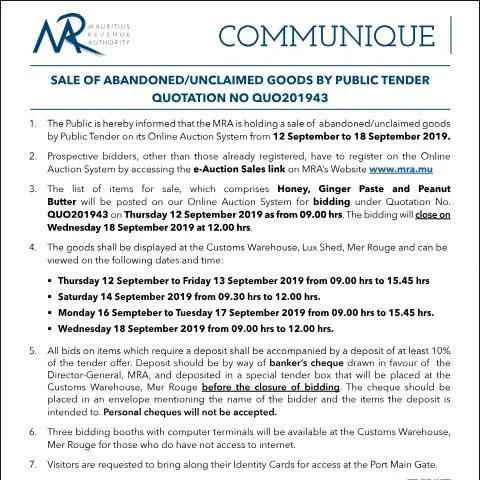
Navigating the Sale of Abandoned/Unclaimed Goods: A Deep Dive into Communique 43 of 2019
The process of acquiring abandoned or unclaimed goods through public tender in Mauritius is a unique opportunity, often shrouded in administrative complexities. This procedure, governed by the Mauritius Revenue Authority (MRA), provides a comprehensive outline for potential bidders interested in participating in the auction of goods that have not been claimed. For those looking to delve into this process, understanding the nuances of Communique 43 of 2019 is essential.
Understanding the Unique Aspects of the Sale Process
Unlike other forms or procedures, the sale of abandoned/unclaimed goods by public tender is distinctly regulated by the MRA and structured to ensure transparency and fairness. The quotation number QUO201943 reflects a specific auction event held from September 12 to September 18, 2019. This is critical information for bidders as it helps identify the auction period and the specific items up for bid.
The process also stands out due to its online component. Prospective bidders are required to register on the Online Auction System via the MRA website. This digital approach is part of a broader push by the Mauritian government to enhance service delivery and accessibility through e-services.
Key Dates and Auction Mechanics
For effective participation, bidders must be acutely aware of the timeline associated with the auction. The goods were available for viewing at the Customs Warehouse, Lux Shed, Mer Rouge. Specific dates for viewing were:
- Thursday, September 12 to Friday, September 13, 2019 from 09:00 hrs to 15:45 hrs
- Saturday, September 14, 2019 from 09:30 hrs to 12:00 hrs
- Monday, September 16 to Tuesday, September 17, 2019 from 09:00 hrs to 15:45 hrs
- Wednesday, September 18, 2019 from 09:00 hrs to 12:00 hrs
The items listed for auction included popular goods such as Honey, Ginger Paste, and Peanut Butter, which highlights the nature of the goods that may be available in such auctions. Bidders must also note that all bids requiring deposits must be accompanied by a banker’s cheque of at least 10% of the tender offer.
Decoding the Form: An In-Depth Look
The actual form associated with the public tender, while not explicitly highlighted in the initial communique, serves as the formal request to bid on the listed goods. Understanding its structure is pivotal for compliance and successful submission.
The Structure of the Bidding Form
The bidding form is typically divided into several key sections, each requiring specific information:
- Bidder Information: This section requires personal details, including full name, address, and identification details. Ensure that the name matches the identification card to avoid discrepancies.
- Item Selection: Bidders must list the items they wish to bid on carefully. It is essential to refer to the exact item descriptions provided in the auction list to prevent errors.
- Deposit Details: The form must detail the amount of the deposit submitted. Remember that personal cheques are not accepted; only banker’s cheques are valid, and they must be placed in a designated envelope.
- Signature: The form concludes with a signature confirming that the bidder accepts the auction terms and conditions.
Each section requires meticulous attention to detail. Common pitfalls may arise in the Item Selection section, where bidders might mistakenly bid on items not intended or fail to provide adequate descriptions. Ensuring accuracy in this segment is crucial for the validity of the tender.
Regulatory Framework: Historical and Legal Context
The rules governing the sale of abandoned or unclaimed goods are grounded in administrative and legal principles laid out by the MRA. The Public Tender process stems from a need to efficiently manage unclaimed assets while ensuring that public resources are utilized judiciously. This process also reflects Mauritius’s commitment to transparent governance.
Under the current legal framework, the procedure is operated under the auspices of both French civil law and English common law, which provides a hybrid system ensuring that procedural fairness is maintained while adhering to local laws. The Constitution of 1968 and complementary regulations support the execution of this process.
Previous Auctions: A Snapshot of Historical Data
To better understand the impact and scale of such auctions, reviewing data from previous sales is instructive. Typically, abandoned goods can range in value and type, reflecting a broad spectrum of consumer products. A table summarizing past auctions, items sold, and the corresponding bid amounts can offer valuable context:
| Quotation No | Item Description | Date of Auction | Final Bid Amount |
|---|---|---|---|
| QUO201843 | Assorted Electronics | July 15, 2018 | MUR 25,000 |
| QUO201844 | Furniture and Home Decor | August 20, 2018 | MUR 15,000 |
| QUO201942 | Sporting Equipment | January 10, 2019 | MUR 12,500 |
Such data emphasizes the variability in the types of goods auctioned, allowing prospective bidders to gauge the potential value and nature of items that may be available in future tenders.
After Submission: Tracking Your Tender Application
Once the bidding form and associated deposit have been submitted, what follows? Understanding the administrative process and what to expect can alleviate anxiety and provide clarity. Bidders typically receive a confirmation of their submission, which can be tracked through the MRA’s Online Auction System.
For effective tracking, bidders are encouraged to:
- Utilize their unique registration details to log in to the Online Auction System.
- Check for notifications regarding the status of their bids.
- Be aware of deadlines for any required actions or additional information requests.
Additionally, having a point of contact at the MRA can facilitate smoother communication. The contact number provided in the communique, +230 202 0500, can be used for inquiries regarding the status of bids or clarification on auction-related queries.
What Happens After the Auction?
Upon closing the bidding period, the MRA evaluates the bids and the highest bidder for each item is typically awarded the goods. Successful bidders must promptly arrange for payment and collection as specified in the auction guidelines.
Failure to comply with payment timelines can lead to forfeiture of the bid. It is crucial for participants to read and understand the terms of sale outlined by the MRA to prevent any oversight that could jeopardize their bid.
The Rights and Obligations of Bidders in the Auction Process
Engaging in a public tender is not merely about placing a bid; it involves a comprehensive understanding of one’s rights and obligations. Bidders are entitled to transparency regarding the auction process and the condition of goods. However, they are also responsible for ensuring that their bids are genuine and compliant with the auction's rules.
Key obligations include:
- Ensuring that deposits are paid in the required form (banker’s cheque).
- Submitting accurate information in the bidding form.
- Complying with all terms set forth by the MRA regarding the auction process.
Bidder negligence—such as failing to adhere to these guidelines—can have serious consequences, including loss of the deposit and disqualification from future bidding opportunities. Hence, a thorough understanding of the entire auction process is paramount.
Engaging with the MRA: A Resource for Bidders
The Mauritius Revenue Authority serves not only as the governing body overseeing the auction but also as a valuable resource for potential bidders. Interested parties are encouraged to utilize the wealth of information available on the MRA website and through direct contact. The MRA's commitment to facilitating the auction process underscores the importance of public engagement in government initiatives.
With a focus on enhancing public participation, the auction system allows for greater access to goods that may otherwise remain unclaimed, fostering a sense of community involvement and economic sustainability.
Whether you are a seasoned bidder or a newcomer to the tender process, understanding the intricacies of Communique 43 of 2019 will empower you to navigate the sale of abandoned and unclaimed goods effectively. As auctions continue to evolve, staying informed and prepared is the key to successful participation.
Understanding the Process of Public Tender for Unclaimed Goods
In Mauritius, the procedure for the sale of abandoned or unclaimed goods through public tender is governed by specific regulations that aim to ensure transparency and fairness. When goods are deemed unclaimed, they are typically held by government authorities or relevant departments such as the Ministry of Finance. The process begins with the identification of items that have been unclaimed for a specified period, often outlined in the policy under which the goods were seized or abandoned.
The relevant authority will compile a list of these goods, which may include anything from vehicles to electronic equipment. This list is crucial as it forms the foundation for the tender announcement. According to the guidelines, the authority must provide adequate public notice, which includes publishing the details of the tender in local newspapers and on official websites, ensuring that potential bidders are informed adequately.
An important component of the tender process is the stipulation of conditions that bidders must meet. These conditions often include a requirement for bidders to submit a deposit, which will secure their bid. This deposit acts as a commitment to the purchase, thereby discouraging frivolous bids. Additionally, bidders are usually required to present identification and proof of their financial capability to ensure they can fulfill their purchasing obligations.
Once bids are submitted, they are assessed based on criteria such as the bid amount, the financial stability of the bidder, and the intended use of the goods. This thorough evaluation process aims to ensure that the goods are sold to responsible parties who will utilize them appropriately. After the evaluation, the successful bidder will be notified, and arrangements for payment and transfer of ownership will be made.
Legal Framework Surrounding Abandoned Goods in Mauritius
The legal context for the sale of abandoned or unclaimed goods in Mauritius is primarily defined by local laws which reflect a hybrid legal system, influenced by both French civil law and English common law principles. Key regulations outline the responsibilities of various governmental bodies in handling abandoned goods. These regulations provide a framework for accountability and procedural correctness.
Under the relevant legislation, goods classified as abandoned may be those that have remained unclaimed within a stipulated period, usually defined in the respective acts governing their management. Different types of goods are treated distinctly; for example, vehicles may require additional documentation to ascertain ownership and the absence of any legal encumbrances. The Ministry of Finance or the applicable authority is responsible for determining the status of the goods and whether they can be classified as abandoned, which is a crucial step before initiating a public tender.
Moreover, the public tender process is subject to scrutiny to prevent fraudulent activities or mismanagement. This involves maintaining complete transparency throughout the tendering process, from advertisement through to the final sale. Authorities are also encouraged to maintain a public record of tenders held, including the list of goods sold and the prices fetched, to establish a historical reference for future auctions and public tenders.
Impact of E-Governance on the Sale of Unclaimed Goods
The advent of e-governance in Mauritius has significantly transformed the procedures surrounding the sale of unclaimed goods. The introduction of digital platforms has streamlined the process, making it more efficient and accessible to the public. Through platforms like govmu.org, potential bidders can access information about upcoming tenders, review lists of available goods, and submit their bids electronically. This has not only enhanced transparency but has also encouraged greater participation from the public.
Furthermore, e-filing of tenders allows for quicker processing times. Bidders are now able to receive instant notifications regarding the status of their bids, while authorities can manage and track submissions more effectively. The integration of the MauPass system with the Central Population Database further simplifies the verification process for bidders, enabling authorities to confirm identities and eligibility almost in real-time.
As a result, the digital transition has also led to increased revenues from the sale of unclaimed goods, as the broader reach means more potential bidders and consequently higher bids. This reflects a growing trend where digital solutions are facilitating better governance outcomes. The government’s push towards e-services not only improves operational efficiency but also fosters a culture of openness and accountability in public financial management, especially regarding the sale of abandoned or unclaimed goods.