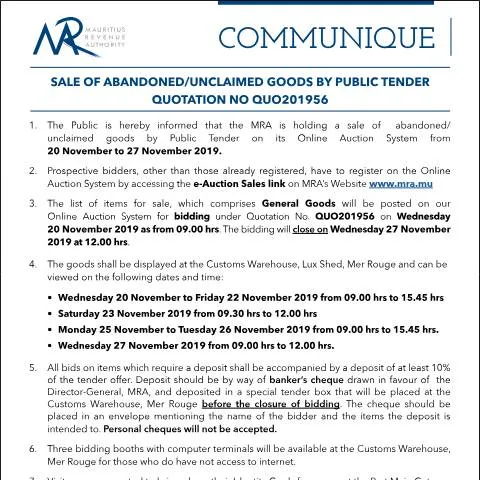
Understanding the Role of the Public Tender for Abandoned Goods
The sale of abandoned or unclaimed goods through public tender presents a unique opportunity for both the Mauritius Revenue Authority (MRA) and the general public. With the aim of disposing of items that have been neglected or left unclaimed, this tender allows for a competitive bid process. This document, Communique 56 of 2019, outlines the procedures, requirements, and timeline for participating in such sales.
The Auction Process: A Step-by-Step Guide
The auction process is structured and requires bidders to follow specific steps. Here’s a chronological breakdown:
- Registration: Those wishing to bid must register on the Online Auction System by accessing the e-Auction Sales link on the MRA’s official website. Registration is crucial for prospective bidders who are not already registered.
- Viewing the Goods: Items for sale will be displayed at the Customs Warehouse, Lux Shed, Mer Rouge. Public viewing will occur from November 20 to November 27, 2019, allowing bidders to inspect the items before placing their bids.
- Placing Bids: Bidding opens on November 20, 2019, at 09:00 hrs and closes on November 27, 2019, at 12:00 hrs. Bidders must submit their bids within this timeframe.
- Deposits: Bidders must submit a deposit of at least 10% of their tender offer, which should be made via a banker’s cheque. Personal cheques will not be accepted.
- Bid Submission: Bids, along with the required deposit, should be placed in a special tender box at the Customs Warehouse before the bidding closes.
Who Can Participate in the Tender?
The tender is open to the general public, but certain eligibility criteria and conditions apply:
- Individual Bidders: Any individual over the age of 18 with a valid identity card can participate.
- Companies and Organizations: Corporate entities can also participate, provided they submit a company registration number and documents proving the authority of the representative to bid on behalf of the entity.
- Exceptions: Those who have previously been disqualified from participating in tenders or have outstanding debts to the MRA are not eligible to bid.
Identifying Eligible Goods for Sale
The types of goods available for bidding cover a wide range, categorized as “General Goods.” It’s essential for potential bidders to understand what is being offered. The specific items available will be posted on the Online Auction System on the commencement date of bidding.
Preparing Documentation for Participation
Successful participation in the tender requires adequate preparation of documents. Depending on your status as an individual or a corporate entity, the documents may vary:
| Document Type | Individual Bidders | Corporate Bidders |
|---|---|---|
| Identity Document | National ID Card | Company Registration Certificate |
| Deposit Requirement | Banker’s Cheque (10% of bid) | Banker’s Cheque (10% of bid) |
| Authority to Bid | N/A | Letter of Authority from the Board |
| Access Credentials | Registration on e-Auction System | Registration on e-Auction System |
Distinct Features of the Tender Process
Understanding what differentiates this public tender from other similar processes is crucial for effective participation. Unlike traditional sales where fixed prices apply, the auction format allows for competitive bidding, which may lead to a lower purchase price for bidders. Additionally, this tender specifically deals with abandoned or unclaimed goods, which often are not available through standard retail channels.
Related Forms and Documentation
While other forms might deal with the sale of goods or property, such as those related to the disposal of government assets, the Sale of Abandoned/Unclaimed Goods by Public Tender is distinct in its focus on unclaimed items. Familiarity with the specific requirements outlined in this tender’s documentation is essential.
Administration’s Role and Post-Bid Process
Once bids are placed, the administration undertakes several responsibilities:
- Bid Assessment: The MRA evaluates all bids received before announcing the successful bidders.
- Notification: Successful bidders will be notified through their registered contact details.
- Payment and Collection: Upon notification, bidders are required to complete payment for the bid amount and arrange for the collection of their purchased goods.
Tracking Your Bid Status
Bidders can monitor their bid status through the Online Auction System. Should there be any issues or delays, participants are encouraged to contact the MRA directly via the provided contact details.
Conclusion: Engaging in the Auction
Engaging in the auction of abandoned or unclaimed goods can be a rewarding experience, both economically and for the thrill of the auction environment. Understanding each component of the process, from registration to post-bid responsibilities, enhances the likelihood of a successful bidding experience. For any queries, bidders are advised to contact the MRA directly at their Customs House or through their official email and telephone lines.
Understanding the Legal Framework for Abandoned Goods in Mauritius
The sale of abandoned or unclaimed goods by public tender in Mauritius operates under a specific legal framework that is designed to ensure transparency and fairness. This process is influenced by both the French civil law and English common law elements as established in the country’s Constitution of 1968 and the PSC Act of 1955. Under this hybrid system, various regulations dictate how abandoned goods are handled, including the rights of the original owners, and the obligations of the authorities involved in managing these assets.
According to local practices, various government bodies, including the Customs Department and the Police, are responsible for declaring items as abandoned or unclaimed. This designation typically occurs after a set period during which the original owner fails to claim the goods. The duration before an item is classified as abandoned can vary, but it generally requires a minimum of six months where the owner does not make any attempts to retrieve their property. Once declared, these items are often categorized into different classes, including personal effects, vehicles, and miscellaneous goods, each with its own protocol for handling.
Fill in your form directly online
No printing: type your details into the boxes of the official form, tick, then download the PDF ready to send.
- 1Type into the form boxes
- 2Tick in one click
- 3Save and download the PDF
Steps for Bidding in Public Tenders for Abandoned Goods
Bidding for abandoned goods through public tender involves a systematic process that requires careful preparation by interested participants. Here’s a detailed breakdown of the steps involved:
- Announcement of Tender: The relevant authority will publish a notice in official gazettes and, occasionally, local newspapers. This notice will include critical information such as the type of goods available, the auction date, and the venue for the tender.
- Registration: Interested bidders must register for the tender process, usually requiring them to submit their identification (such as a National ID) and contact details via the designated online portals like govmu.org. It is advisable to register early to avoid last-minute complications.
- Inspection of Goods: Before bidding, participants are often allowed to inspect the goods. This inspection is crucial as it provides bidders with an opportunity to assess the condition and value of the items they are interested in. Inspection dates will be specified in the tender announcement.
- Submission of Bids: Bidders must submit their bids in sealed envelopes or via the specified online platform, adhering to the instructions laid out in the tender notice. Each bid should clearly state the amount offered and include any additional required documentation.
- Auction Day: On the day of the auction, all bids are opened in a public forum. The highest bidder for each item will be declared the winner, provided they meet the outlined terms and conditions.
- Payment and Collection: Successful bidders are required to make immediate payments, usually in cash or via bank transfer, and then arrange for the collection of their purchased goods within the stipulated timeframe.
Understanding each of these steps and preparing accordingly can significantly enhance the chances of successfully acquiring abandoned goods through public tender in Mauritius.
Common Challenges and Solutions in the Tender Process
While the process for purchasing abandoned goods via public tender is relatively straightforward, several challenges may arise that participants should be prepared to navigate. Below is an exploration of these challenges, along with practical solutions:
- Insufficient Information: One common issue is the lack of detailed information about the goods being auctioned. Bidders may feel uncertain about the value of the items. Solution: Prospective bidders should attend inspection days and speak with officials to gather as much information as possible. Networking with previous bidders can also provide insights into the process and expectations.
- Technical Glitches: Given the emphasis on e-services, technical issues on the government platforms can hinder bid submissions. Solution: Bidders should ensure they have a reliable internet connection and should submit their bids well in advance of the deadline to avoid last-minute issues.
- Payment Delays: Delays in processing payments can complicate the acquisition of goods. Solution: Bidders should confirm payment methods and ensure their readiness to complete transactions immediately after winning a bid. Keeping documentation organized can facilitate quicker transaction processes.
By anticipating these challenges and employing the suggested solutions, participants can enhance their experience and success rate in the tender process for abandoned goods in Mauritius.