Understanding the Role of the Sale of Abandoned/Unclaimed Goods
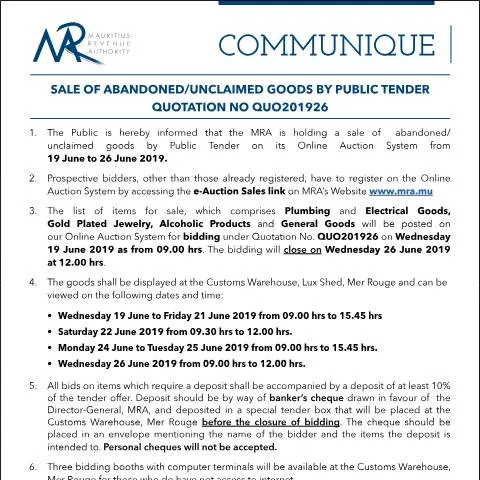
The Sale of Abandoned/Unclaimed Goods by Public Tender represents a vital mechanism for the disposal of items that have been left unclaimed or abandoned in the custody of the Mauritius Revenue Authority (MRA). It serves not only to clear the customs warehouses but also provides an opportunity for individuals and businesses to acquire goods at potentially lower prices. This process is officially highlighted by Communique 26 of 2019, detailing the procedures involved, including registration, bidding, and payment methods.
Target Audience: Who is Engaged in this Process?
This initiative caters to a wide range of participants, from individuals seeking personal items to businesses looking for supplies. Here is a breakdown of the types of participants who might engage with this sale:
- Individual Bidders: Residents or tourists interested in acquiring various goods, including electronics, jewelry, and general merchandise.
- Business Entities: Companies seeking to purchase bulk goods for resale or operational needs.
- Registered Bidders: Those who have pre-registered on the MRA's Online Auction System, allowing them to participate in the bidding process.
Specific Situations to Consider
While anyone can theoretically participate, certain conditions apply, particularly for foreign bidders and minors. Foreigners must ensure they are compliant with local regulations, potentially requiring the assistance of a local representative. Minors, on the other hand, may need parental consent or have limitations on the items they can bid on.
Steps to Participate: Registration and Bidding
Participating in the sale involves several key steps, each with its own requirements. Here’s a comprehensive look at the process:
- Registration: If you are not already registered on the MRA's Online Auction System, you will need to access the e-Auction Sales link on the MRA website. Registration is crucial for bid participation.
- Review Available Items: The list of goods available for bidding will be posted on the online platform starting 19 June 2019. Ensure you review this list carefully to identify the items of interest.
- Schedule a Viewing: Goods can be inspected at the Customs Warehouse, which is essential for determining their condition and authenticity. Viewing dates are allocated from 19 June to 26 June 2019.
- Prepare Your Bid: When placing a bid, remember that many items require a deposit. This deposit is a percentage of your tender offer, typically set at 10%.
- Submit Your Bid: Bids must be placed via the online system or in person at the Customs Warehouse. If using the latter option, ensure you have your Identity Card for access.
Understanding the Bidding Process: Timing and Procedures
The bidding process is time-sensitive and structured to prevent last-minute chaos. Bids will only be accepted between 19 June and 26 June 2019, with the bidding closing at noon on the final day. Here’s how it unfolds:
| Date | Activity | Time |
|---|---|---|
| 19 June 2019 | Start of bidding | 09:00 hrs |
| 22 June 2019 | Viewing | 09:30 hrs - 12:00 hrs |
| 26 June 2019 | End of bidding | 12:00 hrs |
All bids should be accompanied by the required deposit, which must be submitted via a banker’s cheque made out to the Director-General, MRA. This cheque should be placed in an envelope alongside the bid details, and personal cheques are not accepted.
Navigating the Deposit Requirement and Payment Methods
A significant aspect of the bidding process is understanding the deposit requirement, which serves as a guarantee of your commitment to the bid. Here’s what to keep in mind:
- Deposit Amount: Typically, this is set at a minimum of 10% of your bid. Ensure your cheque reflects this amount accurately.
- Submission of Deposits: Deposits must be placed in a designated tender box at the Customs Warehouse before the bidding closes.
- Cheque Specifications: Only banker’s cheques are accepted, so plan accordingly. Personal cheques will lead to disqualification.
Consequences of Non-Compliance
Failing to adhere to these requirements, such as not submitting a deposit or using an incorrect form of payment, could result in disqualification from the bidding process. It is imperative to follow through on these procedures to secure your participation.
Post-Bid Procedures: What Happens After Bidding Closes?
Once the bidding closes, the next steps are crucial for successful bidders. The process includes:
- Awarding of Items: Successful bidders will be notified post-bid closure, and the items they bid on will be awarded based on the highest bids received.
- Payment Confirmation: Final payment must be made according to the instructions provided by the MRA, and this will typically involve settling the remaining balance after the deposit.
- Item Collection: Once payment is confirmed, arrangements for the collection of the awarded goods must be made, usually adhering to a specified timeline.
Challenges and Remedies for Participants
Occasionally, issues may arise during the bidding process, such as discrepancies in bids or missing documentation. Here’s how to navigate potential obstacles:
- In case of a Dispute: If there are disputes regarding bids or the awarding of items, participants can contact the MRA for clarification and resolution.
- Error Rectification: If an error is made in the bidding process, it’s essential to notify MRA officials immediately, as they can provide guidance on correcting the issue.
- Missing Documentation: Ensure all documents are in order prior to the bid. If something is missing, rectify the situation prior to submission to avoid disqualification.
Understanding the Broader Context of Abandoned Goods Sales
This sale process does not exist in isolation. It connects to a broader framework of public asset management and revenue generation. The handling of abandoned goods reflects the efficiency of public sector operations, and by participating, individuals contribute to maintaining this system.
Furthermore, the sale provides an avenue for economic activity, allowing for the circulation of goods that might otherwise remain unused. By facilitating such sales, the MRA not only manages abandoned properties but also engages the community in economic opportunities.
Comparison with Other MRA Procedures
It is important to differentiate this process from other MRA-related procedures, such as customs clearance or tax filings. The Sale of Abandoned/Unclaimed Goods by Public Tender is unique in its competitive bidding format and the temporary nature of the goods being offered. Unlike standard auctions or sales, this process is rooted in the necessity to manage unclaimed items effectively.
Final Considerations: The Importance of Compliance
Participating in the Sale of Abandoned/Unclaimed Goods by Public Tender requires thorough preparation. Understanding each element, from the registration process to the final collection of goods, is vital for a successful experience. Compliance with all rules and procedures ensures that participants can effectively navigate this public tender system.
The MRA remains committed to transparency and efficiency in these auctions, fostering an environment where community members can engage in responsible bidding and acquire goods that might otherwise be lost forever.
Legal Framework Governing the Sale of Abandoned/Unclaimed Goods
The sale of abandoned or unclaimed goods in Mauritius is governed by a specific legal framework that underscores the procedures and regulations to ensure transparency and fairness in the process. The foundational legislation includes the Civil Code and more recent guidelines established by the Ministry of Business, Enterprise, and Cooperatives. These laws outline the responsibilities of various stakeholders, including local authorities and the public tender committee.
Importantly, the process begins with the identification of goods that are deemed abandoned or unclaimed, typically taking into account the duration of time they have remained uncollected. According to the guidelines issued by relevant authorities, goods must remain unclaimed for a minimum period—often set at six months—to be eligible for tender. During this period, the authorities are required to make diligent efforts to locate the rightful owner, including public notices in local newspapers and, where applicable, through digital platforms.
Once the goods are officially categorized as abandoned, they are catalogued, assessed for value, and prepared for public tender. This includes the compilation of a comprehensive inventory and the establishment of a reserve price, which can influence the bidding process. Interested participants must submit a formal application and provide evidence of their capability to meet the reserve price and other associated costs.
Public Tender Process: Step-by-Step Guide
The public tender process for the sale of abandoned or unclaimed goods is structured into several key stages, ensuring that prospective buyers are well-informed and the process remains competitive and equitable. Below is a detailed breakdown:
Notification of Tender: The relevant authority, often the local council or a designated committee, issues a public announcement regarding the sale. This announcement must include critical details such as the nature of the goods, their condition, and the time frame for tender submissions. Notifications are typically posted on official government websites, in local newspapers, and sometimes through community bulletins.
Fill in your form directly online
No printing: type your details into the boxes of the official form, tick, then download the PDF ready to send.
- 1Type into the form boxes
- 2Tick in one click
- 3Save and download the PDF
Submission of Tenders: Interested parties must prepare and submit their tenders within the specified deadline. Each submission must include a completed tender form, which may be designated as PSC Form 14 or another relevant form, along with a deposit, often set at a percentage of the reserve price. This deposit acts as an assurance of the bidder’s commitment.
Evaluation of Tenders: Upon the closing date for submissions, the designated committee convenes to review all received tenders. Evaluation criteria typically include the offered price, the reliability of the bidder, and compliance with legal requirements. Transparency is key during this phase, and bidders may be invited to attend the evaluation meeting.
Award of Tender: Successful bidders are notified in writing, after which they are required to finalize payment and complete any necessary documentation, including a sale agreement. It's essential that bidders ensure they comply with the payment timelines as stipulated in the tender award notification to avoid forfeiting their bids.
Transfer of Ownership: Once payment is confirmed, ownership of the goods is legally transferred to the successful bidder. This process often requires the completion of additional forms, including a transfer certificate, to be recorded with the appropriate authorities, thus ensuring legal clarity and the protection of both parties.
Implications for Buyers: Risks and Responsibilities
Purchasing abandoned or unclaimed goods through a public tender can present excellent opportunities but also involves certain risks and responsibilities that prospective buyers should be aware of before participating.
Understanding the Condition of Goods: One of the primary responsibilities of buyers is to understand that abandoned goods are sold ‘as is’. This means there is no guarantee regarding their condition or functionality. Potential buyers should attempt to inspect items during designated viewing periods, which are usually arranged by the authorities prior to the tender date.
Liability Considerations: Buyers must also consider any potential liabilities associated with the goods. For example, undisclosed defects or legal encumbrances may affect ownership rights. Buyers are encouraged to conduct due diligence to ascertain that there are no outstanding claims or liens against the goods they intend to purchase.
Future Use Restrictions: Depending on the nature of the goods, there may be restrictions on how they can be used after purchase. For example, if the goods are vehicles, they may need to meet specific safety or registration requirements before they can be legally used on public roads.
In conclusion, while the sale of abandoned or unclaimed goods by public tender offers a unique avenue for acquiring items at potentially lower costs, it requires careful consideration of both the legal framework and the procedural aspects involved. Equipped with the right knowledge and preparation, buyers can navigate this process effectively.