Understanding the Sale of Abandoned or Unclaimed Goods
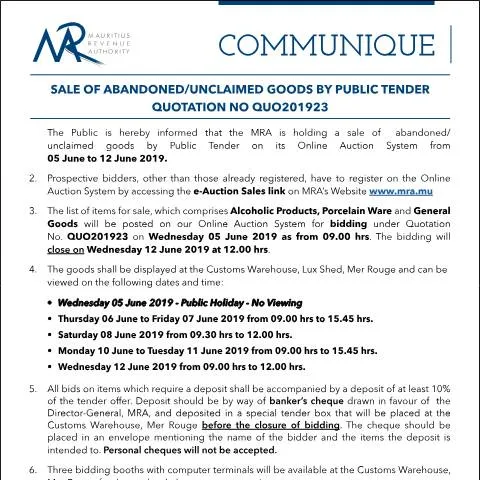
The Sale of Abandoned/Unclaimed Goods by Public Tender is a vital administrative procedure under the jurisdiction of the Mauritius Revenue Authority (MRA). Officially documented as Communique 23 of 2019, this form is integral for prospective bidders looking to acquire goods that have been left unclaimed or abandoned. It is essential to grasp the nuances of this process to navigate it effectively, ensuring compliance and increasing the chances of successful bidding.
The Role of the Form in Public Tender Procedures
This document serves as a gateway for individuals and businesses wishing to participate in a public tender for various abandoned or unclaimed items. The public tender system is not an isolated mechanism, but rather part of a broader framework that promotes transparency and efficiency in asset disposal by the government. To engage in this process, bidders must adhere to specific guidelines set forth by the MRA.
What Makes This Document Unique?
Unlike other forms associated with public procurement or bidding processes, this document focuses solely on abandoned or unclaimed goods. It caters specifically to situations where items are left without ownership claims, often due to customs regulations or uncollected goods. This specific focus differentiates it from documents related to public asset sales or government contracts, underscoring its importance within its niche.
Navigating the Bidding Process: A Step-by-Step Guide
Understanding the bidding process is crucial for successful participation. Here’s a chronological overview of the steps involved:
- Registration: If you’re not already registered on the MRA's Online Auction System, you need to navigate to the e-Auction Sales link on the official MRA website, www.mra.mu, to complete your registration.
- Viewing the Goods: The items for sale will be available for public viewing at the Customs Warehouse, Lux Shed, Mer Rouge. The designated viewing dates include:
- Thursday, 06 June 2019 - 09:00 to 15:45
- Friday, 07 June 2019 - 09:00 to 15:45
- Saturday, 08 June 2019 - 09:30 to 12:00
- Monday, 10 June 2019 - 09:00 to 15:45
- Tuesday, 11 June 2019 - 09:00 to 15:45
- Wednesday, 12 June 2019 - 09:00 to 12:00
- Bidding: Bidding opens on 05 June at 09:00 and closes on 12 June at 12:00. Ensure that your bids are submitted promptly within this timeframe.
- Deposit Submission: For items requiring a deposit, ensure that you submit a banker’s cheque for at least 10% of your tender offer, addressing it to the Director-General, MRA. This cheque should be placed in a sealed envelope with your name and the intended item clearly mentioned.
- Accessing Bidding Booths: If you do not have internet access, MRA provides three bidding booths equipped with computer terminals at the Customs Warehouse, Mer Rouge.
Addressing Issues and Complications
Encountering challenges during any administrative procedure is not uncommon. Here, we outline potential situations you might face and how to address them effectively:
What If Your Application Is Refused?
In the event of a refusal to accept your bid or application, the MRA will typically provide feedback regarding the reasons for this decision. You may appeal this decision by preparing a formal request to the MRA, along with any relevant supporting documents. Understanding the grounds for refusal is crucial for this process.
Handling Errors on Your Form
Should you discover an error on your submission, it is advisable to rectify it immediately. Contact the MRA directly via their customer service channels, and provide them with the correct information. It’s essential to act swiftly to avoid any complications with your bidding status.
Managing Missing Documentation
If you realize that certain documents are missing from your submission, you must provide these as soon as possible. The MRA usually has a clear protocol for accepting additional documents; ensure that you follow their guidelines meticulously to avoid issues.
Essential Documentation and Preparation
Preparation is key to a smooth bidding process. Below is a list of essential documents and materials you may require:
| Document | Description | Required for |
|---|---|---|
| Identity Card | To verify your identity upon entry | Access at Port Main Gate |
| Banker’s Cheque | Must be in favour of Director-General, MRA | To accompany bids requiring a deposit |
| Online Registration Confirmation | Proof of registration on the MRA platform | Necessary for participation |
Practical Implications for Bidders
Engaging in the tender process has both rights and responsibilities for bidders. It is crucial to understand what is at stake:
Rights of Bidders
- The right to access information about the items up for bid.
- The right to participate in viewings prior to bidding.
- The right to a fair bidding process without undue interference.
Obligations of Bidders
- Submission of accurate and complete documentation.
- Timely payment of required deposits.
- Adherence to the bidding timeline and rules as stipulated by the MRA.
Diligence in adhering to these rights and obligations significantly influences the outcome of your bidding experience, impacting whether you secure the desired goods or face penalties.
Exploring Unique Situations: Special Cases
While the general process is straightforward, certain scenarios may require additional consideration:
Foreign Bidders
Foreign individuals or entities wishing to participate must ensure compliance with local regulations. This includes verifying any international bidding requirements and understanding how currency exchange might affect financial transactions. It is advisable to consult with legal counsel familiar with Mauritian law.
Minors and Guardianship
For minors, participation in bidding may necessitate consent from a legal guardian. The guardian must provide necessary documentation proving their relationship and allowing the minor to bid on their behalf. This additional layer protects the interests of minors in financial transactions.
Emergency Situations
In cases where urgent bidding is required, such as a sudden need to liquidate assets or unforeseen circumstances that lead to unclaimed goods, it may be possible to request expedited processing from the MRA. This should be accompanied by proper documentation explaining the urgency.
Concluding Remarks: Maximizing Your Bidding Experience
Successfully navigating the Sale of Abandoned or Unclaimed Goods by Public Tender requires an understanding of the detailed requirements and processes established by the MRA. Proper preparation, awareness of one’s rights and obligations, and addressing any issues promptly are critical elements for any prospective bidder. By adhering to the guidelines set forth in the Communique 23 of 2019, potential bidders can enhance their chances of successfully acquiring valuable items through this public tender process.
For further assistance or to clarify any uncertainties, contacting the MRA via their official communication channels is recommended. This proactive approach will ensure a smoother experience as you engage in this unique aspect of public asset management.
Understanding the Process of Abandoned and Unclaimed Goods
The sale of abandoned or unclaimed goods by public tender in Mauritius is a systematic procedure mandated by the local regulations. Recognizing the difference between abandoned and unclaimed goods is crucial. Abandoned goods refer to items that the owner has willingly relinquished control over, typically without any intention of reclaiming them. In contrast, unclaimed goods are those that remain in possession of a service provider or agency, often after a specified period, with no attempt by the owner to retrieve them.
The legal backing for such sales primarily derives from provisions under the Public Service Act and relevant local government regulations. For instance, after a designated timeframe, if items such as vehicles, machinery, or even furniture remain unclaimed, the responsible authority may initiate the tender process to liquidate these assets efficiently. The Public Service Commission (PSC) and Local Government Service Commission (LGSC) ensure that the procedures align with both the principles of accountability and transparency.
Public notices are usually published in local newspapers and on the official government portals, informing the public about the existence of these goods and the forthcoming sale. This announcement typically outlines the nature of the items, their locations, and the bidding timeline, allowing interested bidders to prepare adequately. It's recommended for potential bidders to inspect the goods before submitting bids, as this can significantly influence their decision-making process.
Eligibility Criteria for Bidders
Engaging in the tender process for the acquisition of abandoned or unclaimed goods in Mauritius entails meeting specific eligibility criteria. Primarily, bidders should be of legal age, which is 18 years, and possess a valid National Identity Card, as facilitated by the MauPass single-sign-on system. This system not only streamlines the application process but also ensures that the identity of all participants is verified against the Central Population Database.
Furthermore, bidders must demonstrate financial viability, as successful bids often require prompt payment of the bid amount upon acceptance. As part of the application process, the authorities may require bidders to provide proof of income or savings, ensuring they can fulfill the payment requirements. Additionally, potential bidders need to abide by any local council regulations, including not being in arrears with local taxes or other statutory obligations, to maintain their eligibility.
It’s pertinent to note that certain categories of individuals may be disqualified from participating in the bidding process. These can include public servants involved in the administration of the sale or individuals with a record of fraudulent activity in previous tenders. Understanding these criteria is essential to avoid disqualification and ensure a smooth bidding process.
Post-Tender Sale Procedures and Responsibilities of Winning Bidders
Once the tender process concludes and a bidder is awarded the goods, several post-sale responsibilities must be adhered to. First and foremost, the winning bidder is required to make the payment for the goods within the specified timeframe, typically outlined in the tender notification. Failure to do so may result in forfeiture of the bid and potential legal ramifications, including being barred from future tenders.
Upon payment confirmation, the winning bidder should collect the goods from the designated location. This process generally involves completing necessary documentation such as the acceptance of the goods (often referred to as PSC Form 9) and any other local authority forms that may be required depending on the nature of the items and their intended use.
Importantly, the bidder assumes full responsibility for the goods once collected, including liability for any damages or losses. This is particularly significant for items such as vehicles or machinery that may require registration or compliance with local regulations post-purchase. Therefore, it is advisable for winning bidders to be aware of any additional costs or obligations associated with the items acquired, such as insurance or maintenance responsibilities.
Lastly, bidders should retain all transactional documentation, as it may be necessary for future reference, particularly concerning any disputes or clarifications regarding ownership or condition of the goods at the time of sale.