Understanding the Essentials of the Sale of Abandoned Goods by Public Tender
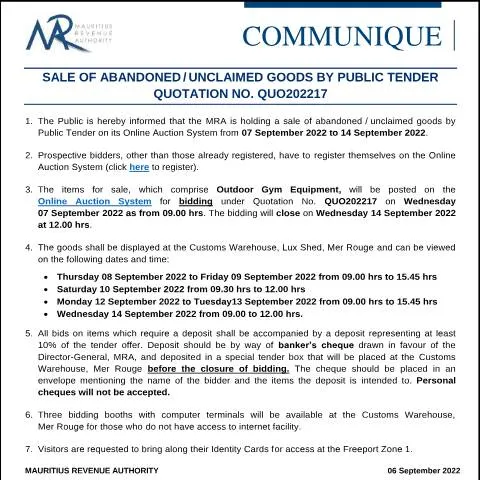
The Sale of Abandoned or Unclaimed Goods by Public Tender, as indicated by Quotation No. QUO202217, presents a unique opportunity for individuals to acquire goods that have been deemed unclaimed. This official document, communicated by the Mauritius Revenue Authority (MRA) on 06 September 2022, outlines the procedures and necessary steps involved in participating in this sale. It is crucial for prospective bidders to be informed and prepared to navigate this process effectively.
The Timeline: Key Dates for Participation
The bidding process is tightly scheduled. It is important for participants to be aware of the key dates to avoid missing out on this opportunity:
- Bidding Opens: 07 September 2022, 09:00 hrs
- Bidding Closes: 14 September 2022, 12:00 hrs
- Goods Viewing Dates:
- 08 - 09 September 2022, 09:00 hrs - 15:45 hrs
- 10 September 2022, 09:30 hrs - 12:00 hrs
- 12 - 13 September 2022, 09:00 hrs - 15:45 hrs
- 14 September 2022, 09:00 hrs - 12:00 hrs
Interested parties should mark these dates on their calendars, as they represent crucial moments within the tender process.
Preparation of Required Documents and Deposits
Before participating in the auction, potential bidders must take care of certain prerequisites to ensure a smooth bidding experience. This includes registration and the preparation of necessary documentation.
Registration on the Online Auction System
It is imperative for prospective bidders who are not already registered on the Online Auction System to complete the registration process. This can typically be accomplished through the MRA’s official online platform.
Understanding Deposit Requirements
For items that require a deposit, bidders must submit a banker’s cheque representing at least 10% of their tender offer. This deposit is a security measure and thus must be adhered to strictly:
- Cheque Instructions: The banker’s cheque must be drawn in favour of the Director-General, MRA.
- Submission of Deposit: Deposits should be placed in a special tender box at the Customs Warehouse, Mer Rouge, prior to the closure of bidding. The cheque must be placed in an envelope indicating the bidder's name and the items for which the deposit is intended.
- Exclusions: Personal cheques are strictly not accepted.
The Role of the MRA in the Tender Process
The Mauritius Revenue Authority assumes a pivotal role in facilitating the sale of abandoned goods. The MRA not only manages the online auction but also oversees the entire tender process to maintain transparency and fairness.
Goods Display and Inspection
Goods for the auction, which, in this instance, include Outdoor Gym Equipment, will be showcased for potential bidders at the Customs Warehouse, Lux Shed, Mer Rouge. Bidders are encouraged to inspect these items during the designated viewing periods to assess their condition and make informed decisions.
Channels for Submission of Bids
Bidders have several options for submitting their bids, which accommodates varying levels of access to technology.
Online Bidding via the Auction System
The primary method for submitting bids is through the Online Auction System. This platform allows for a straightforward bidding experience where bidders can place their offers directly online.
On-site Bidding Booths
For those who may not have reliable internet access, the MRA provides three bidding booths equipped with computer terminals at the Customs Warehouse. This ensures that all interested parties have the opportunity to participate, irrespective of technological constraints.
What to Expect After Submission: Rights and Obligations
Upon successfully placing a bid, several critical outcomes and responsibilities arise for bidders:
Understanding Successful Bids
If a bid is accepted, the bidder is typically required to finalize payment within a stipulated timeframe. Failure to comply could result in forfeiting the deposit and the opportunity to purchase the item.
Obligations of the Bidder
Winning bidders are obligated to collect their purchased goods from the Customs Warehouse within the specified period post-auction. It is essential to plan accordingly, as delays could lead to complications.
Special Cases and Considerations
Certain situations may warrant additional attention or special procedures. Understanding these variations can be beneficial for potential bidders.
Foreign Bidders
Foreign individuals participating in the auction must ensure they present valid identification and comply with any additional verification processes mandated by the MRA.
Minors and Guardianship
In cases where minors wish to place bids, they must do so under the guidance of a legal guardian who can provide necessary approvals and documentation.
Urgent Situations
For those who find themselves in urgent circumstances, it is advisable to contact MRA directly to discuss possible accommodations regarding bidding and payment deadlines.
Final Steps: After the Auction Closes
Once the auction concludes, participants should remain attentive to the following actions:
- Monitor for Notifications: Keep an eye on any communications from the MRA regarding the status of your bid.
- Collecting Purchased Items: Ensure that logistics for picking up the purchased goods are arranged promptly to avoid any administrative issues.
Engaging in the sale of abandoned goods through public tender is not just an opportunity to acquire unique items but also a process that requires diligence and adherence to established protocols. By following the outlined steps and being well-prepared, bidders can navigate this exciting opportunity with confidence.
Understanding the Legal Framework for Abandoned Goods Sale
The sale of abandoned or unclaimed goods in Mauritius is guided by a specific legal framework, ensuring transparency and fairness in the process. The relevant provisions are encapsulated in the Public Tender regulations. The legal basis rests on the Constitution of 1968 and the PSC Act 1955, which dictate the procedural norms for public selling of goods.
Abandoned goods, defined as items left unattended without any intention of reclaiming them, must adhere to strict guidelines. The first step in the process involves confirming the status of an item as abandoned. This entails a thorough verification by authorized personnel from the relevant department, typically the Ministry of Finance or the Local Government authority.
Once an item is confirmed as abandoned, a public tender is initiated, where notice is given to the public. This notice must include details such as the nature of the goods, the location of the sale, and the method of bidding. Typically, this advertisement runs in nationally circulated newspapers and is also published on government portals like govmu.org to ensure there is maximum outreach.
It is crucial for bidders to understand the implications of purchasing these goods. For instance, the ownership rights transferred upon sale do not guarantee the absence of previous claims on the goods. Therefore, prospective buyers are encouraged to conduct thorough due diligence before participating in the tender.
Furthermore, items categorized under special regulations, such as hazardous materials or state property, may have additional restrictions and procedures that need to be followed, highlighting the importance of awareness among potential buyers.
Step-by-Step Process of Bidding for Abandoned Goods
Engaging in the bidding for abandoned or unclaimed goods in Mauritius involves several steps, each meticulously designed to uphold fair practice and accountability. Understanding this process is essential for anyone considering participation.
Announcement of Tender: The process begins with an official announcement regarding the tender. This includes details about the items for sale, the schedule of the bidding process, and the terms and conditions that govern it. The announcement is made public through various channels including government official publications and local newspapers.
Fill in your form directly online
No printing: type your details into the boxes of the official form, tick, then download the PDF ready to send.
- 1Type into the form boxes
- 2Tick in one click
- 3Save and download the PDF
Registration to Bid: Interested bidders must register for the tender by completing the requisite forms, typically available on the PSC website or appropriate government portal. This may involve providing personal identification details, including the National ID number, particularly as part of the MauPass system.
Viewing of Goods: Prospective bidders are usually given the opportunity to inspect the goods prior to placing their bids. This viewing period is crucial as it allows bidders to ascertain the condition and value of the items. Dates and times for viewing are specified in the tender announcement.
Submission of Bids: Bids must be submitted in writing according to the guidelines specified in the tender notice. Each bid should include the bidder’s offer amount, personal details, and any required documentation that proves eligibility to participate. It is important to note that bids must be submitted before the deadline, as late submissions are typically disqualified.
Opening of Bids: After the submission period closes, the bids are opened publicly. This is often conducted in the presence of the bidders and relevant authorities to ensure transparency in the process. The highest bid that meets the criteria set forth in the tender document is typically awarded the contract for the purchase of the goods.
Payment and Transfer of Ownership: Upon winning the bid, the bidder is required to make the payment within a specified period. Instructions regarding payment methods are provided in the tender documentation. Once payment is confirmed, ownership of the goods is formally transferred to the buyer, potentially with the issuance of a receipt or bill of sale.
Understanding these steps and preparing accordingly can significantly enhance a bidder's chances of successfully acquiring abandoned goods while ensuring compliance with legal requirements.
Impact of Digitalization on the Tendering Process
The push towards digitalization in Mauritius has markedly transformed the tendering process for abandoned and unclaimed goods. Digital platforms facilitate greater accessibility, transparency, and efficiency in public tenders, aligning with the government's strategic initiatives to enhance e-services.
The integration of digital systems allows prospective bidders to access tender announcements, submission forms, and related documentation online without the need for physical visits to government offices. This not only simplifies the bidding process but also democratizes access, allowing a broader spectrum of participants, including individuals and small businesses, to engage in public tenders.
Moreover, the digitalization process ensures that the entire procedure is traceable. Each step, from the announcement of tenders to the opening of bids, can be documented digitally. This level of traceability reduces the incidence of fraud and enhances public trust in the process. Bidders can track their submissions and receive real-time updates regarding the status of their bids, which adds an additional layer of transparency.
Additionally, the use of e-payment systems associated with the MauPass framework streamlines the payment process, allowing successful bidders to complete transactions swiftly and securely. This is particularly beneficial in a landscape where timely payments are crucial for the successful transfer of ownership.
Furthermore, digitalization fosters better communication between government departments and bidders. Any changes or updates regarding tender details can be communicated instantly through digital channels, ensuring that all parties remain informed.
In conclusion, the transition towards a more digital approach is not just a modernization effort; it is a substantial enhancement of the entire public tendering process for abandoned goods in Mauritius. This evolution promises to improve efficiency and accessibility while maintaining the integrity of the tendering system.