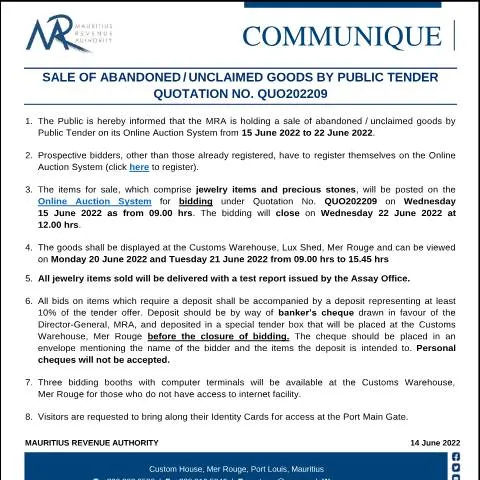
The Significance of Public Tender Sales in Mauritius
The sale of abandoned or unclaimed goods by public tender represents a crucial mechanism by which the Mauritius Revenue Authority (MRA) seeks to manage surplus assets while providing an opportunity for the public to acquire valuable items. Such sales are not merely transactions; they reflect a broader commitment to transparency and efficiency in public asset management. By facilitating these sales, the MRA contributes to the country's economic landscape, ensuring that items which could otherwise languish are put to effective use, thereby benefiting both the state and the community.
Understanding the Context: Legal Framework for Abandoned Goods
This initiative is guided by legal frameworks established under the Customs Act and various provisions of local law that outline how abandoned or unclaimed goods are to be treated. The Public Tender Sale, specifically referenced as Quotation No. QUO202209, provides a structured approach, ensuring that all transactions are conducted openly and fairly.
The procedures surrounding this form stem from the necessity to give life back to items deemed abandoned, in line with regulations aiming for community engagement and the prudent use of government resources. This includes adherence to the legal stipulations set forth in the relevant statutes which define what constitutes abandoned or unclaimed goods, the rights of the MRA in handling these goods, and the processes for public notifications and bid submissions.
A Closer Look at the Bidding Process
The public tender for the sale of abandoned goods involves a systematic process that prospective bidders must navigate. Here’s a detailed breakdown:
- Registration: Interested parties must register on the Online Auction System, which facilitates the bidding process. This step is crucial as it ensures that only eligible bidders can participate in the auction.
- Viewing of Goods: The goods, primarily jewelry and precious stones, are displayed at the Customs Warehouse, Lux Shed, Mer Rouge, offering potential bidders an opportunity to inspect the items prior to placing bids.
- Bidding Period: Bidding commences at 09:00 hrs on 15 June 2022 and closes at 12:00 hrs on 22 June 2022. All bids must be submitted within this timeframe, emphasizing the importance of punctuality.
- Deposit Requirements: Bidders must submit a deposit of at least 10% of their tender offer, payable via banker’s cheque, thereby ensuring serious participation.
Key Sections of the Quotation No. QUO202209 Form
When filling out the official form for participation in the tender, bidders need to pay attention to specific sections. Each section has its own significance and must be completed accurately to avoid disqualification. Here are the critical elements:
- Bidder Information: Full name and contact details of the bidder. Accuracy here is essential, as any discrepancies can lead to complications during the auction.
- Item Selection: Clearly indicate the specific items the bidder is interested in. This section requires meticulous attention, as errors can result in missed opportunities.
- Deposit Amount: Make sure to calculate the correct deposit amount based on the items selected. The 10% rule is a straightforward guideline, but miscalculations can disqualify bids.
- Terms and Conditions Acknowledgment: Bidders must confirm their understanding and acceptance of all terms related to the auction. This includes being aware of the consequences of their bids.
What Happens After Submission?
Once the bids are submitted, several procedures are set in motion:
- Bid Evaluation: The MRA conducts an evaluation of all bids received in accordance with the established criteria.
- Notification of Winners: Successful bidders will be informed promptly following the closure of the bidding period.
- Payment and Collection: Winners are required to settle their payments for the items acquired, after which arrangements for the collection of goods can be made.
Addressing Common Concerns: What If Issues Arise?
Prospective bidders may worry about potential issues that could impede their ability to participate. Here’s how to address common concerns:
- Missing Documents: If you find any required documents are missing after submission, it's advisable to contact the MRA directly to ascertain if there are alternatives or extensions available.
- Disqualification Reasons: Understanding the reasons that lead to disqualification can help bidders avoid similar pitfalls in the future. Typically, issues arise from incomplete forms or incorrect deposit amounts.
- Appeal Process: If a bid is rejected, bidders can inquire about the possibility of an appeal. The MRA usually provides a clear channel for such communications, reinforcing their commitment to fairness.
Comparing Public Tender Sales with Other Procurement Methods
In Mauritius, other forms of procurement exist, including private sales and direct negotiations. It’s essential to distinguish public tender sales from these methods:
| Method | Transparency | Accessibility | Regulatory Oversight |
|---|---|---|---|
| Public Tender | High | Open to all registered bidders | Strong |
| Private Sale | Low | Limited to selected parties | Minimal |
| Direct Negotiation | Medium | Depends on the situation | Variable |
This table highlights the advantages of public tender sales in terms of transparency and regulatory oversight, making it a preferred choice for many stakeholders.
Engaging with the Tender Process: The Role of Technology
In today's digital age, technology plays a paramount role in facilitating the tender process. The MRA's Online Auction System is designed not only for ease of use but also enhances the security and efficiency of transactions. Here’s how technology is leveraged:
- Real-Time Bidding: Bid updates and notifications are provided in real time, allowing participants to make informed decisions swiftly.
- Remote Participation: Bidders can engage in the auction from any location, provided they have internet access, which broadens the scope of participation.
- Secure Transactions: The online system safeguards personal and financial information, ensuring that bidders’ data remains confidential and protected from unauthorized access.
Special Cases: Understanding Bidding for Foreign Participants
Foreign bidders interested in participating in the auction should be aware of specific considerations:
- Eligibility Criteria: Ensure that you meet all eligibility criteria set by the MRA, which may include specific identification or registration requirements.
- Currency Considerations: Bids must be made in Mauritian Rupees (MUR), and foreign participants should be prepared to handle currency exchange as needed.
- Legal Compliance: Foreign participants must adhere to all local laws and regulations that govern the purchase of goods in Mauritius.
Concluding Insights: The Value of Participation in Public Tenders
Participating in public tenders like the one delineated in Quotation No. QUO202209 offers a unique opportunity for both individuals and businesses to acquire valuable items while supporting a well-regulated system of asset management in Mauritius. For those looking to engage in this process, paying attention to the outlined steps, understanding the requirements, and leveraging technology will enhance the chances of a successful bidding experience.
Understanding the Legal Framework for Abandoned Goods Sales
The sale of abandoned or unclaimed goods by public tender in Mauritius is governed by a specific legal framework aimed at facilitating the disposal of such items while ensuring transparency and fairness in the process. This procedure is primarily administered under the provisions set forth in the relevant acts, notably the Public Procurement Act 2006, alongside the guidelines established by government entities responsible for the management of abandoned goods.
The legal basis for the sale of these goods includes compliance with the principles of public procurement as articulated in the Constitution of Mauritius and the Public Procurement Guidelines. These principles ensure that the sale process is conducted through a competitive tendering system that encourages participation from the public while safeguarding the interests of the state and the rightful owners, where applicable.
Additionally, it is essential for interested parties to be aware of the specific conditions under which goods are declared abandoned. Typically, a good is classified as abandoned after a period of non-claim by the owner, which is usually established by the relevant authority after thorough investigation. Establishing ownership may be necessary in certain cases, particularly if items were left in the custody of a public entity for an extended period. As such, the authorities will conduct due diligence to determine the rightful ownership before proceeding with the tender sale.
The Process of Public Tender for Unclaimed Goods
The process for the sale of unclaimed or abandoned goods via public tender involves several key stages, each designed to ensure a structured and transparent sale. Initially, the relevant public authority, such as the Ministry of Finance or the Mauritius Revenue Authority (MRA), will identify the goods that are to be sold. This identification process is crucial, as it determines which items will be included in the tender sale.
Fill in your form directly online
No printing: type your details into the boxes of the official form, tick, then download the PDF ready to send.
- 1Type into the form boxes
- 2Tick in one click
- 3Save and download the PDF
Subsequently, a public notification is issued, detailing the upcoming tender. This notification typically includes essential information such as the date and time of the tender opening, the location where the goods can be inspected, and the registration requirements for interested bidders. It is important for potential bidders to pay close attention to these details, as they outline the parameters within which the tender will be conducted.
After the public notification, the bidding process commences. Interested parties must prepare their tender submissions according to the specifications outlined in the notification. This often involves completing the relevant forms, such as PSC Form 7, and providing documentation that verifies the bidder's eligibility to participate in the tender. A key aspect of this phase is meeting the submission deadline, as late entries are typically disqualified.
Once all bids are submitted, they are evaluated by a designated committee. The evaluation process considers various factors, including the proposed price, the bidder's financial capability, and adherence to the submission requirements. The successful bidder is then awarded the goods, and arrangements for payment and collection are finalized. It's also crucial for bidders to understand the implications of the sale, including any subsequent responsibilities associated with ownership.
Post-Tender Obligations and Responsibilities
Once the tender process concludes and the successful bidder has acquired the abandoned goods, several obligations arise that must be fulfilled to ensure compliance with local laws and regulations. Primarily, the new owner must ensure the goods are appropriately registered, especially if they pertain to vehicles or other regulated items. This registration process typically involves attending the relevant authorities, such as the National Transport Authority, to update ownership details.
Moreover, the successful bidder is responsible for any costs associated with the transport and storage of the goods following the sale. Depending on the nature of the goods, such as heavy machinery or vehicles, these costs can vary significantly and should be factored into the overall expenditure when deciding to participate in the tender. It is advisable for bidders to conduct an assessment of these potential costs, as they may impact the overall viability of the purchase.
Furthermore, it is crucial to note that any goods sold through the tender process may have outstanding taxes or fees associated with them. For example, unclaimed vehicles may carry unpaid road tax or penalties. New owners should promptly inquire with the Mauritius Revenue Authority to clarify any outstanding dues that may be attached to the goods and take necessary measures to settle these obligations to avoid future complications.
Finally, it is important for new owners to be aware of the possibility of previous claims on the goods. While the public tender system aims to clear abandoned goods, legitimate claims may arise from former owners seeking to reclaim their possessions. In such cases, the new owner must be prepared to provide evidence of the tender purchase and may need legal assistance to address any disputes that arise.