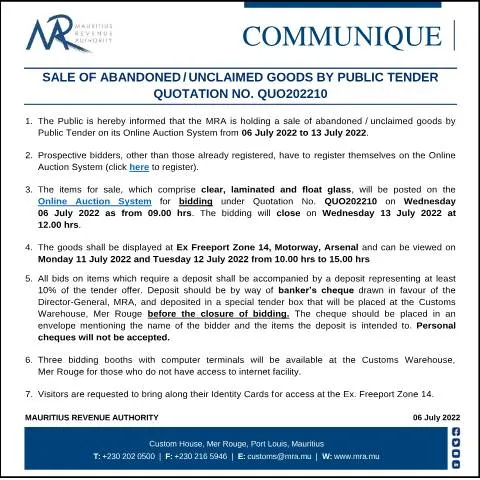
A Deep Dive into the Sale of Abandoned and Unclaimed Goods: The Public Tender Process
Imagine you’re an entrepreneur looking to expand your business, and you stumble upon a rare opportunity to acquire unclaimed goods at prices that can significantly enhance your inventory. The Mauritius Revenue Authority (MRA) presents an avenue for such acquisitions through its Public Tender for the sale of abandoned and unclaimed goods, a process meticulously outlined in the Communique QUO202210. This initiative not only aids the MRA in clearing out goods but also opens a marketplace for savvy bidders.
The Historical Context: Why This Tender Exists
The necessity for regulating abandoned goods dates back to the establishment of the MRA, which was founded to manage the administration of fiscal policies in Mauritius. Over the years, the accumulation of unclaimed goods has necessitated structured processes to promote fair competition and transparency. As specified in the Public Service Act and guided by established practices under both French civil law and English common law, this tender process allows for the responsible disposal of goods that could otherwise clutter storage facilities.
Legal Framework Supporting the Tender
The legal foundation for the sale of such goods is entrenched in the MRA's guidelines, which marry the principles of public accountability with operational efficiency. The Public Tender format not only adheres to the principles outlined under the Constitution of 1968 but also follows the Public Procurement Act of 2006, which mandates competitive bidding. This ensures that all prospective bidders have equal access to participate in the auction process.
Who Takes Part? The Profiles of Potential Bidders
This tender process is open to a diverse array of bidders, encompassing both individuals and companies, who seek to make the most of this unique opportunity. However, there are important considerations to keep in mind based on the bidder's profile.
General Eligibility
- Individuals: Must be at least 18 years old and possess a valid form of identification (National ID).
- Corporate Entities: Must provide proof of business registration and tax compliance.
Specific Cases
In addition to general eligibility, there are specific scenarios that may influence participation:
- Foreign Bidders: Must provide legal documentation affirming their eligibility to bid in Mauritius, including compliance with local laws.
- Minors: Can only participate through legal guardians or representatives who can act on their behalf in the tender process.
- Complex Situations: Bidders involved in bankruptcy or pending litigation may face restrictions and should consult legal advice prior to participation.
Understanding the Tender Process: A Step-by-Step Guide
Participation in this tender requires a systematic approach, beginning with registration and culminating in the submission of bids. Below is a chronological breakdown of the steps involved:
Step 1: Registration on the Online Auction System
To participate in the tender, prospective bidders must first register on the MRA’s Online Auction System. This first step is crucial and must be completed ahead of the bidding period. Registration can be initiated through the MRA website, ensuring all required information is accurately provided.
Step 2: Reviewing Available Goods
Once registered, bidders can access the details of the goods available for auction under Quotation No. QUO202210, starting from July 6, 2022. It is essential to meticulously review the descriptions and conditions of items listed for sale, which can include a variety of goods such as clear, laminated, and float glass.
Step 3: Viewing the Goods
All prospective bidders have the opportunity to inspect the items physically at the Ex Freeport Zone 14 on specific dates, which for this tender are July 11 and 12, 2022. Viewing these items firsthand can significantly influence bidding decisions.
Step 4: Bidding Process
The actual bidding occurs from July 6 to July 13, 2022, with the closing time set for 12:00 hrs on the final day. It is important to note that any bid made must come with a deposit of at least 10% of the tender offer, secured via a banker’s cheque made out to the Director-General, MRA.
Depositing Bids: Compliance and Procedures
As part of the bidding process, understanding the deposit mechanism is imperative. Failure to comply with the requirements can lead to disqualification from the tender process.
Deposit Requirements
- Deposits must be made using a banker’s cheque, as personal cheques will not be accepted.
- The cheque should be placed in an envelope detailing the bidder's name and the items to which the deposit pertains.
- Deposits must be submitted at the Customs Warehouse, Mer Rouge, before the bidding closes.
Utilizing Alternative Bidding Facilities
For those without internet access, the MRA provides computer terminals at the Customs Warehouse to facilitate participation in the bidding process. This ensures inclusivity, allowing individuals from all backgrounds to partake in the auction.
What Happens After the Bidding? Following Up on Your Tender Submission
Once the bidding closes, the MRA undertakes a systematic evaluation of all bids received. Successful bidders will be notified promptly regarding their success or failure in the tendering process.
Post-Bidding Communication
All bidders, whether successful or not, will receive formal communication from the MRA. For successful bidders, this communication will detail the next steps, including payment instructions and item collection procedures.
Payment and Collection of Goods
Upon payment of the remaining balance, bidders can arrange for the collection of their purchased items. It is important to adhere closely to the timelines provided by the MRA to avoid any penalties or loss of the winning bid.
Keys to a Successful Bid: What Bidders Must Keep in Mind
To ensure a smooth bidding experience, prospective bidders should be aware of several crucial points:
Preparation is Key
- Thoroughly review the conditions of goods listed for sale to avoid surprises.
- Ensure all documents required for registration are readily available.
Monitor Timelines Closely
The tender is time-sensitive. Bidders must be diligent about deadlines for registration, bidding, and deposit submission. Late submissions can lead to disqualification.
Engage with the Process
For clarification on any aspects of the process, bidders are encouraged to contact MRA directly. Early engagement can prevent misunderstandings and ensure a smoother experience.
Additional Considerations for Foreign Bidders
Foreign participants looking to bid on abandoned or unclaimed goods must navigate additional layers of regulations. These include:
Legal Documentation
- Complying with local laws and regulations regarding foreign ownership of goods.
- Obtaining necessary permits or approvals from the relevant Mauritian authorities.
Tax Implications
Foreign bidders are subject to specific tax obligations that may arise from their bids. It is advisable to consult with a tax professional to ensure compliance with local tax regulations.
Conclusion: Embracing the Opportunity
The sale of abandoned goods through public tender represents a unique opportunity for individuals and businesses alike. By understanding the rules, regulations, and procedural nuances involved, bidders can navigate this process effectively. As the MRA continues to champion transparency and fair practice in these transactions, participants are encouraged to engage fully and responsibly in what could be a lucrative venture.
Understanding the Legal Framework for Abandoned Goods Sales
The process for the sale of abandoned or unclaimed goods by public tender in Mauritius is governed by specific legal provisions, primarily outlined in the Sale of Goods Act and the relevant regulations set forth by the Ministry of Finance. When goods are considered abandoned, it usually involves a lack of ownership claims or where the owner has failed to retrieve their property after a designated period. This legal framework ensures that the rights of original owners are considered while also allowing for the state to utilize these goods effectively.
Fill in your form directly online
No printing: type your details into the boxes of the official form, tick, then download the PDF ready to send.
- 1Type into the form boxes
- 2Tick in one click
- 3Save and download the PDF
One important aspect to note is the criteria set forth for determining whether goods can be classified as abandoned. Typically, this includes considerations such as:
- The duration for which the goods have been unclaimed, often specified as a minimum period post-notification.
- The nature of the goods, including whether they pose a safety risk or have perishable quality.
- The legal ownership status as verified by relevant authorities.
Additionally, public tenders for abandoned goods must adhere to the principles of transparency and fairness. The government must provide adequate notice of the tender process, ensuring that it is accessible to a broad audience, thus promoting competition and fair pricing. Interested parties are invited to submit bids, which will be evaluated based on predetermined criteria.
Steps Involved in the Public Tender Process for Abandoned Goods
The public tender process for abandoned or unclaimed goods involves several critical steps, ensuring that all procedures align with the regulatory framework. This series of actions, outlined below, must be followed meticulously to maintain compliance and uphold public trust:
- Advertisement of Tender: The Ministry of Finance or the relevant authority must issue a formal announcement regarding the public tender. This advertisement should be displayed in prominent local newspapers, the government’s official website, and potentially through public notices in community centers to reach a wider audience.
- Submission of Bids: Interested buyers must submit their bids within the timeline specified in the tender announcement. Bids typically require bidders to provide essential information such as identification details (e.g., National ID Number), the bid amount, and any intentions for the use of the goods. Bidders may also need to fill out specific forms such as Tender Form No. 1, which outlines their compliance with tender requirements.
- Evaluation of Bids: Once the submission deadline has passed, a designated committee will evaluate the bids. This evaluation process focuses on several factors including the bid amounts, potential usage plans, and compliance with the specified tender conditions. Only bids that meet all criteria will be shortlisted for consideration.
- Awarding of Contract: The successful bidder will be notified and required to sign a contract to formalize the sale. This contract should detail the terms of sale, including payment schedules and conditions governing the transfer of ownership.
- Payment and Collection: The final step is the payment for the goods and the subsequent collection. Once payment is confirmed, necessary documentation will be provided to facilitate the transfer of ownership.
It is also essential for bidders to keep abreast of any updates related to the tender process. Notifications regarding changes or additional requirements may be communicated through official channels, and bidders should ensure that they fulfill these requirements to avoid being disqualified.
Implications for Businesses and Individuals Engaging in Tender Purchases
Participating in the purchase of abandoned or unclaimed goods through public tender may present various opportunities and challenges for both businesses and individuals. Understanding these implications is crucial for making informed decisions during the bidding process.
For businesses, acquiring goods through public tenders can serve as a cost-effective method to diversify inventory, particularly for retail operations. Items acquired can range from electronics to vehicles, depending on what is available. However, one should be cautious about the condition of these goods, as they may require repairs or refurbishment before they can be resold.
Moreover, businesses must consider the legal implications associated with purchasing abandoned goods. Ensuring that proper due diligence is conducted to ascertain that the items are indeed unclaimed and free from legal encumbrances is vital to avoid potential disputes with original owners or regulatory authorities.
On the other hand, individuals interested in participating in these tenders should be aware of the financial considerations involved, including the potential need for a deposit upon bid submission. Individuals must assess their willingness to invest in potentially uncertain assets, emphasizing the importance of thoroughly understanding the terms set forth in the tender documentation.
Participation in these tenders also provides an opportunity for local communities to play a role in re-utilizing resources that would otherwise remain idle. By engaging with the tender process, community members can contribute to sustainable practices and promote responsible consumption.