Navigating the Waters of Abandoned Goods: Understanding the Tender Process
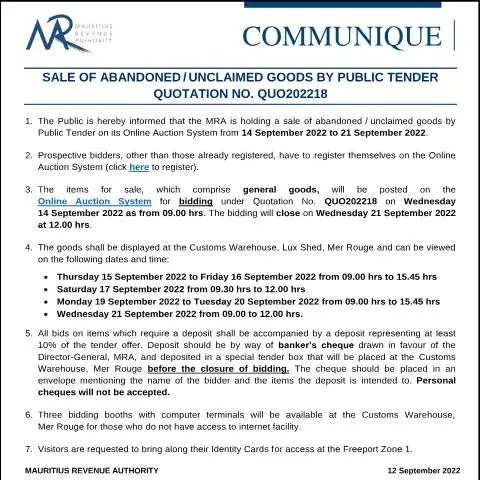
In the vibrant marketplace of Mauritius, opportunities often arise in unexpected places. One such opportunity is the sale of abandoned or unclaimed goods, which is now available through a structured public tender process orchestrated by the Mauritius Revenue Authority (MRA). This process, encapsulated in Quotation No. QUO202218, invites interested bidders to participate in an online auction from 14 September 2022 to 21 September 2022. But who are the players in this intricate process, and what does it entail?
Profile of Potential Bidders: Who Can Participate?
The scope of participation in this tender is broad, attracting a range of individuals and businesses eager to acquire goods that have been deemed abandoned. Understanding the profile of potential bidders is essential.
Individuals: The Everyday Bidder
- Individuals looking for personal items, collectibles or valuable goods.
- Hobbyists searching for rare finds to enhance their collections.
Small to Medium Enterprises: Business Opportunities
- Retailers aiming to stock their shelves affordably with goods.
- Wholesalers interested in reselling items at a profit.
Exceptions: Who Should Not Bid?
While the tender is open to all, there are exceptions. Individuals who are:
- Currently employed by the MRA.
- Involved in the procurement process of the tender.
are excluded from bidding to maintain fairness and integrity in the process.
The Legislative Framework: Grounding the Tender Process
The tender process for abandoned and unclaimed goods is rooted in a legal framework designed to manage and regulate public assets fairly. The MRA operates under various statutes, and the process is informed by a hybrid legal system that combines French civil law with English common law principles.
Historical Context and Legal Basis
Historically, the management of abandoned goods has been rooted in principles aimed at ensuring rightful ownership and equitable distribution. The Constitution of 1968 and subsequent laws, particularly the Public Service Commission Act 1955, establish the parameters within which such tenders are conducted.
These legal provisions ensure that the process of auctioning unclaimed goods is transparent, and every eligible bidder gets a fair chance at acquiring items.
Understanding the Tender Form: A Step-by-Step Breakdown
Completing the relevant tender form, which is an essential document in this process, requires careful attention to detail. This section will dissect the form to ensure bidders can navigate it effectively.
Key Sections of the Form
| Section | Description | Common Pitfalls |
|---|---|---|
| Bidder Information | Personal details including name, address, and ID number. | Omitting required information, leading to disqualification. |
| Item Selection | Specifications of the items bid on. | Incorrect item codes or descriptions can invalidate bids. |
| Deposit Section | Details about the deposit amount and payment method. | Not adhering to the deposit guidelines (e.g., using personal cheques). |
| Bid Amount | Proposed amount for the items. | Bidding below the minimum bid threshold. |
Deposit Requirements: Navigating Financial Commitments
A crucial component of the tender is the deposit. Each bid must be accompanied by a deposit of at least 10% of the tender offer. This deposit:
- Should be in the form of a banker’s cheque made out to the Director-General of the MRA.
- Must be submitted in a special tender box at the Customs Warehouse before the bidding closes.
Failure to comply with these deposit requirements will result in the rejection of the bid.
The Bidding Process: A Timeline of Key Events
Understanding the timeline from the commencement of the bidding to the announcement of winners is paramount for prospective bidders. Here is a detailed breakdown of the key dates and activities related to Quotation No. QUO202218:
Pre-Bidding Phase
- Registration: Bidders must register on the Online Auction System before participating.
- Viewing Days: Scheduled from 15 to 21 September 2022 where bidders can inspect the items physically at the Customs Warehouse.
Bidding Phase
- Bidding Opens: 14 September 2022 at 09:00 hrs.
- Bidding Closes: 21 September 2022 at 12:00 hrs.
- Final Deposits: All deposits must be in place by the close of bidding.
Post-Bidding Process: Following Up on Your Bid
Once the bidding process concludes, what follows is equally important. Bidders should be aware of the subsequent steps and how to monitor their bids.
Bid Evaluation and Notification
The MRA carefully evaluates all bids submitted during the auction. Successful bidders will be notified through the email address registered during their bid submission. This notification will include:
- Confirmation of the successful bid.
- Instructions regarding the payment of any remaining balances.
- Collection details for the awarded items.
What If Your Bid Is Unsuccessful?
In the event of an unsuccessful bid, participants can expect a notification as well, which will often include feedback on their bid. Importantly, the deposit will be refunded automatically within a specified timeframe, usually within two weeks after the auction's conclusion.
Integration of the Tender in a Broader Context
The tender process for abandoned goods does not exist in isolation. It is part of a larger framework that promotes responsible stewardship of unclaimed items, enhancing the economy by enabling the recycling of goods, and encouraging participation from various sectors.
Contributing to Sustainable Practices
This process reflects a commitment to sustainability and resource management, as it offers a second chance for goods that would otherwise remain unused. By facilitating these sales, the MRA not only alleviates the burden of storage for abandoned items but also promotes a culture of reuse that aligns with global sustainability goals.
Conclusion: Embracing the Opportunity
The tender for abandoned and unclaimed goods represents a unique opportunity for individuals and businesses alike in Mauritius. By understanding the nuances of the bidding process, adhering to the necessary protocols, and engaging with the legal frameworks in place, bidders can successfully navigate this auction landscape.
Ultimately, the road from the bid submission to potential ownership of valuable goods is paved with clarity and transparency, allowing Mauritius to turn the tide on abandoned goods and transform them into tangible opportunities.
Understanding the Public Tender Process for Abandoned Goods
The sale of abandoned or unclaimed goods in Mauritius follows a structured public tender process, designed to ensure transparency and fairness. Public tenders allow individuals and businesses to submit bids on goods that have been left unclaimed, often within a specific timeframe, as mandated under the relevant legislation. This process is grounded in legal frameworks that stipulate how abandoned items are to be handled, including auctions and the collection of bids.
Initially, it is crucial to identify the relevant authority involved in the sale, which may either be the Ministry of Finance or another designated governmental agency. Interested parties must be aware of the specifics of the tender, including submission deadlines, the format of the bid submissions, and the method of payment. Tenders are typically published in local newspapers and official government websites, ensuring that a wide audience is reached.
To participate in the tender, bidders are required to fill out specific forms, such as the Tender Submission Form (often referred to as Form 1), which must include detailed personal or company information, the proposed bid amount, and any conditions the bidder wishes to stipulate. All submissions are assessed based on compliance with the tender requirements, financial viability, and sometimes even the bidder's previous experience in similar transactions.
Moreover, bidders must be prepared to provide a deposit, usually a percentage of their proposed bid, which acts as a security measure and ensures that only serious bids are considered. The full payment details, including accepted forms of payment, should be clarified in the tender invitation. For a successful bidder, arrangements for the collection of the items must be made within a specific timeframe post-tender award, and bidders should keep in mind that failure to comply may lead to penalties or forfeiture of their deposit.
Fill in your form directly online
No printing: type your details into the boxes of the official form, tick, then download the PDF ready to send.
- 1Type into the form boxes
- 2Tick in one click
- 3Save and download the PDF
Legal Implications of Purchasing Abandoned Goods
Engaging in the purchase of abandoned or unclaimed goods through public tender carries several legal considerations that potential bidders must be aware of. Firstly, successful bidders need to understand that the purchase does not automatically confer ownership rights over certain items, especially if there are claims from previous owners or third parties. There are legal processes in place to address these claims, and bidders should be prepared to navigate these complexities.
Furthermore, it is essential to review the terms of sale outlined in the tender documentation. These terms will specify whether the goods are sold as-is, meaning the buyer assumes all liabilities associated with the items. In such cases, it is advisable for bidders to conduct thorough due diligence before committing to a bid, which may include inspecting the items or reviewing their condition as stated in the tender notice.
Another significant consideration involves regulatory compliance, particularly concerning items that may be subject to specific laws or restrictions, such as electronics, vehicles, or hazardous materials. Bidders should ensure that their intended use of the goods complies with local regulations, as violations can lead to legal repercussions. Additionally, depending on the nature of the goods, permits or licenses may be required before the items can be legally owned or sold again.
Should any disputes arise post-purchase, whether regarding ownership or compliance, bidders may find themselves entangled in legal proceedings. Legal advice is highly recommended to address and mitigate these risks effectively. Understanding the implications of purchasing abandoned goods through public tender is crucial for ensuring a smooth transaction and avoiding unforeseen challenges.
After the Purchase: Responsibilities and Obligations
Once an auction for abandoned or unclaimed goods concludes and a bid is successfully accepted, the responsibilities do not end there. Successful bidders must adhere to a set of obligations to ensure compliance with local laws and regulations. Foremost among these responsibilities is the timely payment for the goods, which must be settled according to the stipulated terms in the tender documents.
After the payment, arrangements for the collection of the purchased goods must be made promptly. The tender documents will generally outline a specific period within which the goods must be collected; failure to do so may result in additional charges, or, in some cases, the annulment of the sale. Bidders should ensure they have the necessary transportation methods in place and be prepared for any logistical challenges that may arise during this process.
Furthermore, new owners of these goods must also be aware of any post-purchase obligations that may apply, such as registering items that require registration (like vehicles) or obtaining requisite licenses if the items fall under regulated categories. This is particularly true for commercial entities looking to resell or utilize these goods in a business context.
In addition to logistical and registration tasks, successful bidders must maintain accurate records of their purchases for tax and accounting purposes. Given that the fiscal year in Mauritius runs from 1 July to 30 June, bidders should keep this in mind when preparing for potential tax implications arising from their transactions.
Lastly, engaging with the community and maintaining good relationships with local authorities can be beneficial. Successful bidders should be proactive in communicating with relevant departments for any regulatory updates or changes regarding abandoned goods, ensuring they stay informed and compliant with all ongoing obligations.