Unlocking Opportunities through the Sale of Abandoned Goods
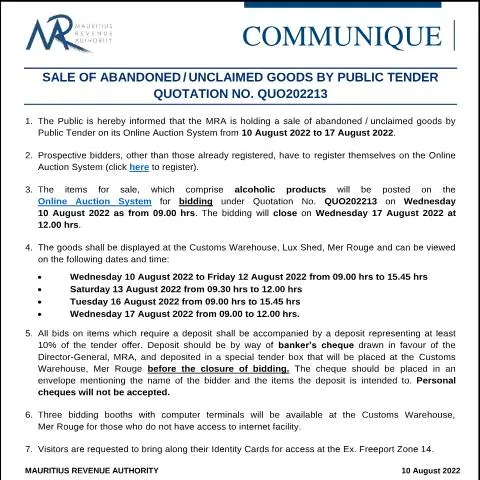
The Sale of Abandoned or Unclaimed Goods by Public Tender, as per Quotation No. QUO202213, opens the door for various stakeholders to acquire items that have been left unattended. Initiated by the Mauritius Revenue Authority (MRA), this event not only serves the purpose of clearing out storage but also presents a unique opportunity for bidders interested in obtaining undervalued goods.
Contextual Overview of the Auction Process
The auction period extends from 10 August 2022 to 17 August 2022, during which potential bidders can access the Online Auction System to place their bids. These goods, primarily comprising alcoholic products, will be showcased for public viewing at the Customs Warehouse, Lux Shed, Mer Rouge, between specified dates prior to the bidding's official commencement.
Understanding the Timeline
- Public Notice Issued: Announced on 10 August 2022.
- Registration for Bidders: All prospective bidders must register on the Online Auction System.
- Viewing Period: The goods can be viewed from 10 August to 17 August 2022, with specific timings outlined later.
- Bidding Window: Opens on 10 August at 09:00 hrs and closes on 17 August at 12:00 hrs.
Critical Steps for Participation
Engaging in this auction involves several vital steps that potential bidders must navigate with care. A comprehensive understanding of each stage ensures a smooth bidding experience.
Step 1: Registration on the Online Auction System
Before participating, bidders must register on the Online Auction System. This process is crucial to gain access to the auction platform.
Step 2: Review Auction Items
Once registered, bidders are encouraged to review the items listed for bidding. The MRA posts detailed descriptions and images of the goods, which will be available for viewing in person at the Customs Warehouse.
Step 3: Inspecting Goods
Potential buyers can inspect the items during the designated viewing periods:
- 10 August 2022 to 12 August 2022: 09:00 hrs - 15:45 hrs
- 13 August 2022: 09:30 hrs - 12:00 hrs
- 16 August 2022: 09:00 hrs - 15:45 hrs
- 17 August 2022: 09:00 hrs - 12:00 hrs
It's advisable to take notes regarding condition and valuation to prepare competitive bids.
Preparing Your Bid Submission
A well-prepared bid can significantly enhance the likelihood of success. The submission must be meticulously completed to avoid disqualification.
Key Components of the Bid
When preparing your bid, consider the following mandatory components:
- Bidding Amount: Clearly state the amount you are willing to bid for each item.
- Deposit Requirement: A deposit of at least 10% of the bid must be attached. This deposit should be in the form of a banker’s cheque made payable to the Director-General, MRA.
- Envelope Specifications: Ensure that the cheque is enclosed in an envelope labeled with your name and the items for which the deposit corresponds.
Where to Submit Your Bid
Bids must be physically deposited in a special tender box located at the Customs Warehouse, Mer Rouge, before the bidding closure. Please note that personal cheques will not be accepted.
What Happens After Submission?
Once bids are submitted, participants await the outcome of the auction. This can be a period of heightened anticipation.
Bid Review and Acceptance Process
The MRA evaluates all bids post-closure and will notify successful bidders. Any item bids that do not meet the minimum requirements or fail to follow submission regulations will be rejected.
Addressing Potential Issues
Despite thorough preparation, bidders might encounter issues such as bid rejection or discrepancies in submitted documents. Understanding the protocol for addressing these situations is vital.
Common Reasons for Bid Rejection
- Insufficient deposit amount.
- Failure to submit the bid envelope correctly labeled.
- Inaccuracy in the bid amount specified.
- Non-compliance with auction rules.
Rectifying Errors or Incomplete Submissions
In the event of an error, bidders should contact the MRA promptly to clarify any misunderstandings. It may be possible to rectify certain issues if addressed before the bidding closes.
Financial Implications and Responsibilities
Engaging in the auction involves various financial responsibilities that must be adhered to by participants.
Understanding the Financial Commitment
All successful bidders must prepare for additional financial commitments following the auction.
- Payment of Winning Bid: Winning bidders are expected to remit payment promptly as specified by the MRA.
- Transfer and Ownership Fees: Be aware that additional fees may apply for the transfer of ownership once the auction concludes.
Conclusion: Embracing the Auction Challenge
The Sale of Abandoned or Unclaimed Goods is not merely a transaction; it represents an opportunity to engage in a bustling market of unique finds. By following the guidelines set forth by the MRA, preparing diligently, and understanding the auction process, bidders can navigate this adventure successfully. The auction is not just about acquiring goods; it is about embracing the challenge of the bidding process and potentially discovering something truly valuable.
For further inquiries or assistance, contact the MRA directly at the following:
Custom House, Mer Rouge, Port Louis, Mauritius +230 202 0500 | F: +230 216 5946 | E: [email protected] | W: www.mra.mu
Understanding the Legal Framework Governing Abandoned Goods in Mauritius
The sale of abandoned or unclaimed goods by public tender in Mauritius is governed by a complex legal framework that intertwines both French civil law and English common law principles. Under the prevailing legal system, the Constitutional provisions and various legislative instruments provide the necessary guidelines for the handling of such goods. The key statutes involved include the Public Procurement Act and the specific regulations set forth by the Ministry of Finance through Circulars and Directives, which outline the procedural aspects of public tenders.
As per the provisions of Question 13 of 2022, which was issued on August 10, 2022, specific attention is given to the conditions under which goods may be considered abandoned. These conditions often hinge on the duration for which the goods have remained unclaimed, as well as the nature and type of goods involved. Generally, goods may be labelled as abandoned if they have not been collected within a designated timeframe, typically stipulated in the notice of the tender sale.
Fill in your form directly online
No printing: type your details into the boxes of the official form, tick, then download the PDF ready to send.
- 1Type into the form boxes
- 2Tick in one click
- 3Save and download the PDF
Moreover, the Ministry of Finance is responsible for issuing guidelines on the classification of goods. This includes categorizing items based on their value and potential market demand. The transition of ownership from the original possessor to the state, once the goods are deemed abandoned, requires adherence to strict procedural laws, ensuring that all parties are adequately notified and given the opportunity to reclaim their possessions before the tendering process begins.
Processes Involved in Bidding for Abandoned Goods
Engaging in the bidding process for abandoned or unclaimed goods necessitates a comprehensive understanding of both the procedural and documentation requirements outlined by the relevant authorities. Interested bidders must first familiarize themselves with PSC Form 7, which is essential for the application process. This form captures the relevant bidder information and expresses the intent to participate in the tender.
Upon completion of PSC Form 7, bidders are required to submit the form alongside supporting documentation. This includes a copy of their National ID Card, proof of address, and any other identification documents deemed necessary by the Public Service Commission (PSC). It is vital for applicants to ensure that their submissions are in compliance with the stipulations outlined in the tender notice, as incomplete applications may result in disqualification from the bidding process.
Once the initial submission is validated, bidders are informed of the details regarding the auction, including the schedule, location, and conditions of sale. Bidders should be prepared to attend the public tender event with the necessary financial resources, as most sales will require immediate payment upon winning a bid. Payment methods typically accepted may include bank cheques or electronic transfers, depending on the tender specifications outlined in the announcement.
Furthermore, it is essential for bidders to conduct due diligence on the goods being tendered. This may involve inspecting the items, understanding their condition, and estimating their resale value. The state often provides a brief description of the items for sale; however, potential bidders are encouraged to inquire further if they have specific questions about any goods.
Implications and Considerations for Potential Bidders
Participating in the tender for abandoned or unclaimed goods can present lucrative opportunities for bidders, including businesses and individual entrepreneurs. However, several implications and considerations should be taken into account before engaging in the bidding process. Firstly, bidders should understand the potential risks involved, especially in relation to the condition and quality of the goods being auctioned. Abandoned items may vary significantly in terms of wear and tear, which can directly affect their resale value.
Additionally, bidders should be cautious regarding the potential legal liabilities associated with the purchased goods. It is crucial to comprehend that, although the state offers these items for sale, the liability concerning any defect or issue related to the goods may still rest with the purchaser post-sale. Bidders must thoroughly assess whether they are willing to accept such risks, particularly for goods that could potentially have hidden defects or legal encumbrances.
Moreover, the competitive nature of public tenders means that understanding market dynamics is essential. Bidders should conduct thorough research on similar items sold in the past, current market trends, and potential demand for such goods. This knowledge will empower them to make informed bids that do not exceed their budget while still being competitive enough to secure a win.
Lastly, participation in these public tenders may also entail compliance with applicable taxation requirements. The Mauritius Revenue Authority (MRA) outlines specific taxation obligations on goods acquired during these sales. Bidders should be aware of any necessary tax filings or payments that may arise from their purchases to avoid future complications and penalties.