Understanding the Sale of Abandoned Goods: A Unique Opportunity
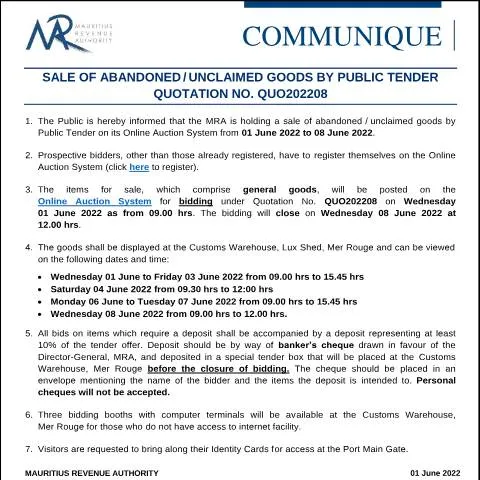
In the world of public tenders, the sale of unclaimed or abandoned goods presents an intriguing opportunity for potential bidders. This specific procedure, outlined in Quotation No. QUO202208, is organized by the Mauritius Revenue Authority (MRA). The distinction between this process and other types of tenders often lies in the nature of the items for sale, the bidding mechanisms in place, and the specific requirements set by the MRA.
Who Can Participate in the Public Tender?
Participation in the tender does not require an extensive background in procurement or auction systems. Essentially, anyone interested in acquiring unclaimed goods can take part, provided they follow the registration and bidding process correctly. However, it is essential for prospective bidders to take note of the specific registration requirements:
- Registration Requirement: Bidders who are not already registered must complete the registration process on the Online Auction System before they can make any bids.
- Verification: Identity verification through the submission of an official identification, such as a national ID card, is mandatory for all bidders.
Overview of the Bidding Process
The timeline and procedure for this public tender are pivotal to understanding how to successfully navigate the auction. Here’s a detailed breakdown:
- Registration: Potential bidders must register online before the auction begins.
- Auction Start: The bidding commences on June 1, 2022, at 09:00 hours.
- Your Bid: Bidders must ensure their bids are submitted by the closing time of June 8, 2022, at 12:00 hours.
- Viewing the Goods: Interested bidders can view the goods at the Customs Warehouse during specified hours from June 1 to June 8.
- Deposit Requirement: Bids must include a deposit of at least 10% of the bid amount, submitted via a banker’s cheque.
Preparing Your Bid: Necessary Documentation
The tender process demands careful preparation, particularly regarding documentation. Below are the necessary components for a successful submission:
- Banker’s Cheque: This must be drawn in favour of the Director-General, MRA. Personal cheques are not accepted.
- Identification: Bring your Identity Card to access the Customs Warehouse during the viewing period.
- Envelope Submission: The cheque must be enclosed in an envelope that clearly states your name and the specific items associated with the deposit.
Key Dates for Bidders
| Date | Activity | Time |
|---|---|---|
| June 1, 2022 | Auction Begins | 09:00 hrs |
| June 1-3, 2022 | Goods Viewing | 09:00 - 15:45 hrs |
| June 4, 2022 | Goods Viewing | 09:30 - 12:00 hrs |
| June 6-7, 2022 | Goods Viewing | 09:00 - 15:45 hrs |
| June 8, 2022 | Bidding Closes | 12:00 hrs |
The Role of Deposits in the Bidding Process
Understanding the role of deposits is crucial for any bidder. The deposit acts as a form of security for the MRA, ensuring that only serious bids are placed. Here are some essential notes regarding the deposit:
- Minimum Requirement: The deposit must be at least 10% of your tender offer.
- Submission Location: Deposits must be placed in a special tender box located at the Customs Warehouse before the bidding deadline.
- No Personal Cheques: Only banker’s cheques will be accepted, reinforcing the seriousness of the bid.
Navigating Challenges: Dealing with Errors and Refusals
In any competitive bidding environment, encountering errors or receiving refusals can be disheartening. Understanding how to address these situations can alleviate some of the stress involved:
- Documentation Errors: If an error is discovered in your submitted documents, immediate action is required. Contact the MRA to rectify the issue as soon as possible.
- Deposit Issues: Ensure your deposit meets all requirements. If it does not, your bid may be disqualified. Double-check the cheque and submission method.
- Refusal of Bid: If your bid is unsuccessful, you will receive notification from the MRA. An understanding of why your bid was refused can help improve future submissions.
Linking the Tender Process to Broader Procurement Practices
This public tender is a unique facet of wider procurement practices within Mauritius, directly influenced by both local laws and international standards. It is important to understand how this process fits into the larger context:
- Regulatory Framework: Governed by laws under the MRA, this tender process upholds transparency and fairness.
- Public Involvement: By allowing public participation, the MRA fosters community engagement and accessibility to goods.
- Environmental Considerations: The sale of abandoned goods also addresses waste management concerns, promoting the recycling and reuse of items.
A Step-by-Step Walkthrough of the Tender Process
To facilitate a smoother bidding experience, here’s a chronological breakdown from initiation to final decision:
- Announcement: The MRA announces the sale of abandoned goods through public communication channels.
- Registration: Interested bidders register on the Online Auction System.
- Viewing: Bidders visit the Customs Warehouse to inspect the available goods.
- Submitting Bids: Bids are placed online or through designated booths before the closing time.
- Deposit Submission: Necessary deposits are submitted, ensuring compliance with bidding regulations.
- Bid Evaluation: The MRA evaluates all bids, considering the offered prices and deposit confirmations.
- Notification: Successful bidders are notified, and arrangements for payment and collection are made.
Your Next Steps After Bidding
After placing your bid, staying informed about the outcome is crucial. Successful bidders will receive specific instructions on how to proceed post-auction:
- Payment Instructions: Follow the payment guidelines outlined by the MRA to secure your purchase.
- Collection Details: Make arrangements to collect your items from the Customs Warehouse, adhering to the specified timelines.
- Feedback Opportunity: Post-tender feedback may be sought by the MRA to improve future auctions, and your insights can be valuable.
Final Thoughts: Preparing for a Successful Tender Experience
Participating in the sale of abandoned or unclaimed goods through public tender can be both exciting and financially rewarding. To maximize your chances of success, meticulous preparation is essential. Understanding the process, adhering to the requirements, and being proactive in addressing potential issues will equip you for a favorable outcome. As the auction date approaches, ensure all documentation is in order, familiarize yourself with the items available, and set a clear budget for your bidding strategy. This careful approach not only increases your chances of winning a bid but also deepens your engagement with public procurement processes.
Understanding the Process of Public Tender for Abandoned Goods
The sale of abandoned or unclaimed goods by public tender is a structured process dictated by specific guidelines according to the laws of Mauritius. The primary authority overseeing this process is the Public Sector Commission (PSC) under the provisions established by Qu. 08 of 2022, which came into effect on June 1, 2022. This section aims to outline the detailed steps involved in participating in the public tender process for such goods, ensuring potential bidders are fully informed about their obligations and the documentation required.
Firstly, it is crucial to understand what constitutes abandoned or unclaimed goods. These items typically include property that has been left unclaimed for a specified period, often due to neglect or abandonment by owners. The threshold for what is deemed "abandoned" is usually defined in the contractual agreements that govern the storage or custody of such goods. For instance, if goods are left in custody for more than six months without payment of storage fees, they may be classified as unclaimed, thus allowing the government to initiate a sale process.
To participate in the public tender facilitated by the PSC, prospective buyers must first register on the govmu.org portal, using their National ID Card for authentication through the MauPass single-sign-on system. Once registered, they can access the relevant tender announcements, which include details such as the type of goods available, the conditions under which they are sold, and the deadline for submitting bids.
The tender documents must include a completed PSC Form 7, detailing the bid amount and the bidder's personal information. It is essential to pay attention to the instructions provided, including the format for bid submissions and any required attachments, such as proof of identity and financial stability (e.g., bank statements or letters of credit). Furthermore, bidders must be aware of the fee structure, as a non-refundable deposit may be required to ensure serious participation in the tender process. This deposit is often a small percentage of the estimated value of the goods and should be paid upon submission of the bid.
Legal Framework and Compliance Obligations
The sale of abandoned or unclaimed goods by public tender is governed by various legal provisions that ensure fairness and transparency in the process. The legal framework is primarily rooted in the PSC Act of 1955, which mandates strict compliance with procedural norms and ethical standards during the tendering process. Bidders should familiarize themselves with these laws to avoid potential pitfalls that could disqualify them from participation.
Firstly, it is paramount to acknowledge the importance of compliance with the Mauritius Revenue Authority (MRA) regulations, especially concerning tax obligations. Bidders must ensure that they are in good standing with the MRA, as outstanding tax liabilities may hinder their ability to successfully place a bid. Documentation proving tax compliance may be required during the submission of bids, ensuring that only eligible bidders are considered.
Fill in your form directly online
No printing: type your details into the boxes of the official form, tick, then download the PDF ready to send.
- 1Type into the form boxes
- 2Tick in one click
- 3Save and download the PDF
Additionally, environmental regulations must be observed when dealing with abandoned goods, particularly if they include hazardous materials. The Ministry of Environment has established guidelines that govern the handling and disposal of such materials to protect public health and safety. Bidders should therefore conduct proper due diligence on the type of goods being auctioned to avoid legal repercussions post-acquisition.
Moreover, adhering to the guidelines set forth in the tender specifications is crucial for each bidder. These specifications often outline the mandatory conditions for the acceptance of bids, including but not limited to, the format of the bid submission, the method of payment, and the timeline for fulfilling obligations following a successful bid. Non-compliance with these conditions can lead to immediate disqualification and can jeopardize any future participation in subsequent tenders.
Potential Challenges and Tips for Bidders
While the public tender process for abandoned goods presents numerous opportunities, bidders may encounter several challenges that can impede their success. One common issue is the inherent uncertainty regarding the actual value and condition of the goods being auctioned. Without a thorough inspection or detailed description, bidders may place offers based on inaccurate assumptions, resulting in financial loss.
To mitigate this risk, it is advisable to conduct preliminary research on the types of goods typically auctioned and their current market values. Participating in information sessions or pre-tender briefings organized by the PSC can also provide valuable insights into the nature of the goods and the typical bidding strategies employed by successful bidders. Engaging with previous bidders or stakeholders in the procurement process can further enhance understanding and preparation.
Another challenge is the competitive nature of the bidding process. Given the allure of acquiring goods at potentially low prices, many bidders may compete aggressively. Consequently, understanding your financial limits and setting a clear, disciplined budget can prevent emotional bidding and ensure responsible spending. It is essential to have a clear strategy in place, including defining your maximum bid amount early in the process and sticking to it throughout the auction.
Finally, bidders should be aware of the post-tender obligations that accompany a successful bid. Upon winning a tender, successful bidders are typically required to complete the payment within a set timeframe and arrange for the collection or delivery of goods. It is crucial to thoroughly review these obligations to avoid any penalties or additional fees associated with delays or inability to fulfill terms.