Understanding the Sale of Abandoned Goods in Mauritius
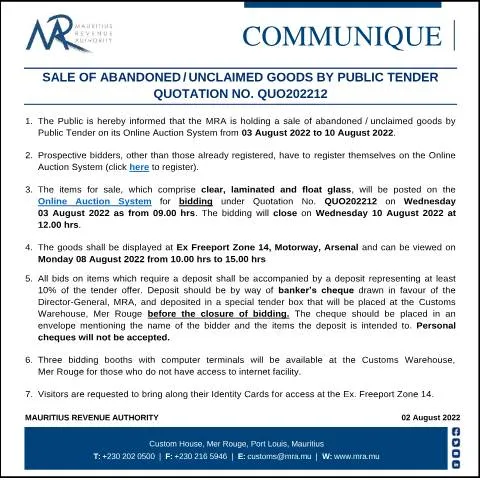
The sale of abandoned and unclaimed goods has a vital role in the economic landscape of Mauritius, serving not only to clear out storage but also to allow citizens and businesses to access items that may otherwise remain unused. The Mauritius Revenue Authority (MRA) has established a formal process for this, as detailed in their official document Communique020822, which outlines the procedures for public tenders. This paper is pivotal for both the MRA and potential bidders, ensuring transparency and fair competition.
The Regulatory Framework Behind the Tender Process
The legal basis for the sale of unclaimed goods in Mauritius is deeply rooted in the country’s hybrid legal system, which combines elements of both French civil law and English common law. The MRA operates under the authority granted by various legislative measures, including the Customs Act and specific regulations governing public sales.
In particular, the Quotation No. QUO202212 under which this sale falls is a direct result of proactive measures taken by the MRA to manage abandoned goods efficiently. This systematic approach not only adheres to local laws but also ensures that the public can engage in responsible and regulated bidding practices.
Importance of the Online Auction System
The introduction of the Online Auction System by the MRA marks a significant shift towards digitalization, enhancing accessibility for bidders. Those interested in participating must complete their registration on this platform prior to the bidding period, which runs from 03 August 2022 to 10 August 2022.
This system allows a broader audience to engage in the auction process, making it convenient for bidders to place their offers remotely without the necessity to be physically present at the auction site.
Preparing to Bid: Necessary Steps and Documentation
Before entering the bidding arena, prospective bidders must undertake several preparatory steps. This preparation is crucial to ensure compliance with MRA regulations and to enhance the chances of a successful bid.
Registration Requirements
Individuals wishing to participate in the auction must register on the Online Auction System. This process typically requires the submission of the following:
- A valid National Identity Card to verify identity.
- Contact information, including an email address and phone number.
- Documentation concerning the bidding deposit, as specified below.
Understanding the Deposit Requirement
For bids that necessitate a deposit, it is imperative that bidders prepare a banker’s cheque equivalent to at least 10% of their tender offer. The cheque must be made out in favor of the Director-General, MRA, and must be deposited in a designated tender box located at the Customs Warehouse, Mer Rouge, before the bidding period ends. Personal cheques are specifically prohibited.
Visual Inspection: The Pre-Bidding Opportunity
One of the unique aspects of this tender process is the opportunity for potential bidders to inspect the items on offer. On 08 August 2022, interested parties can visit the Ex Freeport Zone 14, Motorway, Arsenal, between 10:00 hrs and 15:00 hrs.
This inspection period is essential as it allows bidders to assess the condition and value of the goods, helping them to make informed decisions before submitting their bids.
Navigating the Tender Submission: Key Considerations
Successfully submitting a bid involves a series of steps that must be followed meticulously. The clarity of instructions provided by the MRA helps participants avoid common pitfalls.
Completing the Tender Form
While the document Communique020822 outlines the procedures, bidders will need to fill out the relevant tender form accurately to avoid any rejections or complications. Some of the critical sections of the form include:
- Bidder’s personal information and identification details.
- A detailed description of the items being bid on.
- The proposed bid amount, along with supporting documentation of the deposit.
Submission Guidelines
Bids must be submitted via the Online Auction System or in person at the Customs Warehouse before the deadline. Ensure that all required documents, including the banker’s cheque and completed tender form, are included in the submission. Missing documents can lead to disqualification from the bidding process.
What Happens After the Bidding Process?
Once the bidding period concludes on 10 August 2022 at 12:00 hrs, the MRA will review all bids. Successful bidders will be notified through the contact information provided during registration. This follow-up process is crucial for confirming the sale and arranging payment.
Handling Bidding Outcomes: Success or Rejection
In the event of a successful bid, bidders must fulfil payment procedures promptly. However, should a bid be unsuccessful, there are no formal appeals; instead, bidders are encouraged to participate in future auctions, learning from the experience.
Common Misunderstandings: Differentiating Between Forms
Potential participants often confuse the Sale of Abandoned Goods form with other forms related to public tenders. Understanding the distinctions can save time and effort.
| Form Type | Purpose | Key Differences |
|---|---|---|
| Sale of Abandoned Goods | Public auction for unclaimed items | Involves bidding and deposits |
| Lease Tender Application | Requests for leasing government properties | Focuses on rental agreements, not purchases |
| Job Application Form (PSC) | Applications for public service roles | Employment-based rather than goods-related |
Final Insights: Engaging in the Bidding Process
The sale of abandoned and unclaimed goods through public tender presents a unique opportunity for Mauritian citizens and businesses alike. By adhering to the outlined procedures in the Communique020822 and properly preparing for participation, bidders can navigate the complexities of the auction with confidence.
It is essential for each participant to remain informed about the timelines, regulations, and necessary documentation to ensure a smooth bidding experience. Knowledge of these details can greatly enhance the likelihood of securing desired items and contributing positively to the vibrant auction culture in Mauritius.
Understanding the Legal Framework for Abandoned Goods Sale
The legal basis for the sale of abandoned or unclaimed goods in Mauritius is articulated under the Public Tender process as outlined in Question 12 of 2022, dated 2nd August 2022. It is crucial for individuals and businesses interested in participating in these tenders to familiarize themselves with the specific legislative instruments that govern these sales.
The Public Procurement Act 2006 and its subsequent amendments provide a comprehensive framework for public procurement in Mauritius, including the sale of abandoned goods. The Act mandates that all public procurements, including tenders for abandoned goods, be conducted transparently and fairly, ensuring equal opportunities for potential bidders.
Key components to consider include:
- Criteria for Abandonment: Understanding the criteria that classify goods as abandoned or unclaimed is essential. Goods must be left unattended for a considerable period, often specified in the local government regulations or by the respective authorities overseeing the disposal.
- Notification Process: Authorities must publish a notice, detailing the items available for tender, including descriptions, location, and the time period within which tenders can be submitted. This ensures transparency and gives the public a fair chance to participate.
It is advisable to regularly monitor announcements from the relevant authorities, such as the Local Government Service Commission (LGSC) or the Public Service Commission (PSC), for updates on upcoming tenders and the specific requirements associated with each sale.
Participating in the Tender Process
For individuals or businesses looking to participate in the tender process for the purchase of abandoned or unclaimed goods, understanding the procedural steps is vital to ensure a successful bid. Here’s a detailed guide to navigate the tender process effectively:
Registration with the Relevant Authority: Before participating in any tender process, interested bidders must register with the applicable authority. This typically involves filling out registration forms such as LGSC Form 7a for municipal tenders or PSC Form 7 for general public service tenders. Ensure that all details provided are accurate and up-to-date.
Fill in your form directly online
No printing: type your details into the boxes of the official form, tick, then download the PDF ready to send.
- 1Type into the form boxes
- 2Tick in one click
- 3Save and download the PDF
Reviewing Tender Documents: Once registered, prospective bidders should carefully review the tender documents provided by the relevant authority. These documents will outline the specific terms and conditions of the tender, including:
- Detailed descriptions of the goods available for sale
- Minimum bid amounts
- Payment methods and terms
- Delivery conditions and timelines
Submitting a Bid: Bids must be submitted electronically via the official government portal or physically at designated offices, depending on the requirements stated in the tender document. Pay close attention to submission deadlines, as late submissions are generally disqualified.
Bid Opening and Evaluation: Following the close of the tender submission period, bids will be opened publicly. The evaluation criteria will typically assess the bids based on compliance with tender requirements, the financial offer, and any additional conditions specified in the tender documentation.
Award Notification: Successful bidders will receive official notification from the authority, outlining any further steps required to finalize the purchase.
Payment and Collection: Upon receipt of the award notification, bidders must complete the payment process as outlined, after which they can arrange for the collection of the goods. Clear instructions regarding collection points and necessary documentation will be provided by the authority.
Impact of Digital Transformation on Tender Processes
In recent years, Mauritius has undertaken a significant digital transformation in public service delivery, which has notably impacted the tender process for abandoned goods. The move towards an e-government framework is aimed at enhancing efficiency, transparency, and accessibility. Here are some key aspects of this digital evolution:
E-Services and Online Submissions: The government of Mauritius has invested in the development of online platforms, such as govmu.org, where citizens can access e-services related to public tenders. This transition allows bidders to submit their applications electronically, reducing the paperwork involved and the potential for errors in submissions.
Real-time Updates and Notifications: Through digital platforms, interested parties can receive real-time notifications regarding ongoing and upcoming tenders for abandoned goods. This feature ensures that bidders are consistently informed, helping them to act promptly and remain competitive in the bidding process.
Enhanced Transparency and Accountability: Digital platforms have the potential to further increase transparency in the tender process. Public access to tender documentation, evaluation results, and award notifications can significantly reduce opportunities for corruption or mismanagement, ensuring that the process is fair for all participants.
Training and Capacity Building: As the digital landscape evolves, the government is also focusing on training sessions and workshops to equip bidders with the skills necessary to navigate online platforms effectively. This includes guidance on how to register, submit bids, and track tender status through digital means.
In conclusion, understanding the legal framework, mastering the tender application process, and embracing the digital transformation in public service are crucial for those interested in the sale of abandoned or unclaimed goods by public tender in Mauritius. Staying informed and prepared can significantly enhance the chances of success in this competitive environment.