Understanding the Sale of Abandoned or Unclaimed Goods
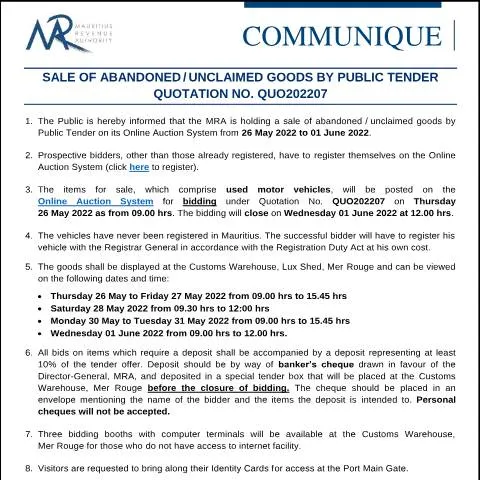
In a landscape where unclaimed goods accumulate, the necessity for effective management and sale mechanisms becomes paramount. The Mauritius Revenue Authority (MRA) facilitates the sale of such goods through public tender, addressing both public interest and regulatory requirements. The Sale of Abandoned / Unclaimed Goods by Public Tender (quotation no. QUO202207) is a systematic approach that allows the public to bid on items that have not been claimed or have been deemed abandoned.
The Regulatory Framework Behind Public Tender Sales
This sale is governed by regulations that assert the MRA's authority to auction unclaimed goods. The framework is aligned with existing laws that ensure transparency and fairness in the tendering process. In line with the Customs Act and other relevant regulations, this initiative aims to provide a structured means of disposing of goods that have been held for a period without claim.
Historical Context
The practice of auctioning unclaimed goods is not new; it has evolved over time. The legal foundations were laid as part of Mauritius’s commitment to effectively manage and utilize state resources. The MRA's initiative reflects both a historical precedent and a modern necessity to keep the system efficient and legally compliant.
Process for Registering and Participating in the Auction
For those interested in participating in this auction, proper registration is essential. Only registered users can bid for items, and registration can be done through the MRA's Online Auction System. This system is designed to streamline the process and make it accessible for all potential bidders.
Steps to Register
- Visit the MRA's Online Auction System.
- Complete the registration form with accurate personal details.
- Submit the form and await confirmation of your registration status.
Registration is crucial as it ensures that all bidders are verified, reducing the likelihood of fraudulent activity during the bidding process.
Preparing for Bidding: What You Need to Know
Before placing bids, bidders must familiarize themselves with the items available for auction and the specific requirements tied to the bidding process. The sale typically includes various items, notably used motor vehicles, which are displayed for public viewing prior to the auction.
Viewing the Goods
Items for sale will be available for inspection at the Customs Warehouse, Lux Shed, Mer Rouge. Viewing times are set to ensure that potential bidders have adequate opportunity to examine the goods. The designated viewing dates and times are as follows:
- Thursday, 26 May to Friday, 27 May 2022: 09:00 hrs to 15:45 hrs
- Saturday, 28 May 2022: 09:30 hrs to 12:00 hrs
- Monday, 30 May to Tuesday, 31 May 2022: 09:00 hrs to 15:45 hrs
- Wednesday, 01 June 2022: 09:00 hrs to 12:00 hrs
Understanding the Bidding Process
The actual bidding takes place from 26 May to 01 June. Bidders must ensure they understand how to submit their bids correctly. A critical point to note is that bids requiring a deposit must be accompanied by a banker’s cheque equivalent to at least 10% of the tender offer.
Key Points Related to Bidding
- Bids must be submitted electronically via the Online Auction System.
- Physical bids can be placed at designated booths equipped with computers.
- All deposits must be submitted in a specified manner, clearly indicating the bidder’s name and the intended item.
Failure to adhere to these requirements can result in disqualification from the bidding process.
What Happens After Bidding Closes?
Upon the closure of the bidding period, successful bidders will receive notification regarding their bids. It is important to follow through with the next steps, particularly concerning the registration of the purchased goods with the Registrar General in accordance with the Registration Duty Act.
Post-Bid Requirements
Successful bidders must:
- Pay any outstanding bids promptly as per the instructions provided.
- Arrange for the registration of their vehicle, if applicable, at their own cost.
Navigating Possible Snags: Handling Refusals and Errors
Despite the best preparations, unforeseen issues may arise. It is crucial for bidders to know how to address these effectively. Should a bid be rejected or an error occurs during the bidding process, understanding the appeals procedure becomes invaluable.
Steps to Take in Case of Issues
- Review the terms and conditions associated with the tender.
- Contact the MRA promptly using the provided channels for clarifications.
- Submit any appeals or requests for reconsideration in writing, adhering to deadlines.
Keeping communication lines open with the MRA can greatly assist in resolving discrepancies or misunderstandings.
Special Considerations for Unique Bidding Scenarios
While the process is generally straightforward, certain unique situations may require additional attention. For example, foreign nationals, minors, or those with complex legal circumstances may face different requirements or restrictions.
Key Considerations for Special Cases
- Foreign nationals need to ensure compliance with any specific legal frameworks regarding property ownership.
- Minors must have a legal guardian complete the bidding on their behalf.
- In complex situations, legal counsel may be prudent to navigate regulatory requirements.
Understanding the Context of This Form Within Broader Administrative Processes
This tender is part of a larger administrative strategy by the MRA to manage and repurpose unclaimed goods effectively. It underscores the importance of regulatory compliance while providing opportunities for the public to acquire goods that would otherwise remain in limbo.
The Role of the MRA in Public Tenders
The MRA not only facilitates these tender processes but also ensures that they are conducted in a manner that upholds the principles of fairness and equity. This organizational oversight helps maintain public trust in the tendering process and assures that all parties are treated justly.
Differences Between Similar Forms and Procedures
It's essential to distinguish this process from other forms and auctions that may seem similar at first glance, such as private sales or informal auctions. The structured nature of the MRA's public tender aligns with statutory requirements and provides more robust protections for bidders.
Comparative Analysis of Tender Types
| Aspect | Public Tender (MRA) | Private Sale |
|---|---|---|
| Regulatory Oversight | High, governed by law | Variable, less formal |
| Transparency | Mandatory bidding documentation | Limited disclosure |
| Bidder Protections | Structured appeals process | Generally non-existent |
Understanding these differences helps participants make informed decisions when engaging in the auction process.
Fill in your form directly online
No printing: type your details into the boxes of the official form, tick, then download the PDF ready to send.
- 1Type into the form boxes
- 2Tick in one click
- 3Save and download the PDF
Understanding the Public Tender Process for Abandoned Goods
The public tender process for the sale of abandoned or unclaimed goods in Mauritius is governed by strict regulations to ensure transparency and fairness. Under Qu. 07 of 2022, which was enacted on May 24, 2022, authorities are required to follow specific steps to conduct these sales. The primary objective is to prevent misuse and to ensure that these goods are disposed of in a manner that is beneficial to the public.
When dealing with abandoned goods, it's essential to identify the category of goods that falls under this regulation. This can include items left at ports, storage facilities, or any items that have remained unclaimed for a stipulated period, usually defined by specific authorities. The goods are usually cataloged, assessed for value, and publicly advertised before being sold through tenders.
The tender process typically involves the following key steps:
- Notification: Public notices regarding the tender are published in local newspapers and on official government websites. These notices must include details about the goods to be sold and the deadline for tender submissions.
- Submission of Tenders: Interested parties must submit their tenders by the specified deadline using the official tender forms provided by the relevant authority. The submission can often be done electronically, enhancing accessibility.
- Evaluation: Once the closing date for tenders has passed, the evaluation committee reviews all submissions based on pre-defined criteria, including the offer price, the credibility of the bidder, and any additional terms stipulated in the tender notice.
- Awarding the Tender: The winning bidder is notified and must complete the purchase under the terms agreed upon. This may entail payment methods and timelines as specified in the tender notice.
- Transfer of Ownership: Upon successful payment, the goods are transferred to the new owner, with appropriate documentation to formalize the change in ownership.
Legal Framework Governing Unclaimed Goods
The legal framework surrounding the handling of unclaimed goods in Mauritius encompasses various laws and guidelines that have been established to protect both the public and the rightful owners of goods. The key legislation that applies to the sale of such goods includes the Public Service Commission Act 1955 and specific regulations under Qu. 07 of 2022.
It is crucial to understand the legal definition of “abandoned” and “unclaimed” goods. Goods are considered abandoned when the owner has left them without any intention to reclaim them, while unclaimed goods refer to items that are held by an agency or entity for an extended period without any claim from the owner. The conditions leading to such designations must be well documented to avoid legal disputes after the sale.
The following legal aspects are particularly important:
- Notification Requirements: Authorities are mandated to notify potential claimants before proceeding with the sale. This involves sending out notices to the last known address of the owners, if available, and publishing the information in various public forums.
- Timeframes: There are specific timeframes defined by law that must be adhered to before goods can be declared abandoned or unclaimed. Typically, this period can range from three to six months, depending on the type of goods and the regulating authority.
- Disposal Procedures: The procedures for disposing of unclaimed goods must comply with the regulations set forth by the Ministry of Finance and Economic Development, which oversees the financial implications of the sale and ensures public funds are appropriately utilized.
- Rights of Claimants: Individuals or entities that believe that their goods have been wrongfully classified as abandoned or unclaimed have the right to contest this designation. Legal recourse is available through the judicial system if they can provide adequate evidence of ownership.
Best Practices for Participants in the Tender Process
Participating in the tender process for the purchase of abandoned or unclaimed goods can be a lucrative opportunity for businesses and individuals alike. However, understanding the intricacies of the process and adhering to best practices can significantly enhance the chances of success. Here are several best practices to consider:
- Thorough Research: Before submitting a tender, conduct thorough research on the types of goods being sold, their market value, and any potential costs associated with their acquisition. Knowledge of the goods will help in formulating a competitive bid.
- Compliance with Submission Guidelines: Ensure that all submissions comply with the specified guidelines. This includes using the correct forms, meeting deadlines, and providing all necessary documentation. Non-compliance can result in disqualification.
- Networking: Engage with other stakeholders, including other bidders and relevant authorities, to gain insights into the market trends and bidding strategies. Networking can also help in understanding the expectations of the evaluation committee.
- Financial Preparedness: Be financially prepared to complete the transaction if awarded the tender. Ensure that you have the necessary funds available and understand the payment process outlined in the tender documentation.
- Post-Tender Follow-Up: After the tender process, regardless of the outcome, follow up with the respective authorities for feedback. This can provide valuable insights into improving future submissions and understanding the evaluation process better.