Navigating the Landscape of Abandoned and Unclaimed Goods: A Detailed Overview
The sale of abandoned and unclaimed goods by public tender offers a unique opportunity for individuals and businesses looking to acquire various items at potentially reduced prices. This is not merely a transactional process but a structured procedure governed by specific regulations, facilitated by the Mauritius Revenue Authority (MRA). Understanding the nuances of this process is essential for prospective bidders to make informed decisions.
Understanding the Auction Timeline: From Announcement to Closing
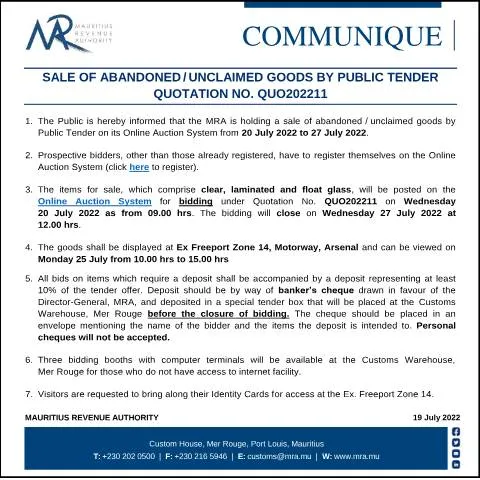
The timeline associated with the public tender for abandoned and unclaimed goods is critical. It affects when prospective bidders can place bids and when the goods can be viewed. The following outlines the key dates associated with Quotation No. QUO202211:
- Announcement Date: 19 July 2022 - The MRA officially announces the upcoming public tender.
- Online Auction Start: 20 July 2022, from 09:00 hrs - Bidding on items begins.
- Online Auction Closing: 27 July 2022, 12:00 hrs - Bids must be submitted before this time.
- Viewing Date: 25 July 2022, from 10:00 hrs to 15:00 hrs - Prospective bidders can view the items at Ex Freeport Zone 14.
Importance of Timeliness in Bidding
It is crucial for bidders to adhere to these timeframes. Late submissions will not be considered, and failing to view the items beforehand can lead to uninformed bidding, which may affect auction outcomes. Therefore, preparing in advance is vital for successful participation.
Steps to Participate: From Registration to Bidding
Participation in the auction process involves several steps, from registration as a bidder to the actual bidding process. Here’s a detailed breakdown:
- Registration: Prospective bidders not previously registered must create an account on the MRA's Online Auction System. This is a straightforward process that requires providing personal information and identification details.
- Deposit Submission: All bids for items requiring a deposit must include a banker’s cheque equivalent to at least 10% of the tender offer. This deposit must be deposited in a designated tender box before the auction closes.
- Online Bidding: Once registered and with the deposit confirmed, bidders can submit their bids online during the auction period.
- In-Person Bidding: For those without internet access, computer terminals will be available at the Customs Warehouse, allowing bidders to participate in person.
Payment Preparation for Deposits
When preparing the deposit, ensure the following:
- The cheque must be a banker’s cheque made out to the Director-General, MRA, and not a personal cheque.
- Include the bidder’s name and the specific items for which the deposit is intended in a sealed envelope.
Viewing Items: A Critical Step for Informed Bidding
Before placing bids, bidders are encouraged to view the items up for auction. This viewing session provides a tangible opportunity to inspect the goods and assess their condition before committing financially. The designated viewing time is:
- Date: 25 July 2022
- Time: 10:00 hrs to 15:00 hrs
- Location: Ex Freeport Zone 14, Motorway, Arsenal
Prospective bidders must present their Identity Cards to gain access to the viewing area. This security measure ensures that only registered individuals participate in the auction process.
Common Pitfalls and How to Avoid Them
While the auction process may appear straightforward, bidders often encounter common pitfalls that can negatively impact their experience:
- Missing Registration: Failing to register well in advance can lead to missed opportunities. Ensure registration is complete before the auction opens.
- Incorrect Deposit Amount: Bids lacking the correct deposit will be disqualified. Review the auction requirements closely.
- Not Viewing Items: Bidding on unseen items can lead to regret after the auction. Make sure to utilize the viewing period effectively.
Critical Documentation: What You Need to Bring
To ensure a smooth bidding process, bring along the following documents:
- Your Identity Card for identification
- Banker’s cheque for the deposit
- Proof of registration on the Online Auction System (if applicable)
Post-Bid Process: What Happens Next?
Once the bidding has closed, there are several subsequent steps that bidders should be aware of:
- Auction Results: The MRA will announce the results of the auction shortly after the bidding closes, detailing the items sold and the winning bids.
- Payment Instructions: Successful bidders will receive instructions on how to complete the payment process for their items.
- Item Collection: Details regarding the collection of purchased items will be provided, including any necessary documentation required during collection.
Tracking Your Bid Status
Bidders should remain proactive in tracking the status of their bids. This can typically be done via the MRA's Online Auction System, where updates will be provided regarding successful bids and payment requirements.
Handling Unforeseen Issues: Rejections and Errors
Despite careful preparation, you may encounter issues such as bid rejections or administrative errors. It's essential to know how to navigate these complexities:
- Rejection of Bids: If your bid is rejected, you will typically receive a notification. Understand the reasons for rejection and rectify any issues for future bids.
- Missing Documentation: If you are informed that your submission is missing documentation, immediately follow up with the MRA to clarify what is needed and rectify the situation.
Steps to Appeal a Rejection
In instances where you believe your bid was unjustly rejected, you may wish to appeal:
- Contact the MRA through designated communication channels.
- Provide any relevant documentation to support your case.
- Be prepared for a review process that may take additional time.
Understanding the Broader Context: The Role of This Tender in Public Administration
The tender process for abandoned and unclaimed goods serves not only as a revenue-generating mechanism for the government but also promotes transparency and responsible management of public assets. By allowing the public to bid on these goods, the MRA helps ensure that items are repurposed rather than discarded, embodying sustainable practices within public administration.
Final Thoughts on Engaging with the Auction System
Engaging in the auction of abandoned and unclaimed goods can be a rewarding experience for bidders willing to navigate the procedural landscape. With proper preparation, knowledge of the timelines, and understanding of the requirements, individuals can capitalize on opportunities while supporting responsible public asset management. Whether participating for personal gain or business purposes, the auction serves as an excellent avenue to acquire unique goods while contributing to a sustainable economy.
Understanding the Legal Framework for Sale of Abandoned Goods
The sale of abandoned or unclaimed goods in Mauritius is governed by a distinct legal framework that intertwines local legislation with administrative procedures. The Public Tender process, as outlined in Question 11 of 2022 dated July 19, 2022, necessitates a clear understanding of both the laws surrounding ownership and the protocols for auctioning such items. It is paramount for stakeholders, including prospective buyers and public entities, to familiarize themselves with the relevant provisions under the Mauritius Civil Code which delineates the principles governing ownership transfer, alongside the Public Procurement Act, which oversees the tendering process.
Fill in your form directly online
No printing: type your details into the boxes of the official form, tick, then download the PDF ready to send.
- 1Type into the form boxes
- 2Tick in one click
- 3Save and download the PDF
The procedural aspects involve ascertaining whether the goods in question are legally deemed abandoned. This often requires a thorough investigation by the relevant authorities, such as the Mauritius Police Force or the Custodian of Abandoned Properties, to ensure that due diligence has been performed. Prospective buyers should note that any claims to ownership may arise from previous owners, therefore understanding the timeline and the legal process of declaration as abandoned is key to avoiding future disputes.
Steps Involved in the Public Tender Process for Abandoned Goods
The process for participating in a public tender for the purchase of unclaimed goods involves several steps that must be adhered to meticulously. Initially, the relevant authority – often the Ministry of Commerce and Consumer Affairs or the local municipal council – will publish a notice announcing the upcoming tender. This notice typically provides essential details including the specific goods for sale, the tender submission deadline, and the terms and conditions applicable to bidders.
Potential bidders are required to complete and submit a specific tender form, such as the Public Tender Form 2022, which must be accompanied by necessary documentation. This might include proof of identity, residential address, and any relevant financial capability documents to ensure that the bidder can fulfill the payment obligations upon winning the bid. It is critical to ensure that submissions comply with the stipulated requirements, as incomplete applications may lead to disqualification.
Once the tender submission period concludes, the evaluation process begins. This involves a committee who will assess the bids based on predetermined criteria, such as the proposed bid amount, bidder’s qualifications, and compliance with submission requirements. Successful bidders will then be notified, at which point they must adhere to the payment terms outlined in the tender document, typically requiring payment within a specified period to finalize the transaction.
Potential Risks and Considerations for Buyers
Engaging in the purchase of abandoned or unclaimed goods through public tender can present an array of risks and considerations that bidders must evaluate carefully. One significant concern is the issue of hidden liabilities. Buyers may inadvertently acquire goods associated with legal disputes or outstanding debts. To mitigate this risk, it is advisable for potential bidders to conduct their own background checks on the goods and to seek legal advice if necessary.
Additionally, there may be condition-related risks associated with the items being auctioned. Unclaimed goods can often vary widely in state and functionality; thus, prospective buyers should be prepared for the possibility that items could require substantial repairs or restoration. It is advisable to attend any public viewings or appraisals that may be arranged prior to bidding to better assess the condition of the items.
Lastly, logistical considerations post-purchase should not be overlooked. Buyers must be prepared to arrange for transportation and storage of their newly acquired goods. This may involve additional costs and planning, particularly for larger items or bulk purchases. Ensuring a clear understanding of these responsibilities upfront can lead to a more successful transaction and minimize unforeseen complications.