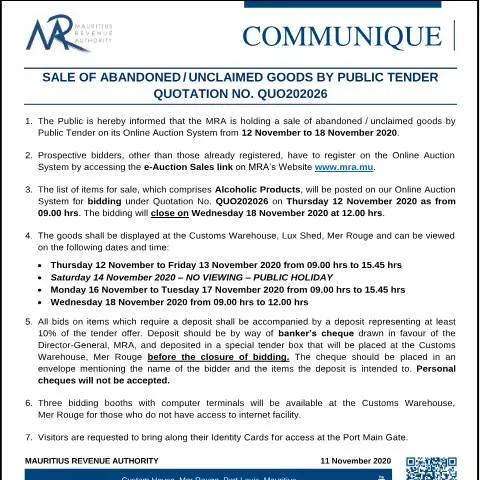
Understanding the Sale of Abandoned or Unclaimed Goods: Key Insights
The process of purchasing abandoned or unclaimed goods through public tender can often seem convoluted, especially for first-time bidders. This official document, CommuniqueQ202026, outlines the essential steps and requirements for participating in such auctions held by the Mauritius Revenue Authority (MRA). These sales offer unique opportunities for individuals and businesses to acquire goods that have been left unclaimed, while ensuring a transparent process that benefits both the public and the government.
Framing the Context: The Legal Landscape Surrounding Abandoned Goods
In Mauritius, the sale of abandoned or unclaimed goods is governed by specific regulations that are designed to manage the handling of items left unclaimed for various reasons. This initiative promotes both accountability and fiscal responsibility. The MRA operates within a hybrid legal framework combining French civil law and English common law, guided by the provisions of the Constitution of 1968 and the PSC Act of 1955. These laws not only facilitate the management of unclaimed property but also safeguard the interests of the public by ensuring compliance with regulatory standards.
The Lifecycle of an Abandoned Goods Auction: From Announcement to Acquisition
The timeline of such an auction starts from the announcement of the sale, as mandated in CommuniqueQ202026. Here’s how the process unfolds:
- Announcement: The MRA announces the dates and details of the auction, including the items available for bidding.
- Registration: Prospective bidders must register on the MRA's Online Auction System, which can be accessed through their official website.
- Viewing Period: Interested bidders have the opportunity to view the goods at the Customs Warehouse, providing a chance to inspect the items before placing bids.
- Bidding Phase: The auction takes place online, allowing registered users to submit their bids within the specified timeframe.
- Closing and Results: Once the bidding closes, successful bidders are notified and must follow the payment procedures detailed in the auction guidelines.
The Role of the MRA: Intermediary and Regulator
The MRA is not just a facilitator but also a regulatory body overseeing the entire auction process. It ensures that all operations comply with established laws and regulations, protecting both the bidders and the integrity of the auction system. Their role encompasses:
- Verifying the legitimacy of goods up for sale.
- Managing the online auction platform to facilitate smooth bidding.
- Offering support and information to prospective bidders, including details on payment and collection of items.
Decoding the Official Document: Navigating the Sections of CommuniqueQ202026
Each section of CommuniqueQ202026 is structured to provide clarity and guidance. Here’s a breakdown of its key elements:
| Section | Description |
|---|---|
| Announcement of Sale | This section outlines the dates of the auction and the nature of goods included. |
| Registration Requirements | Details on how to register on the Online Auction System, essential for participation. |
| Viewing Schedule | Specifies the times during which potential bidders can inspect the goods. |
| Bidding Process | Instructions on how to place bids, including deposit requirements. |
| Payment Guidelines | Information regarding deposits, payment methods, and deadlines for successful bids. |
Insights on Completing the Form: Avoiding Common Pitfalls
While filling out any required forms for participation, it’s crucial to pay attention to detail. Here are some guidelines that can help ensure your submission is error-free:
- Use Accurate Information: Ensure that your identity and contact information are correctly entered to facilitate communication.
- Check Deposit Requirements: Remember that a deposit of at least 10% of your bid is mandatory for items that require it, and this must be paid using a banker’s cheque.
- Label Your Cheques Properly: When submitting your deposit cheque, it should be clearly marked with your name and the items it pertains to, to avoid any confusion.
Channels for Submission: Paper vs Online Applications
Bidders have various options for submitting their bids, each with its distinct advantages:
- Online Bidding: This is the most efficient method, allowing bidders to participate from anywhere with internet access. It can be done via the MRA's e-Auction Sales link.
- In-Person Bidding: For those lacking internet access, MRA provides computer terminals at the Customs Warehouse. However, bidders must be prepared to visit on the designated days.
Regardless of the chosen method, adhering to submission timelines and guidelines is essential to ensure participation in the auction.
Post-Auction Procedures: What Happens After Bidding?
Once the auction has concluded, several important procedures follow:
- Notification: Successful bidders will receive a notification regarding their bids and further instructions for payment.
- Payment: Payment must be made as per the guidelines provided. Non-compliance could result in the forfeiture of the bid.
- Collection: After payment, successful bidders will be informed about how and when they can collect their auction items.
Final Remarks: Embracing the Opportunities in Public Tenders
The public tender process for the sale of abandoned or unclaimed goods, as encapsulated in CommuniqueQ202026, not only facilitates the reclamation of unutilized goods but also fosters a culture of transparency and fairness within governmental operations. For potential bidders, understanding the nuances of the process— from registration to post-auction procedures— is key to maximizing the benefits available through these public sales.
By engaging thoughtfully with the process, participants can ensure a seamless experience, paving the way for successful acquisitions that can serve various personal or business needs.
Understanding the Legal Framework Governing Abandoned Goods Sales
The sale of abandoned or unclaimed goods by public tender in Mauritius operates under a complex legal framework that encompasses both civil and common law principles. Primarily, this process is guided by the provisions established in the Sale of Goods Act and various local regulations pertaining to public tenders. This hybrid legal system ensures that while procedures are informed by English common law, substantive rules remain rooted in Mauritian civil law.
When public entities recover goods that have been abandoned or left unclaimed, they must adhere to specific legal stipulations. These include notifying potential claimants, providing adequate timeframes for claims, and ensuring that the sale process is transparent and open to the public. Legal precedents establish that prior to conducting a sale, proper notices must be issued to the public to inform them of the impending sale, typically published in local newspapers and official government portals. This practice not only adheres to legal obligations but also fosters public trust in government handling of assets.
Moreover, the public tendering process for these sales must align with the Public Procurement Act. This means that any government body planning to sell unclaimed goods must prepare a detailed tender document, outlining the items for sale, conditions of sale, and other relevant information. This document is crucial for ensuring that all bidders have the opportunity to participate under equal conditions.
Practical Steps for Participating in Tender Sales of Abandoned Goods
For interested bidders, engaging in the sale of abandoned or unclaimed goods involves several important steps. Understanding the procedure can significantly increase one’s chances of a successful acquisition. Here’s a comprehensive guide to navigating this process.
- Research and Monitoring: Potential bidders should routinely check government websites and authorized portals like govmu.org for announcements regarding upcoming tender sales. Subscribing to newsletters or updates from the Public Procurement Office can also be beneficial.
- Confirm Eligibility: Before attempting to bid, it is essential to verify eligibility. In some cases, certain individuals or organizations may be excluded due to previous infringements or legal issues. Reviewing the conditions set forth in the tender documents can clarify eligibility criteria.
- Prepare Documentation: Bidders must gather and prepare all necessary documentation, including identification, proof of residence, and any financial documents required to demonstrate capacity for payment. The specific documents may vary based on the nature of the items being sold and the stipulations of the tender.
- Attend the Tender Opening: For transparency, the opening of bids is typically a public event. Participants are encouraged to attend to witness the process, ensure fairness, and validate the bidding process.
- Post-Tender Procedures: Once awarded, the successful bidder must adhere to the payment timelines and conditions specified in the tender agreement. Failure to comply can result in forfeiture of the awarded items and potential penalties.
Participating in these sales can yield tangible benefits, but it requires diligence and a thorough understanding of the entire process.
Common Challenges and Solutions in Tendering for Abandoned Goods
While the sale of abandoned goods presents unique opportunities, it can also pose challenges that bidders must navigate effectively. Understanding these potential hurdles and their solutions is crucial for a successful bidding experience.
- Difficulty in Assessing Item Value: Often, the condition and value of goods can be ambiguous. Bidders are encouraged to seek additional information from the tender documents and, if possible, attend previews of the goods. Engaging with experts or conducting market research can also provide insights into potential resale value.
- Complexity of Bidding Requirements: The tendering process can be intricate, especially for first-time bidders. To mitigate this, it is advisable to consult with professionals familiar with public tenders, such as legal advisors or procurement specialists, who can provide guidance on compliance and strategy.
- Payment Challenges: Bidders may struggle with meeting the financial requirements stipulated in the tender. Prior to bidding, it is wise to ensure that sufficient funds are available and, if necessary, to explore financing options ahead of time.
- Post-Bid Disputes: Issues may arise after the bidding process, such as disputes regarding payment or delivery of goods. It is paramount for bidders to maintain clear documentation of all communications and agreements, and to engage legal counsel at the earliest sign of dispute.
Awareness of these challenges and proactive measures can greatly enhance the likelihood of a successful bidding experience.