Navigating the Sale of Abandoned Goods: Key Insights
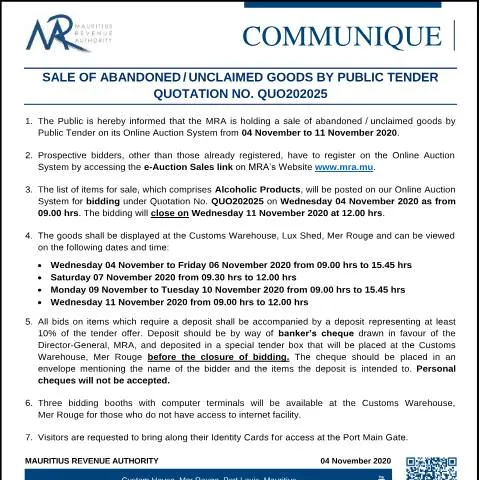
The Sale of Abandoned / Unclaimed Goods by Public Tender, as indicated by the Quotation No. QUO202025, represents a significant opportunity for both the Mauritius Revenue Authority (MRA) and prospective bidders. This public tender is not merely a chance to acquire goods at potentially reduced prices; it’s a structured process that underscores the legal and administrative framework governing such transactions. As a participant or an interested party, understanding the intricate details surrounding this process can enhance your bidding experience and ensure compliance with the stipulated regulations.
Understanding the Framework: Legal and Historical Context
The backdrop of this public tender is grounded in the Customs Act and other relevant legislative frameworks which define how abandoned or unclaimed goods are to be managed. These laws ensure that goods, after a certain period without any claims, are made available for public auction, balancing both the interests of the state and potential buyers.
- Historical Context: The MRA has been facilitating these auctions as a means to recycle goods back into the economy while clearing out storage facilities.
- Regulatory Framework: Governed by strict regulations, the process aims to promote transparency and fairness among bidders.
Who Can Participate? Registration Requirements Unveiled
Participation in this tender is open to the public, however, there are specific registration requirements that must be adhered to, particularly for new bidders. The MRA emphasizes the importance of proper registration to ensure a smooth bidding process.
- Navigate to the MRA’s official website and locate the e-Auction Sales link.
- Complete the registration form, ensuring all details are accurate and current.
- Confirm your registration via the email link sent to your registered email address.
It is crucial to note that existing registered bidders need not re-register; their credentials will remain valid for future tenders.
A Closer Look at the Auction Items and Viewing Schedule
The auction features a variety of items, primarily classified as abandoned or unclaimed goods. Among these, there are alcoholic products and other diverse goods. Familiarizing yourself with the inventory is essential for making informed bids.
The MRA has dedicated time slots for prospective bidders to inspect the items physically. This opportunity to view the goods is scheduled as follows:
| Date | Time |
|---|---|
| 04 to 06 November 2020 | 09.00 hrs to 15.45 hrs |
| 07 November 2020 | 09.30 hrs to 12.00 hrs |
| 09 to 10 November 2020 | 09.00 hrs to 15.45 hrs |
| 11 November 2020 | 09.00 hrs to 12.00 hrs |
Placing Your Bid: Requirements and Procedures
Bidding on items is a straightforward process, but it requires adherence to specific guidelines to qualify. Here’s what you need to keep in mind:
- Deposit Requirement: All bids necessitate a deposit amounting to at least 10% of the tender offer. This deposit must be submitted via a banker’s cheque made out to the Director-General, MRA.
- Submission of Cheque: The cheque is to be placed in an envelope marked with your name and the items related to your bid, deposited in a designated tender box.
- No Personal Cheques: Only banker’s cheques are accepted, ensuring that the bidding process retains its integrity.
For bidders without internet access, the MRA provides facilities at the Customs Warehouse where individuals can place bids through computer terminals.
Post-Bidding Process: What Happens Next?
After the closing of bids on 11 November 2020 at 12:00 hrs, a thorough review process follows. The MRA will assess all bids to determine the successful bidders based on the highest offers received.
- Notification: Successful bidders will receive formal notification detailing the next steps regarding payment and collection of their items.
- Payment Instructions: Complete payment must be made by the specified deadline to secure ownership of the goods.
- Collection Guidelines: Bidders should prepare to collect their items according to the collection schedule provided in the notification.
Handling Issues: What to Do in Case of Complications
While the process is designed to be seamless, complications can arise. Bidders should be prepared for various scenarios that may require intervention:
- Insufficient Documentation: If there are issues with the submitted documents, bidders will be contacted to provide the necessary information.
- Deposit Reimbursement: In cases where bids are unsuccessful, deposits will be returned, but it’s essential to follow the prescribed procedures for reimbursement.
- Disputes or Complaints: Should any disputes arise, bidders are encouraged to contact the MRA directly through the provided communication channels.
Following Up: Keeping Track of Your Bid Status
Post-bid, staying informed about the status of your bid is essential. The MRA encourages active communication and provides several options for bidders:
- Direct contact through the MRA’s dedicated helpline or email is advisable for urgent inquiries.
- Regularly checking the MRA’s website for updates on the auction results and further announcements can keep bidders informed.
Engaging proactively with the MRA can facilitate smoother processes and provide clarity on any outstanding issues.
Conclusion: An Invitation to Participate
Overall, the Sale of Abandoned / Unclaimed Goods by Public Tender presents a unique opportunity for individuals and businesses alike. By understanding the nuances of the bidding process, preparing adequately, and adhering to the regulations set forth by the MRA, bidders can navigate this auction with confidence. Ensure your participation through careful preparation and follow the guidelines to maximize your chances of success.
Understanding the Legal Framework for Abandoned Goods Sales
The sale of abandoned or unclaimed goods by public tender in Mauritius is governed by a specific set of legal frameworks that ensure transparency and fairness in the process. Primarily, the regulations stem from the Sale of Goods Act and other pertinent local laws. It is essential to understand that abandoned goods refer to items that have been left unclaimed, often after a specified period or when the owner is untraceable.
Under Mauritian law, the process starts when goods are deemed abandoned after a particular waiting period, allowing the rightful owners ample time to claim their belongings. The procedure is initiated by an advertisement in the local newspapers and on relevant government websites, such as govmu.org, outlining the nature of the goods, their location, and the date of the auction.
Moreover, the authority responsible for the sale, often either the local public service or the relevant government department, must provide a detailed inventory of the goods. This inventory is a critical component as it ensures that potential bidders are well-informed about the items available, promoting a more competitive and fair bidding environment. Buyers should note that they must be registered with the relevant authority and may be required to present valid identification documents, such as the National ID Card, when participating in the tender.
Participating in the Public Tender: A Step-by-Step Guide
Engaging in the public tender for the purchase of abandoned or unclaimed goods in Mauritius can seem daunting, but understanding the process can streamline your experience. Here’s a detailed step-by-step guide:
Advertisement and Information Gathering: The first step involves keeping an eye on public announcements. These are usually published in local newspapers and online on government portals. The notices will provide critical information about the type of goods, their location, the date of the tender, and the contact details of the overseeing authority.
Registration and Requirements: Interested bidders must ensure they are registered with the relevant authority, such as the Public Service Commission (PSC) or the Local Government Service Commission (LGSC). This registration may include submitting personal details and valid identification, typically your National ID.
Inspection of Goods: Prior to the tender date, potential bidders are often given the opportunity to inspect the goods. This is a crucial step; it allows you to assess the condition and value of the items you are interested in. Make sure to take notes and perhaps photographs, as this will assist with your bidding strategy.
Preparing Your Bid: Based on your assessment, prepare your bid in accordance with any stipulated guidelines provided in the tender advertisement. This may involve filling out a specific form, often referred to as 'Tender Form', and submitting it along with any requisite deposits or fees.
Submission of Tender: Tenders must be submitted within the specified timeframe, typically outlined in the initial advertisement. Ensure your bid is submitted electronically through the appropriate government portal or physically at the designated office. Make sure to keep copies of all documents submitted.
Tender Opening and Results: After the submission deadline, tenders are usually opened in a public forum, ensuring transparency. Results are often announced on the same day or communicated later via the same channels used for the advertisement. Successful bidders will receive instructions regarding payment and collection of their goods.
Fill in your form directly online
No printing: type your details into the boxes of the official form, tick, then download the PDF ready to send.
- 1Type into the form boxes
- 2Tick in one click
- 3Save and download the PDF
Payment and Collection: Upon successful bidding, payment arrangements will need to be finalized according to the terms provided. Accepted payment methods, deadlines, and collection procedures will be given, and bidders must adhere to these strictly to avoid forfeiting their bids.
Post-Transaction Responsibilities: Once the goods are collected, it is advisable to inspect them again to ensure they match the description provided during the tender process. Should any discrepancies arise, these should be reported to the authority immediately.
Potential Challenges and How to Overcome Them
While the public tender process for abandoned goods is designed to be straightforward, bidders may encounter several challenges. Being aware of these potential issues can help mitigate complications:
Documentation Issues: One common challenge is the requirement for proper documentation. Ensure all forms are correctly filled and submitted on time. Familiarize yourself with PSC Form 7 or LGSC Form 7a, as the case may be, and any additional documents that may be required for verification.
Understanding the Terms: The tender documents can sometimes contain complex legal language. It’s vital to thoroughly read and understand the terms and conditions of the sale, including any obligations post-purchase. If uncertain, consider seeking advice from someone experienced in public tenders or legal matters.
Bidding Competition: In competitive tenders, bidding can become aggressive, and prices may escalate quickly. Set a maximum limit for your bids beforehand to avoid emotional overspending during the auction.
Hidden Costs: Be aware of potential hidden costs, such as transportation fees or administrative charges associated with the tender. These should be factored into your overall budget before placing a bid.
Disputes and Claims: Post-tender disputes may arise regarding the condition of goods or ownership claims. Bidders should retain all documentation related to the auction and be prepared to engage with the relevant authorities should issues arise.
Delays in Goods Collection: Delays can occur in the collection of goods post-tender. Plan accordingly and communicate with the authority regarding any challenges you may face in the collection process to mitigate any penalties or forfeitures.
By arming yourself with knowledge about the legal framework, procedural steps, and potential challenges associated with the public tender for abandoned goods, you can navigate this administrative process more effectively and enhance your chances of a successful acquisition.