Understanding the Sale of Abandoned or Unclaimed Goods in Mauritius
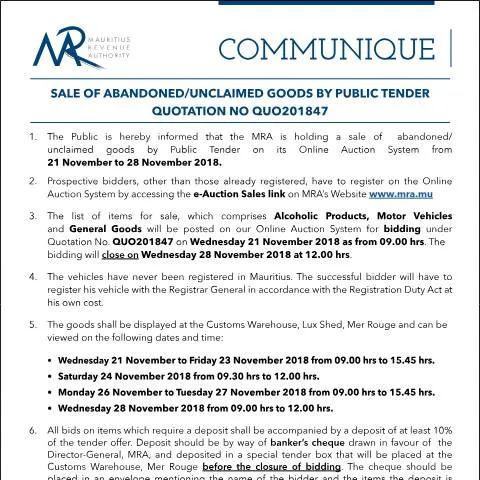
The Mauritius Revenue Authority (MRA) conducts a crucial function in managing abandoned or unclaimed goods, allowing these items to be sold through a public tender process. This initiative not only helps clear storage space but also provides an opportunity for citizens and businesses to acquire goods that would otherwise remain unutilized. Such auctions typically involve a variety of products, including alcoholic beverages, vehicles, and general goods. This document, specifically the Form Communique 47 of 2018, outlines the procedures and requirements for participating in this auction, which took place from November 21 to November 28, 2018.
Key Dates and Timeline for the Auction
The auction operates within a strict timeline, crucial for prospective bidders to adhere to. Here’s a breakdown of important dates related to the tender process:
- November 21, 2018: Auction begins at 09:00 hrs.
- November 28, 2018: Auction closes at 12:00 hrs.
- Viewing Period:
- November 21 to November 23, 2018: 09:00 hrs to 15:45 hrs
- November 24, 2018: 09:30 hrs to 12:00 hrs
- November 26 to November 27, 2018: 09:00 hrs to 15:45 hrs
- November 28, 2018: 09:00 hrs to 12:00 hrs
Understanding these dates is critical for anyone wishing to participate in the auction. Missing the registration or bidding periods will disqualify potential bidders from being able to make a purchase.
Preparing for Registration on the Online Auction System
Before engaging in bidding, prospective participants must register on the MRA's Online Auction System. This initial step is essential, especially for those who have not previously participated in such auctions. Here’s how to navigate the registration process:
- Access the MRA's official website.
- Locate the e-Auction Sales link prominently displayed.
- Complete the registration form by providing all required personal information, including your full name, address, and identification details.
- Submit the form electronically to gain access to the auction platform.
Important Note: Ensure that the information provided is accurate to avoid complications that may arise later during the bidding process.
The Bidding Process: Steps to Secure Your Desired Goods
Once registered, participants can begin the bidding process. The auction features various items, and understanding how to navigate this system is essential for success.
Understanding Bidding Requirements
Each item may have specific conditions associated with it, particularly those requiring a cash deposit. Here are the steps to follow:
- Browse through the list of auction items posted on the Online Auction System.
- Select the items you wish to bid on.
- Prepare a deposit of at least 10% of your tender offer, to be made through a banker’s cheque.
- Submit your bid along with the cheque in a sealed envelope at the designated tender box located in the Customs Warehouse.
It is crucial to understand that personal cheques will not be accepted, and all deposits must be submitted before the bidding closes.
Physical Viewing of Auction Items
Participants are encouraged to physically view the items they are interested in before placing bids. The goods are available for inspection at the Customs Warehouse, Lux Shed, Mer Rouge. This step provides an opportunity to assess the condition and worth of the items personally.
Unique Aspects of Special Cases in Auction Participation
Individuals or entities wishing to participate in the auction may encounter unique circumstances that require additional considerations. Here are a few scenarios:
Foreign Bidders
Foreign participants looking to bid on items at the auction must be mindful of the legal requirements surrounding their involvement. They are required to:
- Register on the Online Auction System.
- Provide a valid form of identification, such as a passport.
- Possess a local bank account or arrange for a banker’s cheque from a Mauritian bank.
Bidders Who Are Minors
Individuals under the age of 18 are generally not permitted to participate in public tenders. However, under special circumstances, minors can bid if:
- Their legal guardians provide written consent.
- A guardian or responsible adult is present to place the bid on their behalf.
Documents Required for Successful Participation
Proper documentation is a key aspect of participating in the auction. Here’s a checklist of documents and information to prepare:
| Document Type | Description | Importance |
|---|---|---|
| Identity Card/Passport | Proof of identity for registration and bidding. | Mandatory |
| Banker’s Cheque | Deposit for bidding on items requiring a monetary commitment. | Mandatory for bids on certain items |
| Registration Confirmation | Proof of successful registration on the Online Auction System. | Essential for access to bidding |
| Written Consent (if applicable) | For minors or individuals with special situations. | Necessary if a minor is bidding |
Following Up After Bidding: Understanding the Outcomes
Upon the closing of the auction, the MRA will evaluate all bids submitted and notify successful bidders. Here’s what you can expect next:
Notification of Success
Successful bidders will receive a notification that confirms their winning bid. This notification will include:
- The total amount due for the items won.
- Instructions for payment and collection of the goods.
Payment Process
Payment for the items must be completed promptly as per MRA guidelines. Methods of payment typically include:
- Banker’s cheque.
- Bank transfer (if applicable).
It is advisable to ensure that payment is made without delay to avoid forfeiting your bid.
Collecting Your Goods
Once the payment is processed, successful bidders can collect their items from the designated location. It is important to bring along the following:
- Payment receipt.
- Identification document.
Failure to collect the items within the stipulated time frame may result in penalties, including the loss of the items or deposits.
Historical Context and Legal Framework Governing Auctions
The sale of abandoned or unclaimed goods by public tender in Mauritius is governed by a comprehensive legal framework, reflecting both the French civil law and English common law systems. This framework ensures that the auction process is conducted fairly and transparently for all participants. The Public Auctions Act and relevant regulations outline the procedures, rights, and responsibilities of both the MRA and bidders. This legal backdrop not only enhances trust but also promotes adherence to best practices in public tenders.
Understanding this context helps potential bidders appreciate the integrity of the process and the guidelines that govern it.
Conclusion: Navigating the Auction Landscape Efficiently
With a well-structured approach, engaging in the sale of abandoned or unclaimed goods through public tender can be a rewarding experience. By being aware of the timelines, preparation for registration, bidding requirements, and legal frameworks, prospective bidders can navigate the auction landscape more efficiently. Participation not only serves to benefit individuals seeking unique items but also contributes to the efficient management of unclaimed goods in Mauritius.
Understanding the Legal Framework Governing Abandoned and Unclaimed Goods
The sale of abandoned or unclaimed goods by public tender in Mauritius is governed by a combination of statutory regulations and procedural guidelines that ensure transparency and fairness. Under the relevant provisions set forth by the Mauritius Government, these items are typically sold to recover costs associated with their storage or maintenance. The legal framework primarily resides within the Public Procurement Act and established guidelines by the Mauritius Revenue Authority (MRA) and other relevant local authorities.
When assessing the nature of these goods, it is crucial to recognize the distinction between abandoned property and unclaimed property. Abandoned goods refer to items that have been relinquished by their owner, while unclaimed goods are those that remain uncollected after a specified period. The approach to their disposal can differ significantly, with abandoned goods generally considered for immediate sale, given that ownership has been waived. In contrast, unclaimed items might necessitate a more formal process to determine ownership and eligibility for sale.
Entities involved in the sale must adhere to specific protocols to ensure compliance with existing laws. This includes an obligation to notify the public prior to the tender process, thereby allowing potential bidders to be informed of the nature and condition of the items on sale. Furthermore, the descriptive inventory of the goods becomes a significant document, requiring accuracy to avoid legal disputes post-sale.
Steps and Procedures for Bidding on Abandoned and Unclaimed Goods
The process for bidding on abandoned and unclaimed goods involves several key steps, each designed to uphold the principles of fairness and accountability. Initially, authorities like the MRA announce the upcoming tender process through official channels, including local newspapers and government portals. This announcement typically includes details on the items available for bidding, viewing dates, and the terms of sale.
Once the tender is announced, prospective bidders must prepare the necessary documentation to participate in the bidding process. This usually requires completing a bid submission form (referred to as the Tender Form), which may include verification of identity through the National ID Card or a similar document to ensure that all bidders are legitimate and accountable. A deposit fee is often required to accompany the tender submission, serving as a commitment to the bidding process. The deposit is typically refundable unless the bidder fails to comply with the terms of the tender.
On the designated day of the tender, bidders assemble at a specified location where the goods are displayed. It is recommended to inspect these items thoroughly before placing a bid. Once the bidding opens, participants submit their bids either verbally or through written proposals, depending on the nature of the tender. The highest bid is generally accepted, although authorities reserve the right to reject any bid if it does not meet the minimum reserve price or if the bidding process is deemed unsatisfactory.
Once the bidding concludes, successful bidders are notified and must finalize their purchase by completing the payment within a stipulated time frame. This timeline is crucial as failure to adhere to it could lead to the forfeiture of the bid deposit and the opportunity to purchase the goods.
Implications of Purchasing Abandoned and Unclaimed Goods
Purchasing abandoned and unclaimed goods through public tender can present both opportunities and challenges for buyers. On one hand, it provides a unique avenue to acquire items at potentially lower prices than retail markets. Many bidders are drawn to the allure of finding valuable goods, collectibles, or materials they can repurpose for profit.
However, there are significant implications to consider. One major aspect is the potential of hidden liabilities associated with the goods. It is essential for bidders to conduct thorough due diligence prior to purchasing. Items may come with conditions that the owner previously imposed, such as liens or outstanding debts which could complicate the buyer's ownership rights. Additionally, buyers are generally responsible for ensuring that their purchases comply with local laws, which may include restrictions on certain types of items like electronics or vehicles.
Moreover, there could be challenges related to resale or modification of the purchased items. Depending on the nature of the goods, buyers might need to consider additional regulations, such as those governing second-hand sales or compliance with safety standards. Understanding these legal nuances is crucial to avoid future complications.
Furthermore, once the auction has concluded and the goods have been purchased, buyers will also need to navigate the logistics of transporting the goods from the sale location. This includes factors related to securing appropriate transportation means and ensuring the goods are adequately handled and transported to avoid damage or loss.
In summary, while participating in the sale of abandoned and unclaimed goods can be a lucrative endeavor, it is imperative that bidders approach the process with a thorough understanding of the accompanying risks and responsibilities.