Understanding the Public Tender Process for Abandoned Goods: A Unique Opportunity
The sale of abandoned or unclaimed goods through public tender represents a significant opportunity for both individuals and businesses in Mauritius. This process not only allows the Mauritius Revenue Authority (MRA) to manage unclaimed items effectively but also provides potential buyers with the chance to acquire items at competitive prices. With a well-defined timeframe and specific procedures, understanding this process is essential for interested parties.
The Legal Framework Behind the Sale of Abandoned Goods
The enforcement of regulations surrounding the sale of abandoned or unclaimed goods in Mauritius is rooted in laws that guide public procurement and tendering processes. This falls within the framework of the MRA, which ensures that the auction system operates transparently and efficiently.
The principle of public tendering is enshrined within various legal frameworks established in Mauritius, including the Public Procurement Act and specific regulations laid out by the MRA. These regulations ensure that the process is conducted fairly, allowing for equal participation while meeting the legal obligations of the government.
Decoding the Public Tender Form: Reference Communique10of2020
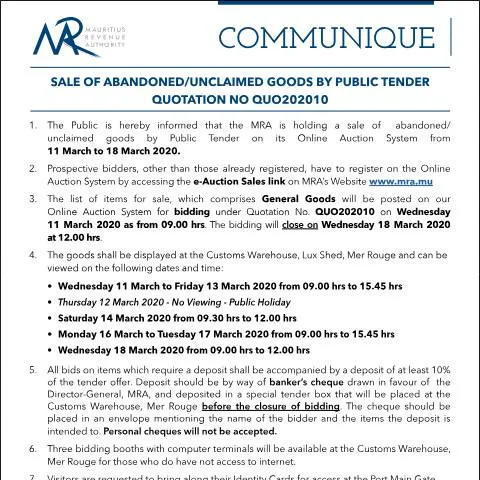
The Communique10of2020 outlines the specifics of the tender process for unclaimed goods. This document serves as a guideline for prospective bidders, detailing the entire process, including registration, bidding, deposit requirements, and the viewing of goods.
This form is not merely a procedural document; it encapsulates the essence of the transaction. It ensures that all parties are aware of their responsibilities and the rules governing the auction. Specifically, it addresses:
- Timeframes for bidding and viewing
- Deposit requirements and payment methods
- Logistical arrangements for accessing viewing locations
Navigating the Auction System: Steps for Participation
Registration Process
For those interested in participating in the auction, registration on the Online Auction System is the first crucial step. This can be accomplished by visiting the MRA’s official website and following these steps:
- Access the e-Auction Sales link
- Complete the registration form with personal details
- Submit your registration to gain access to bidding
It’s essential for bidders to be proactive, as registration must be completed before engaging in the tender process.
Viewing and Bidding on Goods
Once registered, prospective bidders can view the items available for auction at the Customs Warehouse, Lux Shed, Mer Rouge. The goods will be available for inspection during the designated viewing times:
| Date | Time |
|---|---|
| 11 March to 13 March 2020 | 09:00 hrs - 15:45 hrs |
| 14 March 2020 | 09:30 hrs - 12:00 hrs |
| 16 March to 17 March 2020 | 09:00 hrs - 15:45 hrs |
| 18 March 2020 | 09:00 hrs - 12:00 hrs |
Understanding the schedule is vital, as bids must be placed before the auction closes on 18 March 2020 at 12:00 hrs.
Financial Commitments: Deposit Requirements and Payment Methods
To participate in the bidding process, bidders are required to submit a deposit of at least 10% of their tender offer. This deposit, which acts as a pledge of good faith in the bidding process, must be in the form of a banker’s cheque. Personal cheques are not accepted.
Here are the steps to ensure your deposit is correctly processed:
- Prepare a banker’s cheque drawn in favour of the Director-General, MRA.
- Place the cheque in an envelope that clearly states the bidder's name and the items for which the deposit is made.
- Deposit the envelope into a special tender box before the bidding closes.
Accessibility and Support for Bidders
Recognising that not all participants may have internet access, the MRA provides dedicated facilities for bidders at the Customs Warehouse. Three bidding booths equipped with computer terminals are available for the public to facilitate participation in the tender process.
Additionally, potential bidders are reminded to bring their Identity Cards for access at the Port Main Gate, ensuring a smooth entry for viewing and bidding.
Implications of Participation: Rights and Responsibilities
Engaging in the tender process entails understanding both rights and responsibilities. Successful bidders will be expected to honour their bids and complete the purchase, while the MRA is committed to providing a transparent and fair bidding environment.
Failure to comply with the bidding terms, such as not providing the required deposit or failing to complete the purchase after winning a bid, may result in penalties or restrictions on future participation in MRA tenders.
Exploring Special Cases: Non-residents and Minors
While the public tender is predominantly aimed at residents, non-residents may also participate in the auction, though specific conditions apply. Non-resident bidders must provide additional documentation to verify their identity and address in Mauritius.
As for minors, engaging in the tender process typically requires parental or guardian consent. It is advisable for minors to have an adult accompany them during the bidding process to ensure compliance with regulations.
Conclusion: The Value of the Public Tender Process
The sale of abandoned and unclaimed goods through public tender is an important mechanism for the MRA, enabling the efficient management of unclaimed merchandise while providing citizens and businesses with unique purchasing opportunities. Understanding the intricacies of the Communique10of2020 is essential for anyone looking to navigate this process successfully. By following the established guidelines and being proactive in preparation, bidders can take full advantage of this opportunity.
Understanding the Process of Public Tender for Abandoned Goods
The sale of abandoned or unclaimed goods through public tender is an essential administrative procedure in Mauritius, managed by various government bodies, including the Mauritius Revenue Authority (MRA) and the respective local councils. This process not only helps in clearing storage spaces but also provides an avenue for the government to recover some costs associated with the maintenance of these goods. Understanding the intricacies of this process can greatly benefit potential bidders and members of the public keen on purchasing these goods.
To initiate the sale, the authorities must first declare the items as abandoned or unclaimed. This declaration typically involves a legal process where the items have been stored for a designated period without any claim from their rightful owners. The duration for which an item is considered abandoned may vary based on the type of goods and their condition. After this period, the government will compile a list of such items and publish a notice of the impending sale through public tender.
Interested buyers are encouraged to review the published list and attend the public tender, which involves submitting sealed bids. It's crucial to understand that the bid submission must adhere to the guidelines outlined in the tender notice. This includes preparation of necessary documentation and ensuring that the bid is submitted on time, as late submissions typically result in disqualification. It's also advisable for bidders to examine the items during specified viewing periods, which allow potential purchasers to assess the condition and value of the goods in person.
Legal Framework Governing the Sale of Unclaimed Goods
The sale of abandoned or unclaimed goods is governed by various legal frameworks in Mauritius, combining both French civil law and English common law principles. The Constitution of Mauritius (1968) and the relevant provisions of the PSC Act (1955) provide guidelines on the tendering process, ensuring transparency and fairness in the sale of public assets.
Additionally, the local government acts and regulations concerning property management also play a significant role in the legal proceedings around unclaimed property. Prior to the sale, authorities must ensure compliance with procedural fairness, which may involve public notifications and allowing sufficient time for claims to be made by original owners. This balance aims to protect citizens' rights while facilitating the government’s ability to manage unclaimed goods effectively.
Moreover, many local councils have specific bylaws that dictate how unclaimed goods should be handled. These bylaws can outline the timelines for declaring goods as abandoned, the processes for notifying owners, and the conditions under which goods can be sold at public tender. Bidders should familiarize themselves with these regulations to ensure a comprehensive understanding of the legal context in which they are involved.
Best Practices for Bidders in Public Tender Auctions
For individuals and businesses interested in participating in public tender auctions for unclaimed goods, there are several best practices to adopt. First and foremost, thorough research is critical. Prospective bidders should familiarize themselves with the types of goods typically auctioned and the prevailing market prices. This knowledge can significantly influence the bidding strategy and ultimately the success of the purchase.
Additionally, it is important to attend any pre-tender viewings offered by the authorities. This provides an excellent opportunity to inspect the items and gauge their condition before making a financial commitment. Bidders should take detailed notes and photographs if possible, as this information will serve as a reference during the bidding process.
Another essential practice is to prepare all required documentation meticulously. Bidders should ensure they have correct identification, adhere to submission deadlines, and include all necessary forms, such as the appropriate PSC Form or LGSC Form, depending on the jurisdiction. Any discrepancies or incomplete submissions can lead to disqualification from the tendering process.
Furthermore, prospective bidders should be aware of the payment methods accepted for successful bids. Understanding the financial implications, including any taxes or fees associated with the purchase, is crucial for proper budgeting. Thus, engaging with the MRA or relevant local council for clarifications on these aspects can prevent unforeseen expenses.
Finally, it is advisable to remain patient and flexible throughout the process, as public tender outcomes can sometimes be unpredictable. Adjusting bidding strategies based on the competition and the condition of the items can lead to more advantageous outcomes for participants in these auctions.