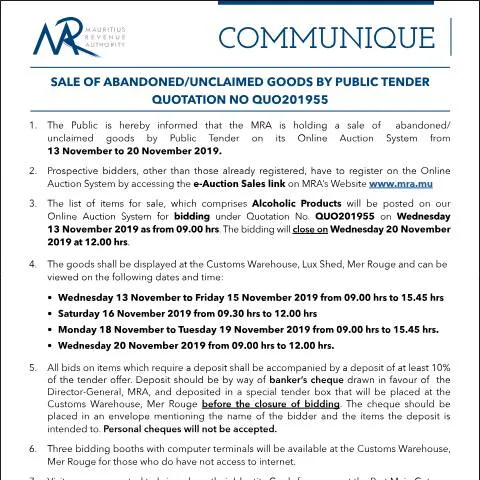
Understanding the Sale of Abandoned or Unclaimed Goods: A Key Official Document
In the intricate world of public tenders, the Sale of Abandoned / Unclaimed Goods by Public Tender serves a pivotal role for both government agencies and citizens. This process involves the auctioning of goods that have been abandoned or left unclaimed, allowing the Mauritius Revenue Authority (MRA) to efficiently handle assets while providing an opportunity for prospective bidders to acquire potentially valuable items.
A Glimpse into the Sale Process: Timeline and Key Milestones
The auction process, as outlined in the Communique 55 of 2019, is initiated by the MRA and features a well-defined timeline. The essential phases are as follows:
- Announcement of Sale: The public is notified of the sale, which is conducted via the MRA’s Online Auction System. This specific auction took place from November 13 to November 20, 2019.
- Registration for Bidders: Individuals wishing to participate must register on the Online Auction System by accessing the e-Auction Sales link on the MRA website.
- Viewing Period: The goods are displayed at the Customs Warehouse, Lux Shed, Mer Rouge, allowing prospective bidders to inspect the items before the bidding opens.
- Bidding Phase: The bidding commences and concludes within the specified dates, with strict adherence to the times stated.
- Deposit Requirements: All bids must be submitted alongside a deposit of at least 10% of the tender offer.
Registration Demystified: How to Join the Auction
To participate in the public tender, prospective bidders need to navigate the registration process. Here are the necessary steps:
- Access the Online Auction System: Navigate to the MRA website and locate the e-Auction Sales link.
- Complete Registration: Fill in the required details to create an account. Ensure all information is accurate to avoid complications during the bidding process.
- Confirmation: Upon successful registration, you will receive confirmation, enabling you to bid on the items listed.
This registration is crucial for participating in the auction; without it, you will not be able to place bids, which can lead to the missed opportunity to acquire unclaimed assets.
Inspection Days: What to Expect When Viewing Goods
Prospective bidders are encouraged to take advantage of the designated inspection days. These viewing sessions are held to allow individuals to assess the condition and value of the goods up for auction. The viewing schedule for the 2019 auction included:
- November 13 to 15: 09:00 hrs - 15:45 hrs
- November 16: 09:30 hrs - 12:00 hrs
- November 18 to 19: 09:00 hrs - 15:45 hrs
- November 20: 09:00 hrs - 12:00 hrs
As you attend these sessions, remember to bring along your Identity Card for access to the Port Main Gate. This allows for a smooth entry into the premises where the goods are stored.
Decoding the Bidding Requirements: Deposits and Payment Methods
Participating in the auction requires an understanding of the bidding requirements, particularly regarding deposits:
- All bids must include a deposit of at least 10% of the tender offer.
- The deposit must be in the form of a banker’s cheque made out to the Director-General, MRA.
- Deposits should be submitted in a special tender box located at the Customs Warehouse before the bidding closes.
It is critical to note that personal cheques are not accepted, which emphasizes the necessity for prospective bidders to prepare their payments in advance. Failure to comply with these requirements could result in disqualification from the bidding process.
Participation Options: Online and Booth Bidding Enhancements
For participants who may face challenges in accessing the internet, the MRA provides alternative solutions. Bidding booths equipped with computer terminals are readily available at the Customs Warehouse, ensuring that all interested bidders have the opportunity to participate. Here’s what you should know about these facilities:
- Three bidding booths are available to accommodate those without internet access.
- Each booth is equipped with computers and is staffed to assist bidders in navigating the online auction system.
- Attendees should prepare to present their Identity Cards at the entrance to utilize these facilities.
Legal Framework and Historical Context: The Rationale Behind the Sale
The sale of abandoned or unclaimed goods by public tender is governed by a hybrid legal framework in Mauritius, incorporating elements of both French civil law and English common law. This regulatory environment ensures that the sale is conducted transparently and fairly. The PSC Act of 1955 provides the foundation for recruitment in the public service, while the provisions set forth by the MRA ensure that abandoned goods are handled in a manner that serves the public interest.
Historically, these sales have allowed the government to reclaim space and asset value while providing citizens with access to potentially valuable items. The implementation of online bidding represents a significant shift towards enhancing accessibility and efficiency in public tenders, reflecting a modern approach to governance and public service.
Consequences of Non-Compliance: Rights and Obligations
Participating in the sale of abandoned goods carries both rights and obligations for bidders. Understanding these can prevent potential pitfalls:
- Rights: Successful bidders are entitled to acquire the goods as per their bid, provided they meet all bidding requirements.
- Obligations: Bidders must ensure their offers are legitimate and that deposits are paid accurately. Any discrepancies may lead to the forfeiture of bids.
- Consequences of Non-Compliance: Failure to adhere to the bidding rules may result in disqualification from current and future auctions.
Overall, understanding the rights and obligations involved in this process helps to create a fair and transparent bidding environment for all parties involved.
Final Remarks: Engaging with the Auction Process
The Sale of Abandoned / Unclaimed Goods by Public Tender offers an exciting opportunity for individuals to engage in the acquisition of unique items. By following the outlined procedures, reviewing the goods thoroughly, and meeting all the stipulated requirements, bidders can successfully navigate this public tender process.
Stay informed about future auctions and continue to utilize the available resources provided by the MRA. For more specific inquiries, do not hesitate to contact the MRA directly through their customer service channels.
Understanding the Process of Public Tender for Abandoned Goods
The sale of abandoned or unclaimed goods by public tender in Mauritius is a structured process governed by specific regulations that ensure transparency and fairness. The initial step involves the identification of goods that remain unclaimed for a designated period, typically set by the relevant authority. Goods may include items left in airports, lost luggage, or uncollected freight. Once goods are identified, they are assessed for value and categorized accordingly.
It is crucial for those interested in bidding to understand the categories of goods that may be available for tender. Categories typically encompass electronics, clothing, bicycles, furniture, and collectibles. Each of these categories may have different processes and requirements in terms of viewing and bidding. Bidders must stay informed about the dates and locations where these tenders will be held, which are published through official government channels, such as the government’s portal at govmu.org.
The calling for tenders usually occurs through public advertisements, and potential bidders must be aware that the tender process is competitive. All interested parties need to register, which may require providing a copy of their National ID Card and completing the registration form specific to the tender. There may be a nominal fee associated with the tender application, which is subsequently applied to the final bid if successful. Bidders are encouraged to attend any pre-tender meetings or viewings of the abandoned goods to better inform their bids.
Fill in your form directly online
No printing: type your details into the boxes of the official form, tick, then download the PDF ready to send.
- 1Type into the form boxes
- 2Tick in one click
- 3Save and download the PDF
Legal Framework Governing Abandoned Goods Tenders
The legal framework surrounding the sale of abandoned goods by public tender is primarily derived from local legislative instruments, including the Constitution of Mauritius and applicable acts such as the Public Procurement Act. Under this framework, every process associated with abandoned goods must adhere to the principles of transparency, equal treatment, and non-discrimination, ensuring a level playing field for all bidders.
Particularly noteworthy is the role of the relevant authorities, such as the Mauritius Revenue Authority (MRA) and the Public Service Commission (PSC), in overseeing these tenders. These authorities ensure compliance with the law at every stage of the tender process. Additionally, the requirement to hold public tenders ensures that the disposal of unclaimed goods is conducted in an open and competitive manner, thereby maximizing potential revenue from the sale of such goods for the state.
The specific procedures involved typically include the preparation of a detailed inventory list of the goods, which must be publicly available ahead of the tender date. Interested bidders must also be informed of any conditions attached to the sale, such as the requirement for immediate payment and removal of the goods upon winning the bid. Legal advice may be beneficial for bidders unfamiliar with the tendering process or those interested in understanding their rights and obligations fully.
Financial Implications of Bidding on Abandoned Goods
Bidding on abandoned or unclaimed goods can be an enticing opportunity for investors and collectors, as they often yield items at significantly lower prices than retail markets. However, participants must be aware of the financial implications associated with such bids. The costs involved can extend beyond the winning bid amount, including taxes, transportation fees, and possibly restoration costs for items requiring repair.
In Mauritius, bidders are generally required to pay a deposit upon registration, a percentage of which may be forfeited should they fail to follow through with the purchase after winning the tender. Additionally, successful bidders are subject to the Goods and Services Tax (GST), which may add to the final cost of the items acquired. Therefore, it is prudent for bidders to meticulously assess their financial capabilities before entering the bidding process.
Moreover, the potential for profit from resale of the acquired goods should be carefully calculated. Bidders should conduct thorough market research to evaluate demand for particular items, allowing for informed bidding decisions that not only account for the purchase price but also for potential resale value. Engaging with local auction houses or second-hand stores may provide insights into the profitability of specific categories of goods.
Overall, while the public tender process for abandoned goods offers a unique opportunity for purchasing valuable items, it requires careful consideration of the associated financial commitments and market dynamics to ensure a rewarding experience.