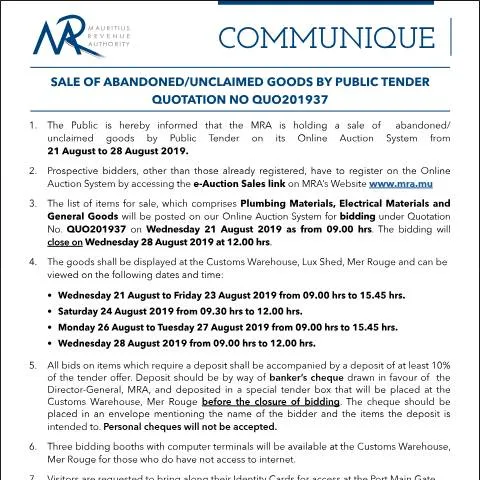
Understanding the Sale of Abandoned Goods: A Unique Opportunity
The sale of abandoned or unclaimed goods presents a significant opportunity for individuals and businesses in Mauritius to acquire items at a fraction of their market value. Often, these goods include a variety of categories, from plumbing and electrical materials to general merchandise, and are sold through public tenders managed by the Mauritius Revenue Authority (MRA). The process not only allows the government to recover costs associated with abandoned items but also enables interested parties to benefit from potentially lucrative purchases.
The Chain of Events Leading to the Sale
Before participating in the bidding process, it is essential to understand the sequence of events that culminates in the public tender. Goods that remain unclaimed after a certain period—usually due to neglect or abandonment—are collected and stored by the MRA. Once a sufficient quantity of goods is accumulated, they are cataloged and prepared for sale via public tender. This sequence is underpinned by regulatory measures that guide the entire process, ensuring transparency and fairness.
Key Milestones in the Sale Process
- Goods Collection: Items are collected and stored by MRA.
- Inventory Preparation: A detailed list of goods is prepared for potential bidders.
- Public Notification: Information about the auction is publicly communicated.
- Bidding Period: An established timeframe for bidding is set.
- Awarding of Bids: Successful bids are confirmed, and payments are processed.
Who Should Consider Participating?
This bidding process appeals to a diverse range of participants. From individual buyers seeking affordable home improvement supplies to small business owners looking for inventory at discounted rates, the target demographic is broad. However, certain conditions and profiles are more likely to succeed in this environment.
Profiles of Potential Bidders
- Homeowners: Individuals looking for building materials or home appliances.
- Entrepreneurs: Small business owners in need of stock at lower costs.
- Contractors: Professionals seeking bulk procurement of materials for projects.
- Resellers: Individuals who plan to sell items at a profit.
The Regulatory Framework Behind the Sale
The Public Tender process for abandoned goods in Mauritius is governed by a framework of laws and regulations designed to uphold ethical standards in public sales. The primary legal references include the Public Procurement Act and guidelines set forth by the MRA. These regulations ensure that the process is conducted fairly, with all participants given equal opportunity to bid on the goods available.
History of Abandoned Goods Sales
Historically, the auction of unclaimed goods in Mauritius has evolved significantly. Initially, the process was relatively informal and lacked comprehensive oversight. However, with the introduction of the MRA's structured approach in recent years, there is now a clear set of guidelines that dictate how sales should be managed. This evolution not only enhances transparency but also boosts public trust in government operations.
Preparing for the Bidding Process
Before diving into the bidding arena, prospective participants must prepare adequately. While the auction system provides a platform for buying goods, understanding the nuances of the bidding process is essential. This preparation involves gathering necessary documents, understanding the bidding mechanics, and knowing what to expect on auction day.
Key Documents for Participation
To engage effectively in the bidding process, bidders must have the following documents ready:
- Identity Card: A valid national identity card is mandatory for identification during the auction.
- Deposit Payment: Bidders must supply a banker’s cheque equivalent to at least 10% of their tender offer.
Decoding the Tender Form: A Closer Look
The tender form, specifically the Communique 37 of 2019, plays a pivotal role in the bidding process. Understanding the various sections of this form is crucial to submitting a valid tender.
Sections of the Tender Form
| Section | Description | Common Pitfalls |
|---|---|---|
| Bidder Information | Personal and contact details of the bidder. | Ensure all details match your identity card. |
| Item Selection | Details of the items the bidder wishes to purchase. | Double-check the item numbers against the auction list. |
| Deposit Submission | Information regarding the deposit cheque. | Ensure it is a banker’s cheque; personal cheques are not accepted. |
| Signature | Bidders must sign to confirm their intention to bid. | Missing signatures may result in disqualification. |
Where and How to Submit Your Tender
Submission of the tender can be carried out through designated channels. Knowing the right method of submission is crucial for ensuring your participation is valid and recognized.
Submission Channels
- Online Portal: Registered bidders can submit their tenders online through the MRA's Online Auction System via their official website. This option is convenient and allows for real-time bidding.
- On-Site Submission: For those without access to the internet, physical submission can be made at the Customs Warehouse, Mer Rouge, where special tender boxes are placed. Bidders must ensure their submission is made before the closing time.
Post-Bidding Process: What Happens Next?
Once the bidding period concludes, successful bids are processed. Participants should be aware of the next steps following the submission of their tenders.
Steps After Bidding
- Award Notification: Bid winners will be notified officially by the MRA.
- Payment Completion: Successful bidders must finalize payment arrangements for the goods won.
- Collection of Goods: Instructions will be provided regarding how to collect their purchased items.
Maximizing Your Bidding Experience
To navigate the public tender process effectively, potential bidders should adopt strategic practices that maximize their chances of success. Being well-prepared and informed can significantly enhance the bidding experience.
Tips for Effective Bidding
- Research: Familiarize yourself with the types of goods being auctioned and their market values.
- Participate in Pre-Auction Viewings: Attending the viewing sessions allows bidders to assess goods physically.
- Set a Budget: Have a clear budget before the auction to avoid overspending during bidding.
By following these guidelines and understanding the nuances of the bidding process for abandoned and unclaimed goods, participants can enhance their experience and potentially secure valuable items at competitive prices. The MRA's structured approach to these sales not only benefits the government but also offers an accessible platform for interested buyers.
Understanding the Legal Framework for the Sale of Abandoned Goods
The sale of abandoned or unclaimed goods in Mauritius is governed by both the Civil Code and specific regulations laid out by various governmental bodies. Under the Civil Code, items that have been abandoned or left unclaimed after a specified duration can be subject to public auction or tender. It is crucial for potential bidders to understand the distinction between abandoned goods and goods that are merely unclaimed, as the legal processes and requirements may vary.
Abandoned goods typically refer to items that the owner has voluntarily relinquished ownership of, often with no intention of reclaiming them. In contrast, unclaimed goods may still belong to an identifiable owner, who simply has not come forward to collect them. Understanding these categorizations affects the bidding process and implications for liability post-sale.
Additionally, the applicable laws may stipulate a mandatory notification period where owners are given a final chance to reclaim their property before it is sold. This period can vary, so interested parties are advised to consult the relevant local authorities, such as the Ministry of Finance or local municipalities, to obtain specific timelines and procedures applicable to their case.
Procedure for Bidding in Public Tenders
Engaging in the process of bidding on abandoned or unclaimed goods via public tender involves several distinct steps. Prospective bidders must first register with the relevant authority handling the auction. For instance, the Public Service Commission (PSC) or the Local Government Service Commission (LGSC) may coordinate these tenders depending on the nature of the goods and their origin.
Fill in your form directly online
No printing: type your details into the boxes of the official form, tick, then download the PDF ready to send.
- 1Type into the form boxes
- 2Tick in one click
- 3Save and download the PDF
Once registered, bidders must familiarize themselves with the tender documents, which typically include details about the items for sale, starting bid prices, and any specific conditions of sale. It is imperative to thoroughly review these documents to ensure compliance with all stipulated requirements, as failure to do so may result in disqualification from the tender process.
Bidders should also prepare the necessary documentation, which may include identification, proof of residency, and financial statements to demonstrate their capacity to make a purchase. All submissions, including bids, must be made through the designated online platform or in person at the specified location, ensuring compliance with the established timelines.
After submitting a bid, participants may be required to attend a public opening of bids, where they can witness the process and verify the legitimacy of the transaction. Successful bidders will need to complete the payment process promptly and adhere to any post-sale regulations, including the collection of goods within a stated period.
Tax Implications and Responsibilities Post-Purchase
Purchasing abandoned or unclaimed goods at public tender not only involves a financial transaction but also entails understanding the tax implications associated with such purchases. Buyers should be aware that the acquisition of these goods may attract Value Added Tax (VAT) or other applicable taxes based on the nature of the goods and the seller's status.
It is advisable for bidders to consult with the Mauritius Revenue Authority (MRA) prior to bidding to clarify any potential tax liabilities. The MRA can provide guidance on how to file any requisite taxes related to the transaction, especially if the goods are intended for commercial use. This is crucial, as failing to account for VAT may lead to unexpected costs post-purchase.
Furthermore, once the sale is completed, buyers must ensure that they maintain compliance with local regulations regarding ownership transfer and potential resale of the items. Depending on the type of goods acquired, there may be additional requirements to register the purchase with local authorities or to obtain permits if the items fall under specific regulatory frameworks, such as vehicles or restricted items.
Ultimately, understanding the full scope of responsibilities following the purchase will help prevent legal complications and ensure a seamless transaction. Buyers should maintain records of their purchases, including any correspondence with authorities, as these documents may be required for tax filings or in the event of disputes arising from ownership claims.