Understanding the Sale of Abandoned and Unclaimed Goods
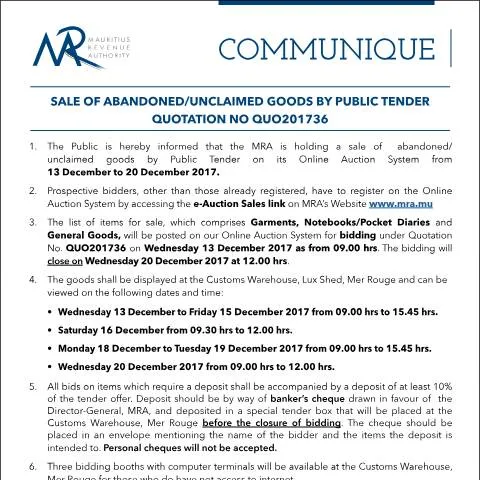
The Sale of Abandoned/Unclaimed Goods by Public Tender is a significant event governed by the Mauritius Revenue Authority (MRA). This process allows the government to auction off items that have either been abandoned or remain unclaimed for an extended period. The goal is to clear these goods while providing an opportunity for the public to acquire them through a transparent bidding process. Such sales are not only efficient but also benefit the state by generating revenue from otherwise unused items.
Who Can Participate and What You Need
This auction is open to any interested bidders. However, it is essential to note the following:
- Participants must register on the Online Auction System if not already registered.
- Only individuals who possess a valid Identity Card will be allowed entry to the auction premises.
- A deposit is necessary for bidding on items requiring one, typically set at 10% of the tender offer.
Those interested in bidding should prepare to submit a banker’s cheque along with their bid, highlighting specific details such as the bidder’s name and intended items. Personal cheques will not be accepted, ensuring security and legitimacy in financial transactions.
The Timeline: Key Dates to Remember
The auction process unfolds over a specific timeline:
- Registration Period: Bidders are encouraged to register as early as possible before the auction dates.
- Viewing Days: Goods will be available for viewing from December 13 to December 20, 2017, during specified hours.
- Bidding Window: Bidding opens on December 13 at 09:00 and closes on December 20 at 12:00.
After the bidding concludes, successful bidders will be notified and required to pay the full amount for their acquired goods within a stipulated period, which is typically defined at the conclusion of the auction.
Exploring the Auction Process: Step-by-Step
To ensure a smooth experience, here’s a concise timeline of the auction procedure from start to finish:
| Step | Description |
|---|---|
| 1. Registration | Sign up on the MRA’s Online Auction System. |
| 2. Viewing | Inspect the items at the Customs Warehouse, Mer Rouge, on designated days. |
| 3. Deposit Submission | Place your banker’s cheque in the tender box before the bidding ends. |
| 4. Bidding | Participate in the auction either online or via physical booths set up at the warehouse. |
| 5. Payment | Make full payment within the prescribed timeframe to claim your items. |
Finding Your Way: Online vs. In-Person Bidding
The MRA has made provisions for both online and in-person bidding to cater to varying needs:
- Online Bidding: This method is facilitated through the MRA’s Online Auction System, allowing registered bidders to place bids conveniently from their homes.
- In-Person Bidding: For those without internet access, the MRA provides three computer terminals at the Customs Warehouse for real-time bidding. This option ensures inclusivity for all potential bidders.
Regardless of the chosen method, all participants must comply with registration and deposit requirements to validate their bids.
What Happens If Things Go Awry?
The process of bidding is generally straightforward, however, there may be instances where things do not go as planned. Here are some common scenarios:
- Bid Rejection: If your bid is rejected due to insufficient deposit or incomplete registration, ensure you rectify these errors immediately. Contact the MRA for guidance on the necessary steps.
- Missing Items: If items listed for auction are not available during the viewing or bidding phases, bidders should check the MRA’s website for updates or contact the authority directly to inquire further.
- Refund Issues: In cases where a deposit has been made but no bids were successful, bidders may request a refund through the proper channels outlined by the MRA.
Understanding these possibilities equips bidders with the knowledge to navigate potential hiccups in the process smoothly.
Historical Context and Regulatory Framework
The Sale of Abandoned/Unclaimed Goods initiative is rooted in the need for efficient asset management within the government. This process is supported by various legal frameworks, including the Mauritius Revenue Authority Act and other pertinent regulations established to govern public tenders. The legal backdrop ensures transparency, fairness, and accountability throughout the auction process.
The MRA continuously seeks to enhance its operations, encouraging public participation while ensuring adherence to these established laws. This historical context emphasizes the importance of such sales in promoting economic efficiency and resource management.
Accommodating Unique Circumstances: Special Considerations
While the auction process is open to all, there are special considerations for various groups:
- Foreign Bidders: Non-residents wishing to participate must ensure compliance with specific documentation and registration requirements as outlined on the MRA's website.
- Minors: Bidding on behalf of minors is handled with additional scrutiny; guardians or parents need to be involved in the process, particularly for financial transactions.
- Urgent Situations: In cases of emergencies where immediate access to goods is required, bidders should communicate with the MRA directly to explore potential expedited arrangements.
These accommodations are designed to ensure that all potential bidders have a fair opportunity to participate, irrespective of their circumstances.
Final Thoughts on Participating in the Auction
Participating in the Sale of Abandoned/Unclaimed Goods by Public Tender offers a unique opportunity to acquire valuable items while contributing to the efficient management of state resources. By understanding the rules, timelines, and requirements, prospective bidders can navigate the process effectively and maximize their chances of success. Preparation is key; thus, it’s advisable to stay informed and act promptly to avoid missing any critical steps. Whether you are an experienced bidder or a newcomer, the MRA's auction is an exciting venue for engaging with public resources in a meaningful way.
Understanding the Process for Sale of Abandoned or Unclaimed Goods
The sale of abandoned or unclaimed goods in Mauritius is a formal process governed by various regulations and procedures to ensure transparency and fairness. It is essential for citizens and businesses to understand the framework surrounding these sales, as they can present unique opportunities for procurement. The process typically starts when goods are classified as unclaimed after a specific period, as determined by the relevant authority. In many cases, this timeframe is set out in the Public Tender Act and associated regulations, which stipulate how long an item must remain unclaimed before it can be sold.
Fill in your form directly online
No printing: type your details into the boxes of the official form, tick, then download the PDF ready to send.
- 1Type into the form boxes
- 2Tick in one click
- 3Save and download the PDF
The responsible authority, such as the Ministry of Finance or the relevant Local Authority, undertakes the initial steps of notifying the public about the availability of these goods through official channels, including online platforms and local newspapers. It is crucial that interested bidders are aware of the conditions under which these goods are being sold, including any stipulations regarding their condition, any existing liabilities, and the terms of sale. This information is often outlined in the tender documents that can be requested directly from the authority.
Detailed Steps to Participate in Public Tenders for Unclaimed Goods
Participating in a public tender for the purchase of abandoned or unclaimed goods requires a methodical approach. Firstly, potential bidders should register on the relevant e-portal, such as the Government of Mauritius e-services portal. The registration process typically involves providing personal details, including the National ID number, which is linked to the Central Population Database. This single-sign-on system ensures streamlined access to various government services.
Once registered, users can browse available tenders related to unclaimed goods, which are often listed under specific categories for better navigation. Each tender listing includes essential details such as the description of the goods, the inspection dates, and the deadline for submission of bids. Interested parties should prepare their bids carefully, adhering to the specifications outlined in the tender notice. It is advisable to include all required documentation, such as proof of identity and any previous relevant experience, to bolster the bid's chances of success.
After submitting bids, participants must remain attentive to any updates or announcements from the tendering authority, particularly regarding the date and time of the auction or tender opening. Successful bidders will be notified in writing and must comply with payment terms and conditions to finalize the purchase. It is important to note that payment is usually required in the local currency, Mauritian Rupee (MUR), and must be completed within a specified timeframe to secure the transaction.
Legal Considerations and Obligations for Buyers of Unclaimed Goods
Engaging in the purchase of abandoned or unclaimed goods comes with specific legal considerations. Buyers should be aware that, upon successful acquisition, they may assume certain responsibilities associated with the goods. This could include any applicable taxes or charges, which must be settled as per the guidelines provided by the Mauritius Revenue Authority (MRA). Failure to comply with these obligations can result in legal repercussions, including the possibility of forfeiting the goods.
Moreover, buyers should also conduct due diligence concerning the provenance of the goods. In some cases, if items are deemed to have been misappropriated or if outstanding claims exist against them, the buyer may find themselves embroiled in legal disputes. Therefore, it is prudent to seek legal advice before finalizing any purchase, particularly for high-value items or larger lots. Additionally, reviewing any available documentation related to the goods, such as previous ownership records or condition reports, will facilitate a more informed purchasing decision.
Ultimately, while the sale of unclaimed goods can present significant opportunities for savings and procurement, it is imperative for buyers to approach the process with caution and awareness of the legal landscape surrounding such transactions. Understanding the implications of the Public Tender process will ensure that potential buyers are well-prepared and informed, minimizing risks and maximizing potential benefits.