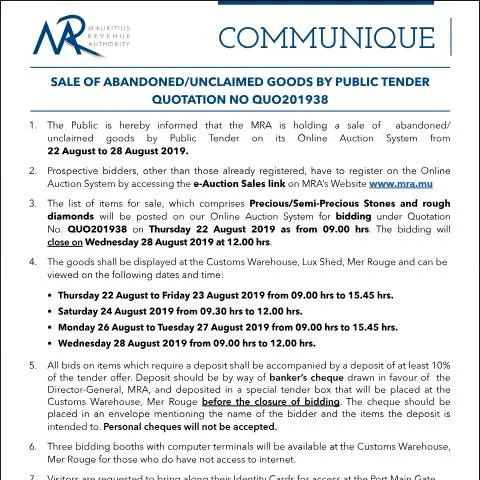
Navigating the Sale of Abandoned or Unclaimed Goods: A Practical Guide
Imagine finding an opportunity to acquire valuable goods, including precious or semi-precious stones, through a public tender process. This situation arises when the Mauritius Revenue Authority (MRA) conducts a sale of abandoned or unclaimed goods. Understanding the intricacies of the Sale of Abandoned/Unclaimed Goods by Public Tender (Communiqué No. QUO201938) can be a game-changer for potential bidders. This document serves as a crucial entry point into the bidding process, delineating the rights and responsibilities of bidders, as well as the steps to follow for successful participation.
The Unique Position of This Document in the Bidding Process
Many might confuse this form with other common administrative forms used by the MRA or local authorities. However, the Sale of Abandoned/Unclaimed Goods by Public Tender stands out due to its specific focus on auctioning off items that have been left unclaimed. It is essential to grasp its role:
- Public Tender Framework: This document operates within a public tender framework, offering transparency and competitive bidding for items that are otherwise idle.
- Legal Grounds: Governed by local laws under the MRA, this process adheres to regulations that ensure fairness and equal opportunity for all participants.
- Financial Implications: Bidders must understand the financial obligations associated with placing bids, such as the requirement for a deposit.
Understanding the Bidding Timeline and Process
Key Dates to Remember
The timeline for the bidding process is critical. The auction operates for a limited period, with specific days designated for bidding and viewing the items.
| Date | Activity | Details |
|---|---|---|
| 22 August 2019 | Auction Opens | Bidder registration starts, and items are listed. |
| 22-23 August 2019 | Viewing Period | Potential bidders can view items from 09:00 to 15:45. |
| 24 August 2019 | Viewing Period | Limited viewing from 09:30 to 12:00. |
| 26-27 August 2019 | Viewing Period | Items can be viewed from 09:00 to 15:45. |
| 28 August 2019 | Auction Closes | Bidding ends at 12:00; finalize deposits before this time. |
Understanding these dates ensures that all bidders can participate effectively and do not miss crucial opportunities.
Completing the Registration Process
Registration on the Online Auction System
To participate in this auction, bidders must register on the MRA's Online Auction System. Here’s a detailed look at the steps involved:
- Access the System: Navigate to the MRA's official website and locate the e-Auction Sales link.
- Create an Account: Fill in the necessary information. Ensure accuracy, as incorrect details could lead to disqualification.
- Verify Your Identity: Some bidders might need to provide additional documentation to verify their identity, aligning with MRA's regulations.
Deciphering the Form's Sections
The Sale of Abandoned/Unclaimed Goods form is meticulously crafted to collect all relevant information for the auction process. Each section demands careful attention:
Personal Information
Bidder details such as name, address, and contact information must be filled out correctly. Any discrepancies could lead to communication failures or issues in processing bids.
Item Selection
Each bidder must indicate which items they are interested in. A detailed list of goods will be available for review during the viewing period. Familiarity with the items is vital:
- Precious/Semi-Precious Stones: Understand the market value and condition of these items.
- Rough Diamonds: Bidders should research how to evaluate these effectively.
Deposit Requirements
As part of the bidding process, a deposit of at least 10% of the tender offer must accompany bids on specific items. This section demands clarity:
- Banker's Cheque: Only banker's cheques drawn in favor of the Director-General, MRA, are accepted. Personal cheques are not permitted.
- Submission Method: The cheque should be placed in an envelope with the bidder's name and the relevant items clearly mentioned.
Terms and Conditions Acknowledgment
Bidder must acknowledge understanding all terms and conditions related to the auction. This part is critical as it protects both the MRA and the bidders. Non-compliance with these terms might lead to penalties.
What Happens After the Bidding Process?
Once the auction concludes, there are specific steps involved depending on whether a bid is successful or not. Understanding these outcomes can help bidders prepare adequately:
Successful Bidders
If you emerge as a successful bidder, expect to receive notification from the MRA detailing the payment process:
- Payment Deadline: Adhere to the stipulated deadline for final payments to avoid forfeiting your bid.
- Collection of Goods: Instructions on how and when to collect the purchased items will be provided.
Unsuccessful Bidders
For those who do not secure items, there are no further obligations beyond what was outlined during the bidding process.
Handling Potential Issues: Refusals and Errors
It’s crucial to know how to address any issues that may arise, such as a refusal or missed documentation:
If Your Bid is Refused
In the event your bid is not accepted, understanding the rationale behind it is key:
- Documentation Issues: Ensure all required documents were submitted accurately and in full.
- Compliance with Terms: Review the terms of the auction to confirm that your bid met all criteria.
Rectifying Missing Documents
If you find that a piece of required documentation was not submitted, it’s essential to address this promptly:
- Contact MRA: Reach out to the MRA for guidance on how to rectify the submission.
- Provide Missing Information: Follow all instructions carefully to ensure compliance with their requests.
Broader Context: The Auction Ecosystem
The sale of abandoned goods through public tender is part of a more extensive framework that serves various purposes for the MRA:
- Reducing Clutter: These auctions help clear unclaimed items from storage, benefiting local authorities.
- Generating Revenue: Proceeds from the sale can be reinvested into public services and infrastructure.
- Encouraging Fair Trade: A public auction ensures that all bidders have equal access to opportunities.
Understanding the broader implications of this auction framework can enhance the bidder’s appreciation of their role in this administrative process.
Final Thoughts on Engaging with the Sale of Abandoned Goods
Engaging in the Sale of Abandoned/Unclaimed Goods by Public Tender can be both rewarding and complex. By following the outlined procedures, grasping all necessary documentation, and staying aware of the timelines, bidders position themselves for success in the auction environment. The potential to acquire valuable goods requires diligence, preparation, and a clear understanding of the associated responsibilities. Embracing this opportunity with the right mindset can lead to fruitful outcomes for savvy bidders in Mauritius.
Legal Framework Governing the Sale of Abandoned Goods
The sale of abandoned or unclaimed goods in Mauritius is governed by a complex interplay of legal principles derived from both French civil law and English common law. The key legislative framework includes the provisions set out in the Public Procurement Act and the specific regulations established by the Ministry of Finance and Economic Development. It is crucial for potential bidders to familiarize themselves with these regulations to ensure compliance throughout the tendering process.
The process typically begins with a period where goods are reported as abandoned or unclaimed. This is often initiated by local authorities or relevant agencies such as the Mauritius Revenue Authority (MRA) when goods remain unclaimed after a specified timeframe. The legal definition of 'abandoned goods' varies, but it generally refers to items that have been left without any intention of reclaiming them and can include a wide range of products from vehicles to household items.
Once goods are classified as abandoned, a public tender process is initiated. Under the Public Procurement Act, it is mandated that these goods are sold through transparent competitive bidding to ensure fairness and to maximize revenue for the state. Authorities must issue a public notice detailing the nature of the goods, the conditions of sale, and the deadlines for bid submissions.
Fill in your form directly online
No printing: type your details into the boxes of the official form, tick, then download the PDF ready to send.
- 1Type into the form boxes
- 2Tick in one click
- 3Save and download the PDF
In addition to the notice, it is vital for the tender documents to clearly state the terms and conditions of sale, including payment methods, viewing arrangements, and any warranties or disclaimers associated with the goods. Bidders need to pay close attention to these details as they can significantly influence the outcome of the tender process.
The Tender Process and Bid Submission Requirements
Submitting a bid for the purchase of unclaimed goods requires adherence to specific protocols established by the relevant authorities. The submission process is typically carried out online via the government portal (for instance, govmu.org), allowing for a streamlined procedure that enhances transparency. However, physical documentation may also be required to complete the process.
First and foremost, potential bidders must register on the Mauritian Government e-Services platform using their National ID or other identification methods tied to the MauPass system. After successful registration, participants must complete the necessary tender application forms. For instance, the tender application may require the submission of PSC Form 7 or a similar form denoting an interest in public tender participation.
Documentation often required includes proof of identity, financial stability (such as bank statements), and in some cases, a deposit or bid bond, which serves as assurance of the bidder's commitment to abide by the tender terms. It is essential that all documents are submitted before the deadline specified in the public notice, as late submissions are typically not considered.
The auction or tender opening is usually conducted publicly, where bids are reviewed, and decisions are made. Winners are subsequently notified, and they must comply with additional conditions that may be imposed, such as the payment of taxes or fees associated with the acquisition of the goods. It is critical for bidders to maintain clear records of all communications and submissions for future reference, especially considering the potential for audits and checks by authorities.
Post-Tender Obligations and Considerations
Once a successful bid has been made, there are several post-tender obligations that the winning bidder must fulfill. The first of these is the payment of the bid amount within the specified timeframe. Failure to do so can result in forfeiture of the bid bond and the awarding of the tender to the next highest bidder.
Subsequently, there may be additional documentation required to facilitate the transfer of ownership of the goods. This may include a transfer of title or other legal documents to ensure the bidder has the right to possess and utilize the acquired items. The relevant authorities will typically guide the winning bidder through this process, ensuring compliance with local laws.
Furthermore, it is important to be aware of liabilities associated with the purchased goods. Depending on the nature of the items acquired, there could be potential legal or environmental liabilities that the buyer must consider, especially if the goods were previously used in a commercial capacity. Conducting due diligence is strongly recommended, as post-purchase issues can lead to significant unforeseen costs and legal challenges.
Finally, successful bidders should also be aware of their obligations related to the resale of goods acquired through public tender. Depending on the nature of the items, further regulations may apply, particularly in the case of regulated products. Knowledge of these obligations is essential for compliance and to avoid penalties that may arise from non-compliance with local laws.