Unlocking Opportunities: The Role of the Sale of Abandoned/Unclaimed Goods by Public Tender
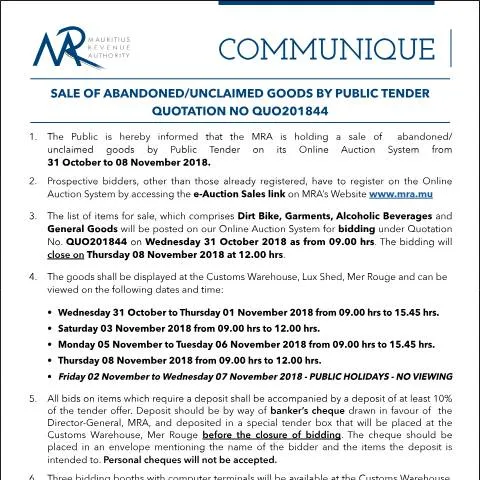
In the realm of public auctions, the Sale of Abandoned/Unclaimed Goods by Public Tender, as detailed in Communique 44 of 2018, presents a unique opportunity for individuals and businesses alike to acquire goods that have been left without claim. This process not only facilitates the liquidation of unclaimed items but also offers prospective bidders a chance to obtain valuable items at potentially lower prices.
Through structured public tenders, the Mauritius Revenue Authority (MRA) invites the public to participate in the bidding process, effectively turning what could be a significant loss into a resourceful procurement opportunity. The upcoming auction from 31 October to 08 November 2018 is a prime example of how this system operates.
Understanding the Bidding Framework
The auction process, under the ambit of the MRA, is governed by specific rules that dictate how and when items are sold. The Quotation No. QUO201844 illustrates this structured approach, providing clarity for prospective bidders.
- Registration: Prospective bidders must register on the Online Auction System by accessing the e-Auction Sales link on the MRA’s website, www.mra.mu.
- Bidding Schedule: The auction opens on 31 October 2018 at 09:00 hrs and closes on 08 November 2018 at 12:00 hrs.
- Viewing of Goods: Interested bidders can view the items at the Customs Warehouse, Lux Shed, Mer Rouge on specified dates.
Categories of Goods Available
The diversity of goods available for tender ranges widely, encompassing categories such as:
- Dirt Bikes
- Garments
- Alcoholic Beverages
- General Goods
This variety ensures that there is something for everyone, whether you are a collector, a retailer, or simply looking for personal use items.
Navigating the Viewing Process
Viewing is an integral part of the bidding process that allows bidders to assess the condition and value of items before committing to a tender. The specific viewing dates are as follows:
| Date | Time |
|---|---|
| 31 October - 01 November 2018 | 09:00 - 15:45 |
| 03 November 2018 | 09:00 - 12:00 |
| 05 - 06 November 2018 | 09:00 - 15:45 |
| 08 November 2018 | 09:00 - 12:00 |
It is essential for potential bidders to plan their visits accordingly, taking note of public holidays when no viewing will occur.
Completing Your Bid: An Essential Guide
Completing your bid involves several key steps, ensuring that all requirements are met effectively. Bids must include:
- A tender offer presented in accordance with the auction guidelines.
- A deposit of at least 10% of the tender offer, submitted via a banker’s cheque.
The deposit cheque should be addressed to the Director-General, MRA and placed in a designated tender box at the Customs Warehouse prior to the bidding closure.
Personal cheques are strictly prohibited, a rule that aims to maintain the integrity and smooth functioning of the auction process. Moreover, bidders must provide clear identification by presenting their Identity Cards upon entry to the venue.
Common Pitfalls and Precautions
Bidders should be aware of common pitfalls that could jeopardize their chances of success. These include:
- Failure to register on the Online Auction System.
- Submission of personal cheques rather than the required banker’s cheque.
- Inadequate identification documentation when attending the auction.
Ensuring that all documentation is prepared and submitted correctly can make a significant difference in the outcome of a bid.
Post-Bid Procedures and Outcomes
Once the bidding process concludes, several follow-up actions are necessary. Successful bidders will be notified as per the guidelines set forth by the MRA. It's crucial to understand the procedures that follow:
- Notification of winning bids is typically communicated via the contact information provided during registration.
- Successful bidders must complete payment for the goods won within the timeframe stipulated by the MRA.
- Failure to comply with payment instructions may result in the forfeiture of the bid and the deposit.
Moreover, arrangements for the collection of goods must be made promptly to avoid delays or complications. It’s recommended that successful bidders review the collection process in detail to ensure a smooth transaction.
Where to Submit: A Closer Look at Channels for Tender Submission
The method of submission is vital for ensuring that tender applications are received and processed correctly. Bidders have different channels through which they can submit their bids:
- Online Submission: The most convenient method, allowing registered users to place bids directly through the MRA’s Online Auction System.
- In-Person Submission: For those lacking internet access, MRA provides computer terminals at the Customs Warehouse for bidders to submit their offers on-site.
- Deposit Box Submission: Physical submission of the deposit cheque in the designated tender box is mandatory for all bidders.
Each method has its advantages, depending on the bidder’s access to technology and their personal preferences.
Final Thoughts on the Value of Participation
The Sale of Abandoned/Unclaimed Goods by Public Tender is not merely a transactional event; it represents a chance to engage with the community and benefit from goods that would otherwise remain unutilized. By understanding the intricacies of this process—from registration, viewing, and bidding to post-bid actions—participants can navigate the tender landscape with confidence.
As you prepare for the auction, take the time to familiarize yourself with the requirements, conditions, and opportunities it presents. By doing so, you position yourself to make informed decisions, ultimately enhancing your chances of securing valuable goods.
Understanding the Legal Framework for Abandoned Goods Sales
The sale of abandoned or unclaimed goods by public tender in Mauritius operates within a specific legal framework that ensures transparency, fairness, and adherence to administrative protocols. The underlying principles are primarily governed by the Disposal of Unclaimed Goods Act, which outlines the procedures that public authorities must follow when dealing with unclaimed goods. This legislation is crucial for protecting the rights of potential claimants while allowing the state to efficiently manage and dispose of abandoned properties.
Public tender processes are designed to facilitate competitive bidding, thereby maximizing the value of the goods being sold. This ensures that the government agency in charge can recover costs associated with storage and handling before goods are released to the public for bidding. It is essential to understand the various stages involved, from the initial identification of unclaimed goods to the final sale, to navigate the process effectively.
The legal framework sets clear guidelines for notification and advertising of the sale. Authorities are responsible for making announcements in local newspapers and relevant online platforms to reach potential bidders. Specifications regarding the condition of goods, terms of sale, and payment procedures must be transparently communicated to avoid disputes and ensure a smooth transaction process.
Procedure to Participate in Public Tenders for Abandoned Goods
Participating in public tenders for the purchase of abandoned goods requires prospective bidders to follow a specific set of procedures. First and foremost, interested parties must ensure they are registered on the relevant e-service platforms provided by the government, such as the Mauritius Government Online Services (govmu.org). This often involves providing valid identification, typically linked to your National ID, through the MauPass single-sign-on system for verification.
Once registered, bidders should monitor announcements related to the sale of unclaimed goods. Each announcement will detail essential information, including the location of the goods, the conditions of sale, dates for viewing the items, and the closing date for submitting tenders. Typically, any interested party is required to submit a completed tender form, often referred to as the “Tender Submission Form” along with any deposit or fees specified in the announcement.
It is advisable to attend any public viewings of the goods if offered. This allows bidders to inspect the condition of the items and assess their value accurately. Following this, bidders must ensure their submission is made before the specified deadline, as late submissions are usually not accepted under any circumstances. Once the bids are opened, successful bidders will be notified and required to follow through with the payment and collection procedures outlined in the sale documentation.
Post-Sale Responsibilities and Legal Implications
After successfully purchasing abandoned goods through a public tender, buyers must be aware of their responsibilities and the legal implications associated with their purchase. One primary concern is the need to ensure that the goods are legally free of liens or claims. Although the auction process aims to eliminate potential claims from previous owners, it is still prudent for buyers to conduct due diligence, especially for high-value items.
Furthermore, there may be regulations governing the use or resale of certain types of goods, particularly if they fall under categories that require specific licenses or registrations. For example, if the abandoned goods include vehicles or electronic devices, buyers are obliged to ensure they comply with local laws regarding registration, safety standards, and applicable taxes. Failure to adhere to these legal requirements could result in penalties or confiscation of the purchased goods.
Lastly, it is vital for buyers to keep detailed records of their purchases, including tender submission receipts, invoices, and any correspondence related to the sale. These documents may be necessary for future reference, especially if any disputes arise or for tax reporting purposes under the Mauritius Revenue Authority (MRA) guidelines.