The Significance of Public Tender Sales in Mauritius
The Public Tender Sales conducted by the Mauritius Revenue Authority (MRA) represent a key mechanism for disposing of abandoned or unclaimed goods. This process not only helps the government recover some value from assets that would otherwise remain unused but also opens avenues for the public to acquire a range of items, from alcoholic beverages to apparel, at potentially attractive prices. Understanding the operational framework and practical implications of this public tender process is crucial for prospective bidders.
A Historical Overview of Abandoned Goods Sales
The sale of abandoned or unclaimed goods by public tender has its roots in the need for efficient management of goods that are either left unclaimed or have exceeded their storage time. The legal basis for these sales is anchored in the policies and regulations established by the MRA, specifically guided by the Public Service Commission Act and other relevant legislative instruments. This historical perspective underscores the importance of regulatory compliance and the role of such sales in maintaining public order and promoting fiscal responsibility.
Legislative Context
Since the enactment of the Public Service Commission Act in 1955, the framework for managing abandoned items has evolved, integrating modern practices such as online auction systems. The introduction of the online platform for public tenders reflects a significant shift towards greater transparency and accessibility, allowing citizens to participate in governmental processes more effectively.
Engaging in the Bidding Process: A Step-by-Step Guide
Prospective bidders interested in acquiring unclaimed goods must navigate through several stages to ensure they comply with the requisite procedures. Understanding these steps is vital to avoid disqualification or missed opportunities.
Registration for Online Bidding
- Access the MRA’s Online Auction System through the designated e-Auction Sales link on their official website.
- Complete the registration form by providing necessary personal information, including your National ID number.
- Once registered, wait for confirmation of your registration before attempting to bid.
Bidding Timeline and Procedures
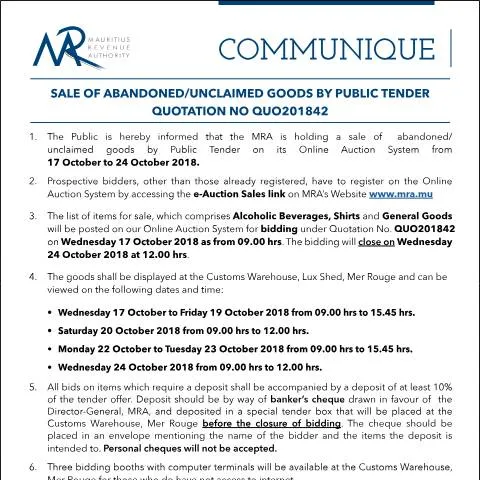
The bidding window for the sale of abandoned goods typically spans several days, allowing ample opportunity for prospective bidders to place their offers. According to Communique 42 of 2018, the auction for such goods was open from October 17 to October 24, 2018. During this period, bidders could view the items at the Customs Warehouse, Mer Rouge, on specified dates.
Viewing and Inspection of Goods
It is highly recommended that bidders inspect the items physically if possible. This allows for an informed bidding decision, reducing the likelihood of disputes post-purchase. The inspection schedule is as follows:
- October 17-19, 2018: 09:00 hrs to 15:45 hrs
- October 20, 2018: 09:00 hrs to 12:00 hrs
- October 22-23, 2018: 09:00 hrs to 15:45 hrs
- October 24, 2018: 09:00 hrs to 12:00 hrs
Understanding the Terms of Bidding: Financial Obligations
Participating in a public tender is not just about placing a bid; it requires a financial commitment in the form of a deposit. For the items listed for sale, bidders are required to submit a deposit of at least 10% of their tender offer. This deposit ensures that serious bidders are committed and helps mitigate frivolous bidding.
Deposit Submission Guidelines
The deposit must be in the form of a banker’s cheque made out to the Director-General, MRA. It should be enclosed in an envelope stating the bidder’s name and the item(s) concerned. Personal cheques are strictly not accepted, thus emphasizing the need for adherence to these financial regulations.
Accessing Bidding Facilities: Online vs. Physical Booths
To accommodate varying levels of digital access, the MRA provides options for submitting bids online or in-person. While the online system is designed for ease of access, bidders without internet access can utilize physical bidding booths available at the Customs Warehouse. This dual-access approach ensures that all interested parties can engage in the bidding process.
Utilizing the Bidding Booths
Those opting for physical booths should be prepared to bring their Identity Cards for verification at the Port Main Gate. The booths are equipped with computers for placing bids, streamlining the process for those less familiar with online platforms.
Identifying Your Rights and Responsibilities as a Bidder
Engaging in the public tender process carries both rights and responsibilities for bidders. Understanding these can significantly impact the outcome of the bidding experience.
Rights of Bidders
- The right to fair access to all information regarding the items for sale.
- The right to transparency in the bidding process, including the final bid results.
- The ability to withdraw from bidding before final offers are submitted, provided that all conditions are met.
Responsibilities of Bidders
- Ensuring timely deposit submission as per the guidelines.
- Adhering to the bidding schedule and terms set by the MRA.
- Conducting due diligence by inspecting items before bidding.
Consequences of Non-Compliance: What Happens If You Forget?
Failure to comply with the guidelines set forth can result in disqualification from the bidding process. For example, failing to submit the required deposit on time or neglecting to register can lead to missed opportunities. Additionally, the MRA retains the right to reject bids that do not meet the stipulated criteria or are submitted late.
Appeals and Disputes
In the event of disputes regarding bidding outcomes or compliance issues, bidders can lodge appeals with the MRA. The procedures for filing an appeal should be clearly outlined by the authority, and bidders are encouraged to document all communications and submissions for reference.
Final Insights: Preparing for Your Bid
As you gear up for the bidding process, consider the following tips to enhance your experience:
- Familiarize yourself with the online auction system ahead of time to avoid last-minute complications.
- Prepare your financial documents, including banker’s cheques, well in advance.
- Engage with the MRA staff if you have questions; they are there to assist.
| Action | Deadline | Notes |
|---|---|---|
| Registration on the Online Auction System | Before bidding opens | Late registrations may not be accepted. |
| Inspection of Goods | October 17-24, 2018 | Check specific timings. |
| Deposit Submission | Before bidding closure | Ensure deposit is in the right form. |
The public tender for the sale of abandoned or unclaimed goods is a unique opportunity for citizens to acquire items while simultaneously supporting the government's efforts to manage surplus goods responsibly. Engaging in this process with a clear understanding of the steps and regulations leads to a more fruitful and satisfying experience.
Understanding the Public Tender Process for Abandoned Goods
The sale of abandoned or unclaimed goods through public tender in Mauritius is governed by specific regulations that aim to ensure transparency and fairness. When an item is deemed abandoned, it typically undergoes a set of procedures to establish ownership and determine whether it can be legally auctioned. This section will delve into the step-by-step process, important timelines, and required documentation.
First and foremost, the responsible authorities, such as the Ministry of Local Government or relevant local councils, need to identify the goods as unclaimed. This usually requires a public notice to be filed, allowing the original owners a fixed period to reclaim their property. The notice period is typically set at 30 days, but may vary depending on the type of item and local regulations.
Once the notice period lapses, and ownership is confirmed to be unclaimed, the local council will prepare an inventory of the items intended for auction. During this stage, it’s advisable for potential bidders to inspect the items beforehand, as this can impact their bidding strategy and final purchase decisions.
Subsequently, a public tender is announced, inviting bids from interested parties. The tender notice will include details such as the date of the auction, the location, and a description of the goods. Bidders are often required to submit their offers using the designated form, typically labeled as ‘Public Tender Form 1’, ensuring compliance with the submission guidelines. Documentation such as proof of identity and, in some cases, a deposit may also be required to secure serious bids.
It's crucial for bidders to understand that all sales are conducted 'as-is' and that no warranties will be offered post-sale. Therefore, due diligence during the inspection phase is paramount. The auction is usually held in a public forum, ensuring transparency in the bidding process. After the closing date, the successful bidders will be notified, and payment arrangements must be made promptly in accordance with the guidelines outlined in the tender notice.
Legal Implications and Responsibilities Post-Purchase
Acquiring unclaimed goods via public tender comes with a set of legal obligations that purchasers must heed to avoid future complications. While the initial purchase may appear straightforward, it is essential to grasp the broader implications of ownership transfer in Mauritius.
Upon successful bidding and payment, the new owner must ensure that all ownership transfers are documented legally. This often involves receiving a ‘Transfer of Ownership’ document from the selling authority, which serves as proof of ownership. This document is critical not only for personal records but also for any future transactions involving the item, such as resale or donation.
Furthermore, purchasers should be aware of any potential liabilities that may come with the goods, especially if they are vehicles or machinery. It is advisable to conduct background checks on the items to ensure that there are no outstanding legal claims or encumbrances, such as fines or taxes linked to the item. In some cases, an item may have been abandoned due to previous legal issues, and the new owner could inadvertently inherit these problems.
As part of the due diligence process, it may be beneficial for the new owner to consult with a legal expert or an attorney specializing in property law. This consultation can provide insights into any liabilities and assist in navigating any potential disputes that may arise after the sale. Additionally, it is essential to register the newly acquired items with the appropriate authorities, such as the National Transport Authority for vehicles, to ensure compliance with local laws and regulations.
Impact on Local Communities and Economic Considerations
The sale of abandoned goods through public tender not only serves as a means of property reclamation but also provides significant socio-economic benefits to local communities in Mauritius. The process can help stimulate local economies by redistributing unclaimed assets that may otherwise remain dormant.
When local councils conduct public tenders, they create opportunities for individuals and businesses to acquire goods at potentially lower prices than retail. This can empower local entrepreneurs by providing them access to equipment, furniture, and other essential items necessary for establishing or enhancing their operations. In many cases, these goods can be refurbished and resold, contributing to a cycle of economic activity and job creation.
Moreover, the sale of abandoned goods also has a positive environmental impact. It encourages recycling and the re-use of products that may still have value, thereby reducing waste and supporting sustainable practices in the community. Residents are more likely to engage in environmental stewardship when they see tangible benefits from the reclamation process.
However, it is essential to consider the implications for individuals who abandon their possessions. Local governments may use the proceeds from public tender sales to fund community programs, which can promote awareness about the importance of responsible ownership and the consequences of abandoning goods. Educational initiatives aimed at informing citizens about the process and implications of abandoning property can also be beneficial in fostering a more responsible community ethos.
In summary, while the sale of abandoned goods through public tender serves immediate financial purposes, it also creates a ripple effect that can enhance community well-being and economic stability in Mauritius.