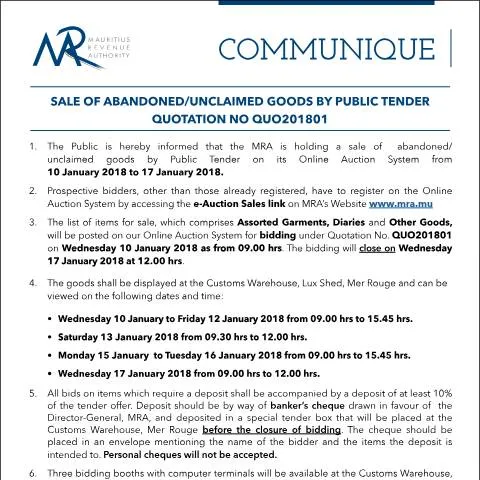
Understanding the Sale of Abandoned and Unclaimed Goods
In the realm of public tenders, one particular event captures the interest of many: the sale of abandoned and unclaimed goods. The Mauritius Revenue Authority (MRA) organizes this sale, offering a unique opportunity for bidders to acquire a variety of items that have been left behind or unclaimed. This public tender, referenced as Quotation No. QUO201801, is instrumental in recycling goods while generating revenue for the government.
The Journey from Abandonment to Auction
When items are abandoned or unclaimed, they typically end up in the custody of the MRA. Over time, these goods accumulate, awaiting a new purpose. The MRA's decision to auction these items underscores a commitment to both fiscal responsibility and environmental sustainability. By selling these goods, the MRA not only clears its inventory but also allows the public to acquire items at a potentially lower cost.
The Role of the MRA
The Mauritius Revenue Authority plays a pivotal role in this process. Beyond collecting taxes, the MRA oversees the administration of the public tender, ensuring transparency and fairness throughout the bidding process. Each auction is conducted online, facilitating broader participation and streamlined operations.
Preparatory Steps for Interested Bidders
For individuals wishing to engage in this auction, preparation is key. Here’s a comprehensive guide to ensure you are ready to partake in the bidding:
1. Registration on the Online Auction System
- Visit the MRA’s official website to access the e-Auction Sales link.
- Complete the registration process, which requires basic personal information and the creation of a secure login.
- Registration must be completed prior to the bidding period, which runs from 10 January 2018 to 17 January 2018.
2. Understanding the Auction Timeline
The bidding process is tightly scheduled. Mark your calendars as follows:
- Viewing Days: 10 to 12 January and 15 to 16 January 2018 (09:00 to 15:45 hrs) and 13 January (09:30 to 12:00 hrs).
- Bid Submission: Begins 10 January 2018 (09:00 hrs) and closes on 17 January 2018 (12:00 hrs).
Navigating the Bidding Process
Once registered, bidders must familiarize themselves with the auction's layout and specific requirements. Here’s where potential pitfalls can be avoided:
Details of the Bidding
Participants will be presented with a list of items during the auction period. Items typically include:
- Assorted garments
- Stationery such as diaries
- Other miscellaneous goods
These items will be listed under Quotation No. QUO201801, available for viewing at the Customs Warehouse, Lux Shed, Mer Rouge.
Understanding Deposit Requirements
All bids necessitate a deposit of at least 10% of the tender offer. This deposit is crucial for securing one's bid and is subject to specific rules:
- Deposits must be made via a banker’s cheque addressed to the Director-General of the MRA.
- Personal cheques are not accepted.
- Place the cheque in an envelope labeled with your name and the item for which the deposit is made.
What to Expect on Auction Day
On the day of the auction, it is essential to be prepared. Here's what to keep in mind:
1. Venue Access and Requirements
Access to the Customs Warehouse is restricted to registered bidders. Ensure you bring a valid Identity Card for entry at the Port Main Gate.
2. Technology Access
For those without internet access, the MRA provides bidding booths equipped with computer terminals at the venue:
- Three booths will be available to assist bidders in placing their offers.
Post-Bidding Procedures
After the bidding concludes, several actions will follow:
1. Bid Evaluation
The MRA will evaluate all bids received and determine the successful bidders based on the highest offers. Should your bid be successful, you will receive communication detailing the next steps.
2. Payment and Item Collection
Upon confirmation of a successful bid, it is imperative to:
- Complete the payment process as outlined in the communication from the MRA.
- Collect your items within the stipulated timeframe, following the instructions provided.
Addressing Issues and Challenges
Occasionally, participants may face difficulties during the bidding process. Here’s how to navigate potential challenges:
Disputes and Concerns
In the event of a dispute regarding a bid or item, bidders should:
- Contact the MRA directly via their helpline or email provided on www.mra.mu.
- Provide all necessary details, including the quotation number, item description, and your bidder registration details.
Handling Incomplete Submissions
Should your documentation or deposit be incomplete, the MRA will notify you of the missing elements. It is crucial to respond promptly to rectify any issues to ensure your participation remains valid.
Understanding the Regulatory Framework
The Sale of Abandoned and Unclaimed Goods by Public Tender is governed by various regulations established by the MRA. This regulatory framework ensures transparency, fairness, and accountability in the bidding process. Key points include:
1. Legislative Influence
This procedure is influenced by the broader governance policies set forth in Mauritius's Constitution and the Public Service Commission Act. These laws guide how state properties are managed and sold to the public.
2. Accountability and Oversight
The MRA is mandated to maintain a high level of accountability throughout the auction process, ensuring that all transactions are conducted ethically and transparently.
Conclusion: The Path Ahead
Engaging in the public tender for abandoned and unclaimed goods not only provides an avenue for acquiring unique items at competitive prices but also supports the MRA's objectives of efficient resource management. Whether you are a seasoned bidder or a newcomer, understanding the nuances of the process will enhance your experience and increase your chances of success. Leverage the insights provided here, and prepare thoroughly to make the most of your bidding experience.
Understanding the Process of Public Tender for Abandoned and Unclaimed Goods
The public tender process for the sale of abandoned and unclaimed goods in Mauritius is governed by specific regulations designed to ensure transparency and fairness. It primarily falls under the purview of the Ministry of Public Infrastructure and Land Transport and other relevant authorities. It is crucial for potential bidders to understand the step-by-step procedures involved, including how to identify eligible goods, the process of registration for the tender, and the importance of adhering to the deadlines set forth in the tender notice.
Initially, the goods that are deemed abandoned or unclaimed are typically those that have been left in custody of a public entity or have been through a legal process where the ownership cannot be established. The relevant authorities will publish a notice detailing the types of goods available for tender, along with specific terms and conditions. Interested parties should regularly check the official government website or the Government Gazette for these announcements.
When preparing to bid, it is essential to fulfil all registration requirements, which may include submitting PSC Form 7 to declare your intent to participate in the tender. Ensure to attach all necessary supporting documents, including proof of identity, financial capability, and any prior experience in similar tendering processes. This documentation is vital to affirm your eligibility and credibility as a bidder.
Once the tender submission period closes, the evaluation committee will assess all bids based on the established criteria. Factors such as bid amount, compliance with terms, and bidder reliability will influence the outcome. Successful bidders will then be notified through an official letter. It is advisable to maintain open communication with the tendering authority to confirm any additional requirements prior to finalizing the sale.
Legal Framework and Compliance Considerations
The sale of abandoned and unclaimed goods by public tender in Mauritius is anchored in the legal framework of the PSC Act 1955, alongside other public procurement regulations. Understanding the legal implications of this framework is essential for both the authorities conducting the tender and the bidders participating in it.
Authorities must ensure that the entire process adheres to the principles of equity, transparency, and accountability. This entails maintaining clear documentation throughout the tendering process, from the initial announcement to the final sale. Bidders are also responsible for familiarizing themselves with the legal stipulations that govern their participation. For instance, the need for compliance with financial regulations means that bidders must ensure they are in good standing with the MRA, which includes settling any outstanding taxes or duties before being eligible to purchase the goods.
Furthermore, bidders should also be aware of the consequences of failing to comply with the terms of the tender. For example, submitting false information or failing to complete the sale after winning the bid can lead to penalties, including disqualification from future tenders. Therefore, thorough preparation and compliance with all legal requirements is imperative.
Additionally, there may be instances where goods have heritage or cultural significance. In these cases, the tender process may include additional layers of scrutiny to ensure compliance with the laws protecting cultural properties. Bidders should conduct due diligence to ascertain whether the goods have any such classifications.
Post-Tender Process and Asset Transfer Procedures
After the successful conclusion of the tender process, the next critical phase involves the post-tender procedures that ensure the proper transfer of ownership of the acquired goods. This stage requires adherence to specific protocols to formalize the sale and prevent any future disputes.
Once bidders are notified of their successful bid, they will receive detailed instructions on the payment process. It’s essential to make timely payments as stipulated in the tender document; failure to do so can result in forfeiting the bid. Acceptable methods of payment are typically outlined in the tender documents, and bidders should select the method that is most efficient for them.
Upon receipt of payment, the transferring authority will provide a formal sale agreement, outlining the terms of sale, details of the goods acquired, and any obligations the buyer may have, including removal of the goods within a specified timeframe. This document serves as proof of ownership and may be required for further legal or administrative procedures.
Buyers must take note of the logistics involved in transporting the goods. Depending on the nature and condition of the goods, it may be necessary to arrange for appropriate handling or storage facilities. Not adhering to the specified timeframes for collection could lead to additional penalties, including storage fees or, in extreme cases, reversion of ownership back to the authority.
Finally, bidders should also consider potential future implications of their purchases, such as taxes, maintenance costs, or resale obligations, which may arise depending on the nature of the goods. Understanding these aspects will ensure that successful bidders can manage their new assets effectively.