Understanding the Sale of Abandoned/Unclaimed Goods via Public Tender
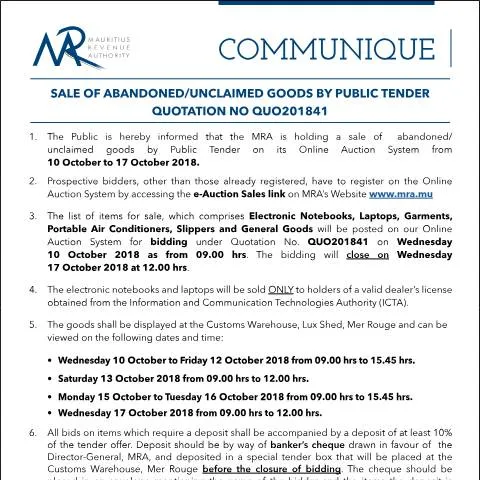
The Sale of Abandoned/Unclaimed Goods by Public Tender, as outlined in the Communique 41 of 2018, serves as a crucial avenue for the Mauritius Revenue Authority (MRA) to manage surplus items that remain unclaimed or abandoned. This public tender presents opportunities for potential bidders to acquire a range of goods, including electronic devices and general merchandise. Understanding this procedure is essential for interested parties to navigate the process effectively, ensuring compliance and maximizing their chances of successful bidding.
Who Should Consider Participating in the Tender?
The tender primarily targets individuals and entities interested in purchasing unclaimed goods. However, certain conditions apply particularly to the acquisition of electronic items such as laptops and electronic notebooks:
- Individuals and Dealers: Prospective bidders must distinguish between personal and commercial interests. Only those holding a valid dealer’s license from the Information and Communication Technologies Authority (ICTA) can acquire electronic items.
- Individuals without Internet Access: For those who do not have access to the Online Auction System, the MRA provides facilities at the Customs Warehouse, which allows for in-person bidding.
- General Public: Anyone seeking to explore various goods, including garments and home appliances, is welcome to participate, regardless of prior registration.
Critical Timeline: Preparation and Bidding Phases
Understanding the timeline is crucial for a successful bidding experience. The tender process for this particular sale initiated on 10 October 2018, with a series of important dates:
- Registration: New bidders need to complete their registration on the Online Auction System by accessing the e-Auction Sales link on the MRA’s website.
- Viewing Period: Items will be showcased at the Customs Warehouse from 10 October to 17 October 2018, where potential bidders can inspect the goods pre-bid.
- Bidding Window: The actual bidding process runs from 10 October at 09:00 hrs to 17 October 2018 at 12:00 hrs.
Deposit Requirements: Ensuring Your Bid is Valid
A crucial step in placing a bid involves the financial deposit, which underscores the seriousness of your intention to purchase. According to the tender conditions, all bids for items requiring a deposit must be accompanied by:
- A deposit amounting to at least 10% of the tender offer.
- The deposit must be made via a banker’s cheque issued in favor of the Director-General of the MRA.
- Personal cheques are not acceptable; thus, it is vital to ensure your payment method aligns with these requirements.
Viewing the Goods: Essential Inspection Dates
Potential bidders are encouraged to inspect the available items to assess their value and condition. The MRA has set specific dates for viewing:
| Date | Time |
|---|---|
| 10-12 October 2018 | 09:00 hrs - 15:45 hrs |
| 13 October 2018 | 09:00 hrs - 12:00 hrs |
| 15-16 October 2018 | 09:00 hrs - 15:45 hrs |
| 17 October 2018 | 09:00 hrs - 12:00 hrs |
During these times, bidders can evaluate the condition of the items on offer, which is particularly important when considering electronic goods.
Navigating the Bidding Process: Steps to Follow
Once registered and familiarized with the items, the next phase involves actively participating in the bidding process. Here are the steps to follow:
- Register: Ensure that you are registered on the Online Auction System prior to the bidding start date.
- Prepare Your Deposit: Have your banker’s cheque ready, clearly labeled with your name and the items of interest.
- Place Your Bid: During the bidding window, submit your bid through the Online Auction System or at the designated booths at the Customs Warehouse.
- Monitor Bids: Keep track of your bids and be prepared to adjust your offers in response to competing bids.
- Understand Auction Terms: Familiarize yourself with terms and conditions as outlined in the tender, as this knowledge may influence your bidding strategy.
Post-Bid Actions: What Happens After Bidding Closes?
After the bidding period concludes on 17 October 2018 at 12:00 hrs, several outcomes may occur:
- If successful, you will be notified regarding payment details and item collection.
- Unsuccessful bidders will not be notified, but they are encouraged to review future opportunities as they arise.
- If you encounter issues such as discrepancies in bidding results or payment queries, it is advisable to contact the MRA for clarification.
Addressing Potential Issues: What If My Bid is Rejected?
As a participant in the tender process, understanding how to respond to a rejection or complications is essential. Common scenarios include:
- Insufficient Deposit: If your deposit does not meet the required percentage, your bid will be automatically disqualified.
- Invalid Registration: Failure to register correctly can also lead to rejection; double-check your registration details.
- Lack of Required Documents: Ensure you have all necessary documents, including identification, to access the bidding site and submit bids effectively.
In cases of legitimate disputes or questions, bidders are encouraged to reach out to the MRA promptly for resolution.
Preparing for Success: Documentation and Requirements
Having the right documentation in place is vital to ensure a smooth bidding process. Key documents include:
- Identity Card: Required for accessing the Customs Warehouse and for verification purposes.
- Dealer’s License: Mandatory for bidding on electronic goods, ensuring compliance with ICTA regulations.
- Banker’s Cheque: Should be prepared in advance to avoid last-minute complications during the bidding process.
Exploring the Legal Framework Behind the Tender
The tendering process for the sale of unclaimed goods is governed by regulations established under the MRA, emphasizing transparency and fair access. This legal backdrop ensures legitimate sales while providing a structured environment for bidders. The provisions of the Public Tender Act and guidelines from the MRA form the basis for the operational framework of this tender process, ensuring accountability and public trust.
Looking Ahead: Future Sales and Opportunities
The sale of abandoned and unclaimed goods is not a one-time event; prospective bidders should stay attuned to future tenders. Regular updates on upcoming sales can be found on the MRA's official website, ensuring that interested buyers are always informed. Participation in these sales can be a unique opportunity not just to acquire goods but also to support the government's efforts in managing unclaimed properties efficiently.
The sale of abandoned/unclaimed goods serves as a significant event for both the MRA and prospective bidders. Understanding the complete process, from registration to final bids, is essential for engaging successfully in this tender. By adhering to the stipulated guidelines and timelines, bidders can navigate the complexities of the auction efficiently, ensuring their participation leads to fruitful outcomes.
Understanding the Process of Public Tender for Abandoned Goods
The sale of abandoned or unclaimed goods through public tender is governed by specific protocols established to ensure transparency and fairness in the process. In Mauritius, such sales are typically conducted by various government agencies when goods remain unclaimed for a designated period, usually outlined in the relevant internal policies of the administering agency.
To initiate the process, an agency must first identify items that qualify as abandoned. This can include a variety of goods such as vehicles, electronics, furniture, and other personal property left behind by individuals. Each agency has its own criteria for determining whether an item is considered abandoned, taking into account the duration of unclaimed status and the condition of the goods.
Once identified, the agency will usually prepare a detailed inventory of the goods, which must be made available to the public. This inventory serves as a crucial document, outlining the items to be sold and their corresponding conditions. The agency then advertises the public tender, often through official gazettes and local news outlets, ensuring compliance with the Public Procurement Act.
A key aspect of the public tender process is that potential bidders must submit a formal application during the specified tender period. This application typically includes personal identification, proof of residence, and any other relevant documentation that the agency may require. Moreover, bidders may be required to pay a deposit, which is often refundable for those not awarded the tender, thus ensuring serious participation in the auction.
It is vital for prospective bidders to be aware of all terms and conditions associated with the tender. This includes specifics on viewing the goods, which is typically scheduled prior to the submission of bids. Viewing days allow potential buyers to assess the condition of the items, which plays a crucial role in determining their offers.
Legal Implications and Responsibilities in Purchasing Abandoned Goods
Acquiring abandoned or unclaimed goods through public tender does carry certain legal implications and responsibilities. Buyers need to be particularly attentive to the laws surrounding the ownership and use of such goods to avoid potential legal disputes.
Firstly, it is important to understand that purchasing abandoned goods does not automatically confer full ownership in all circumstances. Certain items may have unresolved legal claims or liens attached to them. Prospective buyers should conduct due diligence, which may involve researching the history of the item, checking for any outstanding debts or legal actions associated, and understanding local laws concerning ownership of such goods.
Fill in your form directly online
No printing: type your details into the boxes of the official form, tick, then download the PDF ready to send.
- 1Type into the form boxes
- 2Tick in one click
- 3Save and download the PDF
Moreover, buyers should be mindful of the obligations that come with ownership. This includes responsibility for any taxes or fees that may arise from acquiring the goods. For instance, if the abandoned goods are vehicles, the new owner must ensure they are properly registered and licensed as per the requirements set forth by the Mauritius Revenue Authority (MRA).
It's also crucial for purchasers to be aware of environmental regulations that may apply, especially for goods that could potentially pose risks to public health or safety. Buyers may be held liable for proper disposal if the acquired goods are hazardous or need special handling.
Additionally, the purchase of abandoned goods is typically final and “as-is,” meaning buyers assume all risks related to the condition and usability of the items. Therefore, it is advisable for bidders to review the goods carefully during the viewing period to ensure they are financially prepared for any subsequent costs associated with repairs or disposal.
Post-Purchase: Steps to Take After Acquiring Abandoned Goods
After successfully acquiring abandoned goods through the public tender process, there are several important post-purchase steps that new owners should take to ensure compliance with local regulations and to safeguard their investments.
First and foremost, it is advisable to immediately register the ownership of the acquired items, especially if they are vehicles or other regulated goods. This procedure typically involves visiting the relevant authorities, such as the National Transport Authority for vehicles, to complete registration paperwork and pay any associated fees.
Next, new owners should conduct a thorough assessment of the items to identify any necessary repairs or modifications. For example, if the purchase includes machinery or equipment, inspecting for functionality is essential to avoid incurring unforeseen costs. Depending on the findings from this assessment, owners may need to engage appropriate service professionals to address repairs or updates.
Documentation of the purchase and any related assessments should be meticulously maintained. These records may be crucial for future transactions, such as reselling the items, or in the event of legal inquiries concerning the ownership or condition of the goods.
Moreover, it would be prudent for new owners to stay informed about ongoing legal responsibilities related to the items. For instance, if the acquired goods include vehicles, owners must ensure adherence to road safety regulations and periodic inspections mandated by law.
Finally, community engagement can also be beneficial. If the purchased goods are to be used in a manner impacting the public domain, such as vehicles or equipment for public use, informing local authorities and seeking necessary permissions may help avoid potential regulatory issues.