Understanding the Sale of Abandoned and Unclaimed Goods
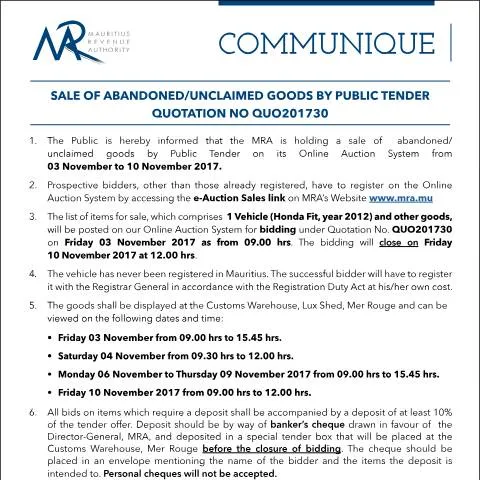
When it comes to acquiring goods that have been abandoned or left unclaimed, an intriguing opportunity arises through public tender processes. The Mauritius Revenue Authority (MRA) oversees these sales, allowing individuals and businesses alike to bid on various items, including vehicles and other goods. This particular initiative, as outlined in the official communiqué dated 31 October 2017, pertained to the sale of such goods by public tender, specifically under Quotation No. QUO201730.
The Trigger: Why Does MRA Hold These Sales?
Abandoned and unclaimed goods accumulate over time due to various factors such as non-payment of duties, uncollected customs items, or goods that have simply been forgotten. To manage this surplus effectively, the MRA organizes periodic sales. These auctions not only declutter storage facilities but also offer the general public a chance to purchase valuable items at potentially reduced prices.
Key Dates and Timelines
The sale detailed in the communiqué commenced on 3 November 2017 at 09:00 hrs and concluded on 10 November 2017 at 12:00 hrs. Here is a timeline of key events:
- 03 November 2017: Bidding opens. Potential bidders gain access to a list of available goods.
- 04 November 2017: Viewing of items continues, from 09:30 hrs to 12:00 hrs.
- 06 to 09 November 2017: Open viewing hours remain from 09:00 hrs to 15:45 hrs.
- 10 November 2017: Last day of bidding, closing at 12:00 hrs.
Preparing for the Auction: Registration Process
Before participating in the bidding process, all prospective bidders, especially those not previously registered, must complete the registration on the Online Auction System. This is done by accessing the e-Auction Sales link available on the MRA's official website. It is crucial to register early to avoid missing out on bidding opportunities.
Understanding the Goods for Sale
The auction under quotation number QUO201730 featured a variety of goods, including:
- One vehicle: Honda Fit, 2012 model, never registered in Mauritius.
- Additional assorted goods, the specifics of which would be made available on the auction platform.
Potential buyers should be aware that all items were displayed at the Customs Warehouse, Lux Shed, Mer Rouge, offering transparency and enabling buyers to inspect their prospective purchases prior to bidding.
Deposits and Bidding Regulations
To participate in the bidding process, bidders were required to place a deposit of at least 10% of their tender offer. This deposit was to be made via a banker’s cheque payable to the Director-General, MRA, and placed in a specified tender box at the Customs Warehouse before the auction closed. Personal cheques were explicitly not accepted, ensuring a secure bidding environment.
Access and Viewing of Goods
For those wishing to inspect the items physically, MRA facilitated open viewing sessions on designated dates. It was recommended that visitors bring their Identity Cards for entry through the Port Main Gate. The access policy ensured a secure environment while allowing potential bidders to assess the condition of items before making financial commitments.
The Bidding Process: How to Navigate It
The actual bidding mechanism was straightforward but required attention to detail. Here’s a breakdown of how the process worked:
Online Bidding Mechanics
Once registered on the Online Auction System, bidders could place their offers from anywhere, provided they had internet access. For individuals lacking internet access, the MRA set up three bidding booths at the Customs Warehouse, equipped with computer terminals to facilitate participation.
Tracking Your Bid: Post-Auction Follow-Up
After the auction closed, successful bidders received notifications detailing the next steps. If you were fortunate enough to win a bid, the subsequent responsibility included registering the vehicle or goods with the relevant authorities as stipulated by the Registration Duty Act. This registration is conducted at the bidder's own cost.
What Happens in Case of Refusal or Missing Documents?
Like any administrative procedure, instances of refusal or issues with documentation can arise. Here’s how to handle such situations:
Handling Refusals
If a bid is unsuccessful, the bidder will typically receive a notification indicating the outcome. In most cases, no further action is necessary. However, for bidders who believe there was an error in the process, they may wish to contact the MRA for clarification.
Addressing Missing Documents
In situations where required documentation is absent or incomplete, bidders are advised to promptly rectify the issue. Missing deposits or paperwork can disqualify a bid. Therefore, ensuring all documentation is in order before participating in the auction is paramount. If any issues arise, it is crucial to consult the MRA directly for guidance on how to proceed.
Distinguishing This Form from Similar Documents
The sale of abandoned or unclaimed goods by public tender is not the only procedural avenue available in Mauritius. Understanding how this specific form differs from others can save time and confusion:
| Document Type | Description | Unique Aspects |
|---|---|---|
| Form for Sale of Abandoned Goods | Used for bidding on unclaimed items | Requires a deposit and allows online/offline bidding |
| Customs Declaration Form | Used for declaring imported goods | Focuses on duty payment and product origin |
| Vehicle Registration Form | For registering vehicles in Mauritius | Involves ownership verification and tax obligations |
What It Means for Stakeholders: Rights, Obligations, and Consequences
Participating in the auction not only opens avenues for acquiring items but also comes with responsibilities and implications that bidders need to be aware of:
Rights of Bidders
- The right to view all items before placing a bid.
- The right to receive clear communication regarding the bidding process and outcomes.
- The right to appeal a refusal or seek clarification from MRA if necessary.
Obligations of Bidders
- Each bidder must ensure compliance with deposit regulations.
- All bids must be made in accordance with outlined terms and conditions.
- Successful bidders are obligated to complete the registration of items purchased.
Consequences of Non-Compliance
Failure to adhere to the outlined procedures can result in:
- Disqualification from the bidding process.
- Loss of deposited amounts if terms are not met.
- Legal action for fraudulent or misleading bids.
Final Insights: Making the Most of the Auction
For those interested in participating in the sale of abandoned and unclaimed goods, being well-informed is key. A thorough understanding of the registration process, bidding regulations, and what to expect post-auction can significantly enhance the experience.
To ensure success, potential bidders should:
- Register well in advance of the auction dates.
- Thoroughly review the list of items for sale.
- Prepare all necessary documentation and deposits ahead of time.
Engaging in this process can be rewarding, not just for acquiring goods but also for contributing to the efficient management of unclaimed items within the public domain. The MRA continues to evolve its platforms to enhance citizen engagement and service efficiency, paving the way for greater accessibility in future public tenders.
Understanding the Process of Public Tender for Unclaimed Goods
The sale of abandoned or unclaimed goods through public tender in Mauritius is a regulated process designed to ensure transparency and fairness. Public entities, including departments and local authorities, typically manage these transactions under the provisions set forth by relevant regulations. The procedure begins with a thorough identification of goods that have remained unclaimed for a specified duration, usually governed by local ordinances or guidelines. Once identified, a public notice is issued to inform potential buyers and stakeholders about the upcoming tender.
One critical aspect of this process is the meticulous evaluation of the goods to ascertain their condition and value. This often necessitates a detailed inventory, including descriptions, valuations, and photographs, to promote transparency and build trust among prospective buyers. The goods could range from lost property, abandoned vehicles, confiscated items, to various other possessions that, after a designated holding period, become eligible for sale.
The public notice must specify key details such as the date, time, and location of the tender, along with any conditions or requirements that bidders must fulfill. Interested parties usually have to submit a formal application, often using a specific form designated by the relevant authority, such as the Public Service Commission (PSC) or Local Government Service Commission (LGSC). The applications should include identification information and any financial guarantees required for participation.
Once the public submission period has closed, a committee typically reviews all bids. This committee may comprise members from various departments to ensure that the evaluation process is impartial and thorough. The committee will assess the bids based on pre-established criteria, often including the offered price, the bidder's financial capability, and compliance with any specific terms outlined in the tender notice.
Legal and Regulatory Framework Governing the Sale of Abandoned Goods
The legal framework for the sale of abandoned or unclaimed goods in Mauritius is primarily governed by the Public Procurement Act and various local government regulations. The Public Procurement Act (2006) outlines the procedures for public tenders, including principles of transparency, accountability, and competition that must be upheld throughout the process. This legal structure serves to protect the interests of the public while ensuring that the sale of goods is conducted in a fair and just manner.
Additionally, specific local government regulations may dictate the time frames for holding unclaimed goods and the processes to follow before moving to auction them off. These regulations are critical because they provide a legal basis for determining what constitutes ‘abandonment’ and establish the procedures for notifying the original owners of the goods.
It is also imperative to note that certain types of goods may be subject to different regulations. For instance, vehicles may require adherence to the Motor Vehicle Act, while items deemed hazardous could necessitate compliance with specific health and safety regulations. Therefore, any authority involved in the sale must be well-versed in the various legal requirements applicable to the categories of goods they are dealing with.
Moreover, any revenue generated from the sale of unclaimed goods typically goes back into public funds or is earmarked for specific community programs as stipulated in the governing laws. This financial transparency helps bolster public confidence in the process, ensuring that stakeholders understand where their money is going and how it is being utilized for the benefit of the community.
Implications for Buyers: What to Consider Before Bidding on Unclaimed Goods
For potential buyers considering participating in a public tender for unclaimed goods, several factors must be taken into account. Firstly, it is essential to conduct due diligence on the items being auctioned off. This includes obtaining thorough descriptions and potential valuations, as the condition of the goods can significantly affect their resale value and usability.
Buyers should also be aware of the terms and conditions attached to the sale. These may include stipulations related to the collection of goods, liability for any damages incurred post-purchase, and even conditions about restoration or refurbishment of certain items. Understanding these terms is crucial to avoid any legal complications or unexpected costs after the sale.
Another critical point is the financial implications of participating in a public tender. Potential buyers should be prepared to pay a deposit or guarantee, the amount of which is usually specified in the tender notice. Additionally, it is advisable to have a clear budget in mind, as competitive bidding can drive prices up quickly. Having a pre-defined limit can prevent impulsive decisions that may lead to financial strain.
Lastly, buyers should familiarize themselves with the post-sale process. Once the auction is concluded, there may be designated timelines for payment, collection, and any necessary paperwork. Adhering to these timelines is essential to ensure a smooth transition of ownership and to avoid any penalties or complications related to the auction.