Unveiling the Sale of Abandoned/Unclaimed Goods: Insights into the Public Tender Process
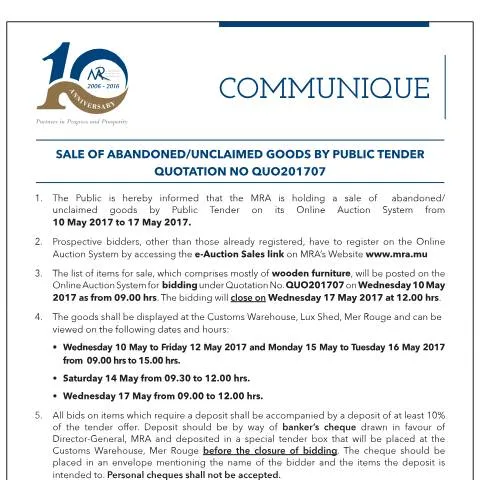
In the bustling economic landscape of Mauritius, opportunities abound for savvy bidders looking to acquire unclaimed or abandoned goods. The Mauritius Revenue Authority’s (MRA) structured approach through the Sale of Abandoned/Unclaimed Goods by Public Tender is not only a means of clearing out warehouses but also provides an avenue for the public to procure items that may otherwise be lost to time. This official document, identified under CommuniqueQu07of2017, serves as a critical tool in this process.
Understanding the Timeline: Key Dates You Must Not Miss
Timing is essential in the world of public tenders. The MRA has set forth a precise timeframe that bidders must adhere to for a seamless experience. Here’s a breakdown of the timeline:
- Registration Period: Starting May 10, 2017, potential bidders must register on the MRA's Online Auction System. This step is crucial for those not already registered.
- Viewing Goods: Items will be made available for inspection at the Customs Warehouse, Lux Shed, Mer Rouge during specified dates, providing bidders an opportunity to assess the goods beforehand.
- Bidding Window: The bidding spans from May 10, 2017, at 09:00 hours to May 17, 2017, at 12:00 hours, after which no further bids will be accepted.
It is imperative for participants to mark these dates clearly on their calendars, ensuring they do not miss out on the chance to bid.
The Role of the Form: A Pillar of the Bidding Process
This official form encapsulates the procedural requisites for those interested in participating in the sale. It's not merely a document; it's a pivotal component that outlines the obligations and expectations of prospective bidders. It encompasses crucial information regarding:
- The registration procedure for new bidders.
- The requirement of a deposit for bids on certain items.
- The specifics of how and when bids can be submitted, including the deposit process.
Understanding this form is vital as it ensures that bidders comply with the stipulated processes, thus avoiding disqualification.
Distinctive Elements: What Sets This Form Apart
The Sale of Abandoned/Unclaimed Goods by Public Tender form distinguishes itself from other forms within the MRA's portfolio. Unlike typical sales forms, which may cater to direct purchases or private transactions, this specific form is designed to facilitate a competitive bidding environment. Key differentiators include:
- Public Tender Mechanism: This form initiates a public bidding process, allowing multiple participants to vie for the same goods.
- Deposit Requirement: A minimum deposit of 10% of the tender offer serves to validate the seriousness of bidders, a feature not commonly found in straightforward purchase forms.
- Online Auction System Utilization: The incorporation of a digital platform for bids underscores a modern approach, enhancing transparency and accessibility.
These attributes are crucial for bidders to understand, as they shape the nature of the auction and define the expected conduct during the bidding process.
Step-by-Step Guide to Completing the Tender Form
Completing the tender form may appear daunting at first, but a structured approach can ease the process. Here’s an organized way to navigate through the sections of the form:
Section 1: Personal Information
Begin by accurately entering your personal details. Make sure to include:
- Name
- National Identification Number (NIN)
- Contact Information (telephone and email)
Verify the spelling of names and numbers to avoid complications later.
Section 2: Item Selection
In this section, bidders indicate the items they wish to bid on. It's essential to:
- Refer to the list of items posted on the Online Auction System.
- Clearly mention the item code or description to reduce ambiguity.
Be specific: vague descriptions can lead to misunderstandings and bid rejections.
Section 3: Bid Submission
Here, bidders will fill in their proposed bid amounts. Note the following:
- Bids should reflect the value of the item, as excessively low bids may be disregarded.
- If a deposit is required, state it clearly in the designated area.
Ensure that your bid adheres to the minimum deposit requirement of 10% to avoid disqualification.
Section 4: Deposit Information
As part of the bidding process, bidders must submit a deposit. Pay close attention to:
- The necessity for a banker’s cheque, as personal cheques will not be accepted.
- Including your name and item details on the envelope containing the cheque.
This section is non-negotiable; failure to comply will result in bid rejection.
Special Considerations: Unique Scenarios in the Bidding Process
While the bidding process is relatively straightforward, unique situations may arise. Below are some scenarios that could impact the bidding experience:
1. Non-Residents and Foreign Bidders
Foreign bidders are welcome; however, they must adhere to the same registration and deposit requirements as local bidders. It's crucial for them to:
- Have a valid identification document.
- Understand the currency exchange implications when preparing their bids.
2. Minors Participating in Bids
In cases where minors wish to participate, the law requires that they be represented by an adult. The adult must:
- Complete the form on behalf of the minor.
- Provide proof of guardianship or parental consent.
3. Urgent Situations
For bidders facing urgent circumstances, such as limited availability, it is advisable to:
- Utilize the online bidding system promptly to secure their items.
- Consider pre-registering if they anticipate future bids.
Understanding these exceptional circumstances allows bidders to prepare adequately and avoid pitfalls.
Viewing the Goods: Access and Inspection Details
The opportunity to inspect the items before bidding is a critical aspect of this tender process. Bidders must take into account:
- Viewing Dates: Items can be viewed from May 10, 2017, to May 12, 2017, and again from May 15, 2017, to May 16, 2017. Special hours on May 14, 2017, are also available.
- Location: The inspection takes place at the Customs Warehouse, Lux Shed, Mer Rouge.
- Identification Requirement: All visitors need to bring their Identity Cards for access at the Port Main Gate.
Familiarizing oneself with the viewing process can significantly enhance the bidding strategy, allowing bidders to make informed decisions.
Post-Bidding: The Outcome and Next Steps
Once the bidding closure arrives, the next steps become crucial for successful bidders. Understanding the follow-up process ensures a smooth transition:
1. Notification of Results
Successful bidders will be informed through the contact details provided in the tender form. It is vital to maintain updated contact information to avoid missing crucial notifications.
2. Payment Instructions
Winners will receive specific instructions regarding payment for the items won. This includes:
- Payment methods accepted.
- Deadline for payment to confirm the purchase.
3. Item Collection
Upon payment confirmation, bidders will be provided details on how and when to collect their items. Proper documentation will be required at the point of collection, including:
- A copy of the winning bid notification.
- Proof of payment.
Being proactive after the bidding ends is essential to ensure that the process concludes smoothly.
In conclusion, navigating the Sale of Abandoned/Unclaimed Goods by Public Tender requires a thorough understanding of the form and its processes. By adhering to deadlines, following the structured steps outlined in the form, and being aware of the unique considerations, prospective bidders can maximize their chances of successfully obtaining items of interest. This opportunity not only allows for potential bargains but also plays a significant role in promoting transparency and efficiency within Mauritius’s economic framework.
Understanding the Process of Public Tender for Unclaimed Goods
The sale of abandoned or unclaimed goods by public tender in Mauritius is a structured process governed by specific regulations to ensure transparency and fairness. When goods are deemed unclaimed, they are typically held by the relevant authorities for a specified duration before being auctioned. Understanding this process is crucial for potential bidders who wish to participate in these tenders.
Initially, authorities must ascertain the status of the goods. This involves a thorough inspection and documentation of what is being auctioned, including details such as the condition and estimated value. It is crucial to note that the goods in question may vary considerably, ranging from vehicles and machinery to personal items and equipment.
Once the goods are confirmed as unclaimed, the selling authority, often the Ministry of Finance or a designated governmental body, will publish a notice in local newspapers and on official government portals. This notice typically includes information about the nature of the goods, the auction date, and the procedures for bidding. Relevant forms, such as the Tender Submission Form (TSF), will need to be completed, which may be available through the government site or at the offices of the selling authority. Bidders are encouraged to submit their applications electronically to streamline the process.
It's important for prospective bidders to familiarize themselves with the terms and conditions outlined in the tender notice. These may include stipulations regarding viewing times for the goods, deposit requirements, and the method of payment once a bid is accepted. Bidders should also be aware of any applicable fees or taxes that may apply upon purchase, such as Value Added Tax (VAT) as administered by the Mauritius Revenue Authority (MRA).
Legal Framework and Responsibilities of Bidders
The sale of abandoned or unclaimed goods by public tender is rooted in the legal framework established by the Public Procurement Act and related regulations in Mauritius. Bidders should have a clear understanding of their responsibilities under this legal framework to ensure compliance and successful participation in the tender process.
Firstly, bidders must ensure that they possess valid identification, such as a National ID Card, when submitting their tender applications. This identification must match the details provided in the application forms. Additionally, bidders are often required to provide proof of funds or a bank guarantee to confirm their ability to complete the purchase should their bid be successful.
Moreover, the legal framework delineates the rights and obligations of both the selling authority and the bidders. For instance, bidders have the right to receive fair treatment as per the principles of public procurement, including non-discrimination and transparency. Conversely, the selling authority is responsible for providing accurate information about the goods and ensuring that the auction process adheres to the stipulated rules and guidelines.
One critical aspect that bidders must consider is the potential for disputes arising from the tender process. Should a bidder feel that their rights have been violated, they may have recourse through the relevant administrative channels or the Public Procurement Review Authority. This underscores the importance of maintaining accurate records of all communications and submissions related to the tender process.
Post-Auction Procedures and Implications
After the public tender for unclaimed goods concludes, successful bidders must follow a series of post-auction procedures to finalize the acquisition of their purchased goods. This phase is critical as it determines the ownership transfer and ensures compliance with the necessary fiscal regulations.
Once a bid is awarded, the winning bidder is usually required to pay the total purchase price within a specified timeframe. This payment is generally made to the designated treasury account, and bidders must keep receipts of these transactions as proof of purchase. Failure to comply with payment deadlines may result in the annulment of the bid and potential forfeiture of any deposits made.
Following the payment, the buyer must arrange for the collection of their goods from the designated location. It is advisable for the buyer to inspect the items thoroughly at the collection point to ensure that they match the descriptions provided during the tendering process. Any discrepancies should be reported immediately to the selling authority, as this may impact warranty claims or post-sale negotiations.
Moreover, it's essential for successful bidders to be aware of any ongoing obligations regarding the purchased goods. For instance, if the goods are vehicles, the new owner must ensure that they are properly registered with the National Transport Authority and that any necessary road taxes are paid. This is particularly pertinent given that the fiscal year in Mauritius runs from July 1 to June 30, and timely payments are crucial to avoid penalties.
Overall, navigating the post-auction process requires diligence and adherence to local regulations. Buyers must remain proactive about understanding their rights and obligations to ensure a smooth transition of ownership.