The Significance of Participating in Public Tenders for Unclaimed Goods
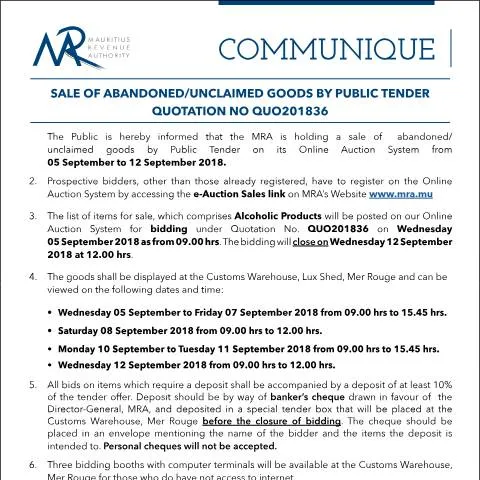
Engaging in public tenders for unclaimed goods presents unique opportunities for individuals and businesses alike. When the Mauritius Revenue Authority (MRA) announces a sale of abandoned or unclaimed goods, it opens a gateway to acquiring valuable items at potentially reduced prices. The Communique36 of 2018 serves as a pivotal document that outlines the procedures and requirements for this process. Understanding how this tender operates is essential for successful participation.
Understanding the Timeline: Key Dates and Activities
The timeline for the Public Tender established by the MRA is crucial for any prospective bidders. The tender process begins with an announcement, inviting interested parties to participate. Here’s a detailed breakdown:
- Announcement Date: 05 September 2018 - The MRA initially informs the public about the availability of the goods and the associated tender.
- Viewing Period: 05 to 12 September 2018 - Potential bidders can inspect items at the Customs Warehouse, ensuring informed choices.
- Closing Date for Bids: 12 September 2018 at 12:00 hrs - All bids must be submitted by this deadline to be considered.
During this specified period, bidders should not only prepare their bids but also take the time to visit the warehouse to view the items available for auction.
Viewing Schedule for Potential Bidders
It is advisable for bidders to visit the Customs Warehouse within the following timeframes:
- Wednesday, 05 September to Friday, 07 September 2018: 09:00 - 15:45
- Saturday, 08 September 2018: 09:00 - 12:00
- Monday, 10 September to Tuesday, 11 September 2018: 09:00 - 15:45
- Wednesday, 12 September 2018: 09:00 - 12:00
Attending these sessions allows bidders to inspect the quality and condition of the goods, thereby making informed decisions on their bids.
Eligibility and Requirements for Bidders
Not everyone can participate in public tenders; specific criteria must be met to ensure compliance with the MRA's regulations. Here are the primary eligibility requirements:
- Registration on the Online Auction System: Bidders must register ahead of time. This is a mandatory step for those not already registered. Accessing the e-Auction Sales link on the MRA’s website is vital for this process.
- Submission of a Deposit: All bids on items requiring deposits must include a minimum of 10% of the tender offer. This deposit must be in the form of a banker’s cheque made out to the Director-General of the MRA.
- Identification: Bidders are required to present their Identity Cards for verification upon entering the Customs Warehouse.
Importance of the Deposit
Understanding the significance of the deposit is crucial. It serves as a financial commitment that reflects the seriousness of the bid. Notably:
- The deposit should be enclosed in an envelope, clearly labeled with the bidder's name and the items for which the deposit is intended.
- Personal cheques are not accepted; hence ensuring the provision of a banker’s cheque is essential to avoid disqualification.
Navigating the Auction Process: From Bid Submission to Outcome
The auction process is structured yet straightforward. Here’s a chronological overview of what bidders can expect:
- Registration: Ensure that you are registered on the MRA's Online Auction System as soon as the announcement is made.
- Viewing Goods: Visit the Customs Warehouse during the designated viewing periods to inspect the available goods.
- Preparing Your Bid: Calculate your bid amount based on your observations and include the required deposit.
- Submitting Your Bid: Ensure that your bid is submitted before the deadline on 12 September 2018 at 12:00 hrs. Deposit your cheque in the designated tender box.
- Auction Outcome: After the bidding closes, successful bidders will be notified of their successful bid and further instructions regarding payment and collection of the goods.
Potential Pitfalls: What to Avoid During the Process
While participating in the public tender, it is essential to be aware of common pitfalls that can lead to missed opportunities or disqualification:
- Missing the Registration Deadline: Ensure that you register well ahead of the bidding period to avoid last-minute issues.
- Inadequate Preparation for Viewing: Failing to inspect the items may lead to unwise bidding decisions based on assumptions.
- Incorrect Deposit Amount: Double-check the percentage required for the deposit to avoid complications with your bid.
- Late Bid Submission: Adhere strictly to the bid submission timeline as late bids will not be accepted.
The Legal Framework Surrounding Abandoned Goods in Mauritius
The sale of abandoned and unclaimed goods is not an arbitrary process; it is governed by legal frameworks ensuring transparency and fairness. The MRA operates under the regulations laid out in various acts, including the Public Service Commission Act 1955 and the provisions related to revenue collection and management.
Understanding this legal context not only enhances the credibility of the auction process but also provides bidders with confidence in their transactions.
Post-Tender Process: What Happens After You Bid?
Once bids have been submitted, the process does not end there. Here’s what successful bidders can expect:
- Notification of Success: Successful bidders will receive notifications via the contact information provided during registration.
- Payment Instructions: Detailed instructions for payment will follow. Timely payment is crucial to secure the goods.
- Collection of Goods: After payment confirmation, arrangements will need to be made for the collection of the purchased items from the Customs Warehouse.
It is important to remain aware of the timelines for payment and collection to avoid penalties or forfeiture of the items bought.
Special Considerations for Non-Residents and Other Unique Cases
Bidders who are non-residents or have unique situations may face additional considerations:
- Non-Residents: Non-residents must ensure they comply with local laws and regulations and may need additional documentation to register and bid.
- Minors: Bids from minors (individuals under 18 years) must be submitted by a parent or legal guardian who can assume responsibility for the transaction.
- Urgent Bidding Needs: If urgent bidding opportunities arise, it is advisable to seek assistance from local representatives who understand the tender process.
Being aware of these unique circumstances can help bidders navigate the process more effectively, ensuring compliance and maximizing their chances of success.
Conclusion: Embracing Opportunities through Knowledge
Participating in the sale of abandoned and unclaimed goods by public tender requires careful planning, understanding of the process, and awareness of the legal framework in place. The Communique36 of 2018 offers a detailed roadmap, equipping bidders with the knowledge necessary to engage successfully in this unique opportunity. By following the outlined steps, understanding the requirements, and avoiding potential pitfalls, individuals and businesses can effectively leverage these public tenders to acquire valuable goods at competitive prices.
Understanding the Procedure for Bidding on Abandoned Goods
The process of bidding on abandoned or unclaimed goods in Mauritius is governed by specific regulations set forth by various authorities, including the Ministry of Finance and Economic Development. When a public tender is announced for the sale of such goods, it is crucial for potential bidders to understand the procedural requirements and the documentation necessary for participation.
Firstly, interested bidders must obtain the relevant tender documents which are typically available from the official website of the Ministry or at designated government offices. These documents contain detailed information regarding the items up for auction, the conditions of sale, and instructions for submitting bids. Bidders should pay careful attention to the terms outlined, which may include whether a deposit is required and the timeframe for payment upon winning the bid.
Once the tender offer is published, bidders are advised to visit the location where the goods are stored, if possible, to assess the condition of the items before placing their bids. The inspection is a critical step as it helps participants to make informed decisions regarding their bids. Following the inspections, bids must be submitted either physically at the designated office or electronically through the appropriate e-tendering portal, which requires a valid MauPass account linked to the bidder's National ID Card.
After the submission, bids are evaluated based on the criteria outlined in the tender documents, including the highest bid amount and compliance with conditions of sale. Successful bidders will be notified through official channels, and it is essential to comply with payment instructions promptly to finalize the acquisition of the goods.
Fill in your form directly online
No printing: type your details into the boxes of the official form, tick, then download the PDF ready to send.
- 1Type into the form boxes
- 2Tick in one click
- 3Save and download the PDF
Legal Implications of Purchasing Abandoned Goods
Purchasing abandoned or unclaimed goods through public tender in Mauritius carries significant legal implications that bidders must understand before entering the auction. The ownership transfer of goods is typically governed by the provisions outlined in the Sale of Goods Act, which stipulates the rights and obligations of both the seller (the government or relevant authority) and the buyer.
One critical aspect is that upon winning a tender, the buyer assumes responsibility for the goods, which may include liabilities associated with them. For instance, if the goods are found to be defective or if they infringe on any intellectual property rights, the new owner may face legal challenges post-purchase. Therefore, thorough due diligence is advisable; reviewing the provenance and legal status of the goods can mitigate potential legal risks.
Moreover, it is vital to be aware of the potential implications regarding environment and safety regulations. Certain categories of abandoned goods may include hazardous materials, and the buyer must comply with local regulations regarding their disposal or use. Failure to adhere to these regulations could result in penalties or further legal action.
The Ministry of Finance also emphasizes that buyers must refrain from using acquired goods for purposes that contravene Mauritian laws. For instance, goods that are potentially used for illegal activities or that violate local customs regulations face confiscation. Buyers should consult with legal advisors if there are any uncertainties regarding the intended use of the goods purchased through public tender.
Post-Tender Responsibilities and Compliance Obligations
After successfully acquiring abandoned goods through a public tender, it is essential for the buyer to comply with certain obligations and responsibilities that follow the purchase. These responsibilities encompass a range of actions that ensure the buyer adheres to local regulations and maintains ethical standards in the use of the acquired goods.
One of the primary obligations is the timely payment of the total bid amount as stipulated in the tender agreement. Payment must be made within the duration specified; failure to do so may result in penalties or even forfeiture of the goods. Bidders should plan their finances accordingly to ensure that funds are available upon winning the bid.
Following the payment, it is also important for the buyer to arrange for the collection of the goods within the timeframe stated in the tender documents. Often, the storage of purchased items incurs costs, and delay in collection can lead to additional fees or complications. Proper logistics planning is therefore essential to avoid unexpected expenses.
Furthermore, buyers are encouraged to maintain accurate records of their purchases and any subsequent modifications or sales. Such documentation can be critical in establishing ownership and ensuring compliance with tax obligations associated with reselling the goods. The Mauritius Revenue Authority (MRA) advises buyers to submit necessary tax declarations that may arise from the sale of goods acquired through public tenders, especially if the goods are intended for commercial use.
Lastly, buyers must be prepared for possible audits or follow-up inquiries from government authorities regarding their purchases. Maintaining a proactive approach to compliance not only protects the buyer legally but also fosters a transparent relationship with local authorities, ensuring smoother future transactions.