Understanding the Sale of Abandoned or Unclaimed Goods
The Public Tender for the sale of abandoned or unclaimed goods is not just a mere auction; it is a systematic approach to managing items that have been left unattended within the jurisdiction. Designed under the guidance of the Mauritius Revenue Authority (MRA), this procedure aims to reclaim and reuse goods that have, for various reasons, become unclaimed. In the context of Mauritius, the significance of this tender lies in its capacity to recycle resources, thereby contributing to the economy.
A Glimpse into the Regulatory Framework
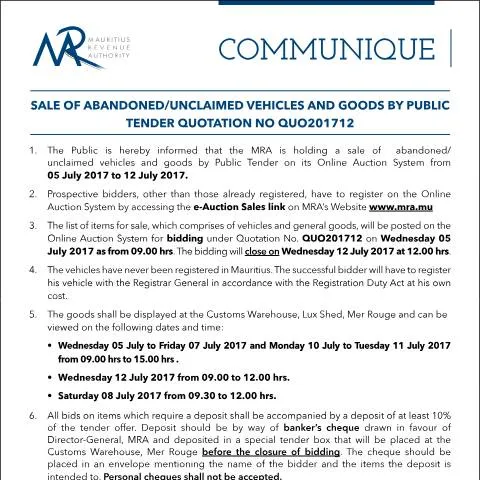
The genesis of this initiative is rooted in regulatory provisions aimed at maintaining order in the management of unclaimed assets. As articulated in the CommuniqueQ12of2017, published on 5th July 2017, the sale is conducted within the framework established by the MRA, primarily focusing on enhancing transparency and efficiency in public dealings. The Public Tender mechanism is essential for both the authorities and prospective bidders as it provides a structured process for the disposal of goods that have lost their owners.
Key Dates and Timeline of Activities
The timeline for the auction is crucial for bidders to note, as it dictates their participation strategy. Below are the significant dates surrounding the tender:
| Date | Activity |
|---|---|
| 05 July 2017 | Start of bidding; list of items available on the Online Auction System. |
| 08 July 2017 | Viewing time for bidders from 09.30 to 12.00 hrs. |
| 10-11 July 2017 | Open for viewing of items from 09.00 to 15.00 hrs. |
| 12 July 2017 | End of bidding at 12.00 hrs.; final opportunity for public participation. |
Registering for the Tender: Steps to Follow
For individuals wishing to participate in the tender, registration on the Online Auction System is a fundamental requirement. The process is as follows:
- Access the MRA’s official website and locate the e-Auction Sales link.
- Complete the registration form, ensuring accuracy to avoid any submission errors.
- Submit your application and await confirmation of your registration.
It is advisable to complete this registration process well in advance of the bidding start date to ensure all technical issues are resolved ahead of time.
Preparing for Your Bid
Preparation goes beyond mere registration; prospective bidders must adequately prepare for the bidding process. Key considerations include:
- Inspection of Goods: Participants should take the opportunity to inspect goods during the specified viewing times. This allows bidders to assess the condition and authenticity of items.
- Financial Arrangements: Ensure that the necessary funds are available for deposits and bidding. As specified, a deposit of at least 10% of the tender value must be prepared in a banker’s cheque.
- Identity Verification: Bring along your Identity Card to facilitate access to the bidding area.
Navigating the Bidding Process: Essential Considerations
Once registered, bidders can embark on the exciting yet competitive bidding journey. Here’s how to navigate this process:
- Log in to the Online Auction System on or after the commencement date.
- Browse through the list of available items, each marked clearly for identification.
- Submit your bid before the closing time on 12 July 2017, ensuring that all deposit requirements are met.
Understanding Bid Requirements
All bids that necessitate a deposit must comply with the following:
- Deposit should be a minimum of 10% of the proposed bid amount.
- Send the banker’s cheque in a sealed envelope clearly stating your name and the items related to the deposit.
- Deposits must be made in a special tender box located at the Customs Warehouse prior to the bid closing time.
What Happens After the Bidding?
Successful bidders will receive notification of their winning bids shortly after the closing time. Following this, there are important steps to finalize the acquisition of the goods:
- Payment Completion: Fulfill any remaining payment obligations as directed by the MRA.
- Registration of Vehicles: If vehicles were purchased, bidders must register them with the Registrar General in accordance with the Registration Duty Act.
- Collection of Goods: Keep track of timelines and instructions for collecting the items from the designated customs warehouse.
Challenges and Complex Situations: Who Needs Extra Attention?
While the process is generally straightforward, certain bidders may encounter unique challenges. Here are some categories where extra caution and attention are warranted:
- Foreign Bidders: Non-Mauritian residents must ensure compliance with local regulations and may need additional documentation.
- Minors: Bidding on behalf of minors requires legal guardianship documentation to be presented.
- Complex Situations: In cases where multiple claims on goods exist, thorough verification is essential.
Case Study: An Example of Success in Bidding
Consider the example of a local entrepreneur who successfully acquired unclaimed electronics through the tender process. By meticulously preparing her registration, making a substantial initial deposit, and thoroughly inspecting the items, she made informed bids that led to a lucrative return on investment. Her case exemplifies how successful bidding can transform abandoned goods into valuable assets.
Final Remarks on the Sale of Abandoned Goods
Participating in the sale of abandoned or unclaimed goods through public tender is not merely about acquiring items at a bargain; it is about engaging with a structured administrative process that serves a greater economic purpose. By understanding the ins and outs of the procedure, from registration to bid completion, participants can navigate the process with confidence and competence. Whether you are a first-time bidder or a seasoned participant, the MRA’s public tender provides a unique opportunity to contribute to the recycling of unclaimed assets within the community.