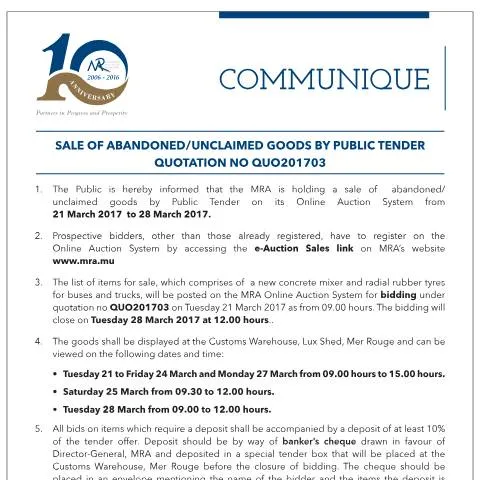
Navigating the Sale of Abandoned/Unclaimed Goods: An Overview
In Mauritius, the Public Tender process for the sale of abandoned or unclaimed goods is not only a means of disposing of items that have lost their rightful owners but also provides an opportunity for prospective buyers to acquire items at potentially attractive prices. This procedure is governed by the Mauritius Revenue Authority (MRA) and follows strict guidelines to ensure transparency and fairness. The official document pertinent to this process is known as Sale of Abandoned/Unclaimed Goods by Public Tender, referenced as Qu03of2017.
The Public Tender Process: Key Dates and Procedures
The timeline for the public tender begins with the announcement of the sale and culminates in the closing of bids. Here’s a detailed breakdown of the process:
- Announcement of Sale: The sale is publicly announced by the MRA, with specific details on the duration and items available for bidding.
- Registration: Prospective bidders must register on the MRA’s Online Auction System to participate, ensuring they have access to all necessary features.
- Viewing Period: Prior to placing bids, interested parties can view the items available for sale at designated customs warehouses.
- Bidding Duration: Bids are accepted within a specific timeframe, with a clear start and end date.
- Submission of Deposits: For items requiring a deposit, bidders must provide a banker’s cheque as part of their bid.
This structured timeline ensures that all participants have equal access to information and resources necessary to make informed purchasing decisions.
Understanding Bidder Requirements: Who Can Participate?
Not all individuals are entitled to participate in the public tender. Here’s a closer look at the eligibility criteria:
- All interested bidders must possess a valid identity card for identification purposes.
- Participants must ensure they are not barred from engaging in bidding activities due to previous violations of tender regulations.
- Foreign nationals looking to bid must adhere to additional legal requirements, including compliance with local customs and bidding laws.
These stipulations are crucial in maintaining the integrity of the auction process and ensuring the legitimacy of all bids received.
Step-by-Step Instruction for Completing the Tender Process
The process of participating in the public tender can be broken down into several clear steps:
- Accessing the MRA Online Auction System: Navigate to the MRA’s official website and locate the e-Auction Sales link.
- Registration: Complete the registration form as per the guidelines, ensuring all personal information is accurate and up to date.
- Review Available Items: Check the published list of items, including detailed descriptions and starting bid prices.
- View the Goods: Attend the viewing sessions at the Customs Warehouse to assess the physical condition of the items.
- Prepare Your Bid: Decide on the items you wish to bid on and calculate the necessary deposit.
- Submit Your Bid: Ensure your bid includes the required deposit in the form of a banker’s cheque, submitted in accordance with the established procedures.
- Monitor the Auction: Keep track of the bidding process online to stay informed about the status of your bids.
Following these steps diligently can enhance your chances of successfully acquiring the desired goods during the tender.
Deposit Requirements for Bidders: What You Need to Know
When participating in the public tender for abandoned or unclaimed goods, bidders must pay careful attention to deposit requirements. This is a critical aspect of the bidding process and includes the following points:
- Deposit Amount: A minimum deposit of 10% of the tender offer is required for all items that necessitate a deposit.
- Form of Deposit: Only banker’s cheques will be accepted; personal cheques are explicitly prohibited.
- Submission Method: The deposit cheque must be placed in a sealed envelope, which includes the bidder’s name and the items the deposit pertains to.
- Location of Submission: Deposits should be submitted at the Customs Warehouse in Mer Rouge, before the bidding period ends.
This structured approach to deposit submission safeguards the auction's integrity and provides a clear pathway for potential bidders.
Items for Sale: What’s Included in This Tender?
The types of items available in the tender can vary widely, but the announcement typically includes a list of goods that are abandoned or unclaimed. For the auction concerning Qu03of2017, the items were diverse and included:
- New Concrete Mixers: Ideal for construction and manufacturing purposes.
- Radial Rubber Tyres: Designed for buses and trucks, essential for transport and logistics companies.
These items are displayed at the Customs Warehouse, allowing potential bidders to evaluate them prior to making any bids.
Critical Viewing Dates and Times: Planning Your Visit
Familiarizing oneself with the viewing dates and times is imperative for interested bidders. The viewing of items for the Qu03of2017 tender was scheduled as follows:
| Date | Time |
|---|---|
| March 21 to March 24 | 09:00 - 15:00 |
| March 25 | 09:30 - 12:00 |
| March 27 | 09:00 - 15:00 |
| March 28 | 09:00 - 12:00 |
Attending these viewing sessions is critical for bidders to assess the condition and quality of items before placing bids, thus making informed decisions.
Post-Bid Process: What Happens After You Bid?
Once the bidding period has closed, several outcomes can follow, depending on various factors. Here’s what a bidder can expect:
- Bid Evaluation: The MRA will evaluate all bids received within the stipulated timeframe. Successful bids that meet all criteria will be processed.
- Notification: Bidders will be notified of the outcome of their bids, whether successful or not. This is typically done within a few days after the auction closure.
- Payment and Collection: Successful bidders will be required to complete payment for their purchased items and arrange for collection.
Understanding this post-bidding process can alleviate confusion and ensure that participants are prepared for the next steps in acquiring their items.
Final Thoughts: Engaging with Public Tenders in Mauritius
Participating in the public tender process for abandoned and unclaimed goods presents an excellent opportunity for individuals and businesses alike. The structured approach, from registering to bidding and finally to item collection, ensures that the process remains fair and transparent.
Individuals are encouraged to stay informed about upcoming tenders, including regulations, required documentation, and specific timelines, as these can significantly impact their bidding experience.
For more information, prospective bidders can visit the MRA's official website or contact their customer service for personalized assistance regarding the tendering process.
Overview of the Abandoned/Unclaimed Goods Sale Process in Mauritius
The sale of abandoned or unclaimed goods in Mauritius is an administrative process governed by specific regulations, ensuring that the disposal is conducted transparently and fairly. The process typically involves several stages, starting from the identification of goods that have remained unclaimed for a specific period. Under various statutes, including the Companies Act, the Public Warehousing Act, and specific provisions associated with customs regulations, goods may be considered abandoned if they have not been claimed or picked up by their rightful owners within a designated timeframe.
Authorities such as the Mauritius Revenue Authority (MRA) and the relevant local government bodies are responsible for overseeing the identification, storage, and eventual sale of these goods. The process requires careful documentation, including compliance with provisions set out in PSC regulations, to ensure that all stakeholders adhere to the law. Goods may include items from lost luggage at airports, unclaimed cargo, and items left in public facilities.
Fill in your form directly online
No printing: type your details into the boxes of the official form, tick, then download the PDF ready to send.
- 1Type into the form boxes
- 2Tick in one click
- 3Save and download the PDF
The competitive bidding process encourages interested parties to submit tenders, which fosters healthy competition while also ensuring that the government can recover some revenue from otherwise neglected assets. Successful bidders are typically required to fulfil certain obligations, such as paying the full amount within a specified timeframe and adhering to any conditions set forth during the tender process.
Legal Framework and Regulations Governing the Sale
The legal framework surrounding the sale of abandoned or unclaimed goods in Mauritius is multifaceted, drawing from both local law and administrative procedures. The key legislation involves the Public Service Commission Act of 1955 and other relevant statutory provisions, which outline the procedures and safeguards necessary for the disposition of such goods.
For example, goods must be stored in a secure location, and the authorities must maintain a public registry of items pending auction. This registry must be accessible, allowing potential bidders to inspect the goods before the tender process begins. Additionally, regulations mandate the publication of sales notices in at least one local newspaper and on the government's official website, ensuring that the information reaches a broad audience.
Moreover, specific guidelines govern the conditions under which goods can be declared abandoned. These include the duration goods must remain unclaimed, typically set at a minimum of three months, during which the owner has the opportunity to reclaim their property. If unclaimed, the goods can then be scheduled for sale through public tender, reinforcing the principle of due process.
Key Steps for Potential Bidders in the Tender Process
For those considering participating in the tender for abandoned or unclaimed goods, it is crucial to understand the steps involved in the bidding process. First, potential bidders should regularly check announcements on the government portal and local publications for upcoming sales. The notices will typically include information about the goods available, the date and time of the tender, and the location where the bids must be submitted.
Next, bidders must prepare the required documentation, which often includes personal identification, proof of residence, and any other documents specified in the tender notice. It’s advisable to visit the storage facility before the bidding to evaluate the condition and value of the items being auctioned. Potential bidders should also familiarize themselves with the bidding process, including minimum bids and deposit requirements, which are often stipulated in the tender announcement.
During the tender, bidders will submit their offers in an envelope or through a designated online platform, if applicable. Once the tender closes, the authorities will review all submissions, and the highest compliant bid will typically be accepted. Bidders will be notified of the results, and successful bidders must promptly fulfill the payment obligations to secure their purchase.
It's essential to understand that participation in these sales often involves risks, including the potential for hidden defects in the goods purchased. Therefore, thorough research and caution are advisable to ensure a successful and satisfactory acquisition.