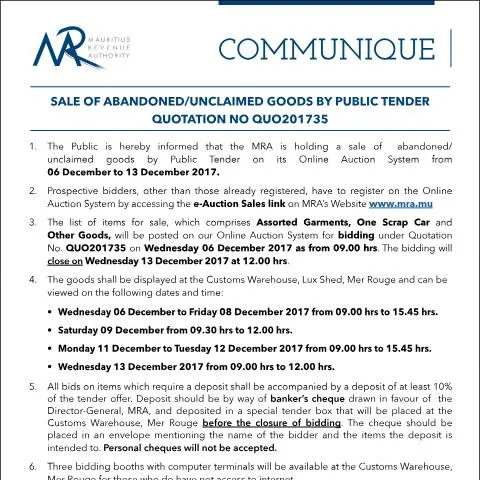
Understanding the Sale of Abandoned and Unclaimed Goods
The sale of abandoned or unclaimed goods by public tender represents a significant opportunity for individuals and businesses alike to acquire goods that have been left unclaimed. These sales, conducted by the Mauritius Revenue Authority (MRA), not only facilitate the reclamation of value from unclaimed items but also help in clearing customs warehouses. Each year, various items ranging from garments to vehicles are auctioned off, allowing the public to participate in the bidding process.
The Timeline of the Sale Process
Key dates and actions involved in the process are crucial for potential bidders to understand. The 2017 auction held by the MRA is an example of what participants can expect in terms of timing:
- Initial Announcement: The public tender was announced on December 4, 2017, with details on the items for sale.
- Bidding Period: The actual bidding occurred from December 6 to December 13, 2017. This window allowed registered bidders to place their offers.
- Viewing Period: Prior to placing bids, interested parties were given specific days to inspect the items physically, from December 6 to December 13, 2017.
Understanding this timeline ensures that bidders can prepare adequately and participate effectively in the process.
Who Should Consider Participation?
This process is not limited to businesses or experienced bidders. Individuals from various backgrounds may find value in participating in these auctions. Some typical profiles include:
- Resellers: Individuals who buy goods in bulk to resell them at a profit.
- Homeowners: People looking for furniture, clothing, or vehicles at a fraction of retail prices.
- Collectors: Enthusiasts seeking rare or unique items that may be among the unclaimed goods.
The diverse range of goods available makes this auction appealing to a wide audience, which can include anyone with a keen eye for value.
Preparation for the Tender: Essential Documentation
To participate effectively in the public tender process, potential bidders must prepare specific documentation. This ensures compliance and smooth operations during the bidding phase.
- Registration Requirements:
- Prospective bidders must register on the MRA’s Online Auction System. This step is crucial, especially for those who are not already registered.
- Access the e-Auction Sales link on the MRA’s official website to complete the registration.
- Identity Verification: Participants must present a valid identification document at the Customs Warehouse when bidding.
- Deposit Payment: For items requiring a deposit, bidders must prepare a banker’s cheque (at least 10% of the bid) made out to the Director-General of MRA.
Proper documentation is vital not only to fulfill legal requirements but also to streamline the bidding process and avoid potential pitfalls.
Navigating the Bidding Platform and Process
The MRA conducts its auctions via an online platform which provides an efficient way to manage bids. Here are some key aspects of the bidding process:
- Online Bidding: Bidders may place bids through the MRA's Online Auction System during the specified timeframe.
- Bidding Booths: For those lacking internet access, the MRA set up three booths equipped with computer terminals at the Customs Warehouse, allowing bidders to place their offers in person.
- Closing of Bids: Bids must be submitted by the deadline, which was 12.00 hrs on December 13, 2017, for the 2017 auction.
Understanding the nuances of the bidding process empowers participants to engage confidently and increase their chances of securing coveted items.
Viewing Items: A Key Step Before Bidding
Physical inspections are crucial for bidders, providing a first-hand look at the condition and quality of goods. During the 2017 auction, various items were made available for viewing at the Customs Warehouse, with specific times allotted:
| Date | Viewing Hours |
|---|---|
| December 6 - December 8, 2017 | 09:00 - 15:45 |
| December 9, 2017 | 09:30 - 12:00 |
| December 11 - December 12, 2017 | 09:00 - 15:45 |
| December 13, 2017 | 09:00 - 12:00 |
Potential bidders are strongly encouraged to take advantage of these viewing opportunities to make informed decisions before proceeding with bids.
Understanding Deposits: Financial Commitment in Bidding
Deposits play a critical role in the public tender process. Bidders must ensure they have the necessary funds available to successfully participate in the bidding:
- Deposit Amount: A minimum deposit of 10% of the offered bid amount is required for certain items. This deposit acts as a security measure for the bidding process.
- Payment Method: All deposits must be made via banker’s cheque. Personal cheques or cash will not be accepted, ensuring a secure transaction environment.
- Submission of Deposit: Bidders must place their deposits in a special tender box located at the Customs Warehouse before bidding closes, alongside a clearly labeled envelope indicating the bidder’s name and item details.
Failure to adhere to deposit requirements may disqualify potential bids, emphasizing the need for careful preparation and attention to detail.
Post-Bid Outcomes and Next Steps
Once the bidding period concludes, participants will await the outcomes of their bids, which can lead to various scenarios:
- Successful Bids: Winning bidders will be notified and must follow through with payment to secure their items.
- Payment Procedures: Instructions regarding the final payment process will be provided to successful bidders to ensure they complete their transactions correctly.
- Unsuccessful Bids: Participants who are not awarded items will not incur any further obligations, allowing for future participation in subsequent auctions.
Understanding the post-bid process ensures that participants are prepared for the outcomes, whether successful or not, and can plan accordingly for future opportunities.
Common Pitfalls and Best Practices
While engaging in public tenders, bidders can encounter various challenges. Awareness of common pitfalls can aid in a more successful experience:
- Neglecting Registration: Failing to register in advance can lead to disqualification from the bidding process.
- Missing the Deposit Deadline: It is imperative that bidders submit their deposits on time, as late submissions will not be considered.
- Inadequate Item Inspection: Bidders must ensure they have thoroughly inspected items before placing bids to avoid unforeseen issues post-purchase.
Adhering to best practices not only enhances the likelihood of success but also contributes to a more satisfying auction experience overall.
In Summary: Engaging with the Tender Process
Participating in the sale of abandoned or unclaimed goods through public tender is a distinct opportunity for a diverse audience. From understanding the timeline and preparing the necessary documentation to engaging in the bidding process and navigating post-bid outcomes, each step demands careful consideration. By remaining informed and organized, bidders can maximize their chances of success while contributing to the efficient management of unclaimed goods in Mauritius.
Understanding the Process of Public Tender for Abandoned Goods
The sale of abandoned or unclaimed goods via public tender is a structured process regulated by Mauritian law to manage property that is no longer in the possession of its original owner. This initiative promotes transparency and fairness in the disposal of such goods, which can range from vehicles to personal items found in public spaces. The process is overseen by the relevant local authorities who are mandated to conduct public tenders in accordance with established guidelines.
Firstly, the authorities typically prepare an inventory of abandoned goods, which will be publicly announced via various channels, including local newspapers and the official government website. Interested parties must pay special attention to the details provided in these announcements, as they will include important information about the nature of the goods, the conditions for bidding, and the timeline for the tender process.
It is essential to understand that bidding on such goods requires adherence to specific protocols. Interested bidders must register in advance, often filling out a bidding application form, like the LGSC Form 12, and providing necessary identification documents, including a copy of their National ID card. This registration process ensures that only eligible individuals participate and helps maintain a secure and credible bidding environment.
Legal Framework Governing the Sale of Abandoned Goods
The legal provisions surrounding the sale of abandoned or unclaimed goods in Mauritius are primarily encapsulated in the Public Auctions and Sales of Unclaimed Goods Act. This framework outlines the rights and responsibilities of both the authorities and individuals involved in the tender process. For instance, it specifies the duration that goods can remain unclaimed before they are considered for auction, which is typically set at six months from the date of abandonment.
Moreover, the Act mandates the advertisement of the auction details to ensure that potential claimants have a fair chance to reclaim their goods before they are sold. This can include notices at local community centers and online announcements on government portals such as govmu.org. Additionally, the authorities are required to maintain transparent records of all goods sold, including the final sale price, to promote accountability and public trust.
It is also worth noting that legal exceptions can apply based on the type of goods being auctioned. For example, certain hazardous materials or items of significant cultural value may be subject to stricter regulations, requiring additional permits and inspections prior to sale. This ensures that the process aligns with environmental and cultural preservation standards.
Key Considerations for Bidders in the Tender Process
Participants in the public tender for abandoned goods must be informed of several key considerations to maximize their chances of a successful bid. One major aspect is understanding the valuation of the goods. Before placing a bid, it is advisable for bidders to conduct thorough research on the potential market value of the items in question. This might involve contacting local appraisers or utilizing online resources to gauge fair pricing.
Additionally, bidders should carefully review the terms and conditions outlined in the tender notice, as these will dictate the rules governing the auction, including payment methods, deposit requirements, and the timeframe for taking possession of the purchased goods. Failure to comply with these requirements can lead to forfeiture of the bid deposit and, potentially, a ban from future tenders.
Moreover, participation in the tender process may require bidders to be prepared for inspection days. Authorities often allow potential bidders to view items prior to the auction to assess their condition. This is a critical step as it allows bidders to make informed decisions and identify any potential flaws or damages that may affect their bidding strategy.
Lastly, fostering good relations with the local authorities overseeing the tender process can be advantageous. Engaging in dialogue and asking questions can not only clarify doubts but also demonstrate a bidder's genuine interest and seriousness in the process. In some instances, this can facilitate smoother transactions and provide insights into future auctions.