Navigating the Sale of Abandoned or Unclaimed Goods: A Practical Guide
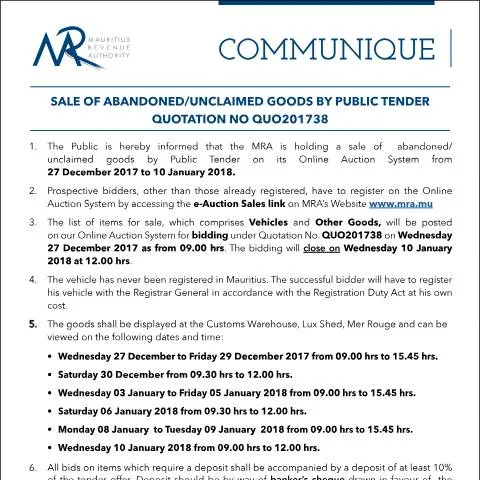
Imagine walking into a bustling auction, the air thick with anticipation as bidders prepare to secure items that were once abandoned or unclaimed. This scenario unfolds through the Sale of Abandoned/Unclaimed Goods by Public Tender, organized by the Mauritius Revenue Authority (MRA). This official document, referenced as Communique Q38 of 2017, plays a pivotal role in facilitating this unique auction process. Understanding its intricacies is essential for anyone looking to participate in this auction.
The Auction Timeline: Key Dates to Remember
It's crucial to stay informed about the timeline associated with the sale. The auction period for the abandoned or unclaimed goods spans from December 27, 2017, to January 10, 2018. Here’s a detailed look at the key dates:
- Start of Bidding: December 27, 2017, at 09:00 hrs.
- End of Bidding: January 10, 2018, at 12:00 hrs.
Before the bidding opens, prospective bidders must ensure their registration on the MRA’s Online Auction System. The bidding process itself operates under Quotation No. QUO201738, where a variety of items, including vehicles and other goods, will be available for viewing and bidding.
Viewing Schedule for Auction Items
Potential bidders have multiple opportunities to inspect the items on sale. The details for viewing are as follows:
| Date | Time |
|---|---|
| December 27 to December 29, 2017 | 09:00 - 15:45 hrs |
| December 30, 2017 | 09:30 - 12:00 hrs |
| January 3 to January 5, 2018 | 09:00 - 15:45 hrs |
| January 6, 2018 | 09:30 - 12:00 hrs |
| January 8 to January 9, 2018 | 09:00 - 15:45 hrs |
| January 10, 2018 | 09:00 - 12:00 hrs |
It is essential for bidders to avail themselves of these viewing opportunities to make informed decisions before placing bids.
Understanding the Role of the Official Document
The Sale of Abandoned/Unclaimed Goods by Public Tender document serves various functions within the auction process. Primarily, it outlines the conditions under which the auction will operate, including:
- Identification of the goods available for sale.
- Details of the bidding process and required deposits.
- The stipulation that the successful bidder assumes responsibility for registering any vehicles purchased, as per the Registration Duty Act.
This document is not merely a form but a comprehensive guide ensuring transparency and compliance throughout the auction process. It delineates the rights and responsibilities of both the MRA and the bidders, thereby facilitating a smoother transaction.
Registration and Participation: Step-by-Step
Participation in the auction involves a few critical steps, especially for those who are not yet registered on the Online Auction System. Prospective bidders should follow these guidelines:
- Online Registration: Access the MRA’s website and locate the e-Auction Sales link to complete your registration.
- Deposit Requirements: For items that necessitate a deposit, ensure you provide at least 10% of your tender offer via a banker’s cheque made payable to the Director-General, MRA.
- Submission of Bids: Submit your bids through the Online Auction System before the bidding closure on January 10, 2018, at 12:00 hrs.
Additionally, if you do not have access to the internet, the MRA has arranged for three bidding booths with computer terminals at the Customs Warehouse, Mer Rouge, to accommodate such bidders.
Detailed Insights into Form Completion
While the process may seem straightforward, there are crucial details within the official document that require attention to avoid complications. Below, we dissect some significant sections of the form:
- Bidder’s Information: Ensure that your identity is accurately represented, including your full name as per your National ID card. This is critical for verification during the bidding process.
- Item Description: Clearly indicate the items you are bidding on, referencing the specific quotation number — QUO201738 — to avoid confusion.
- Deposit Payment Details: Provide clarity regarding the deposit amount and its intended purpose. Place your banker’s cheque in an envelope marked with your name and the items bid on. Note that personal cheques will not be accepted.
Being meticulous while completing this form is essential to ensure that your bid is valid and recognized.
Comparative Understanding: Distinctive Features of the Q38 Document
It is common to conflate the Sale of Abandoned/Unclaimed Goods by Public Tender with other similar documents or forms related to auctions. However, the Q38 document has unique attributes that set it apart:
Fill in your form directly online
No printing: type your details into the boxes of the official form, tick, then download the PDF ready to send.
- 1Type into the form boxes
- 2Tick in one click
- 3Save and download the PDF
| Feature | Q38 Document | Other Auction Documents |
|---|---|---|
| Focus | Sale of abandoned/unclaimed goods | Sale of various goods |
| Deposit Requirement | Minimum of 10% required | Varies depending on auction type |
| Registration Platform | MRA Online Auction System | May vary by auction house |
| Viewing Opportunities | Multiple scheduled viewing dates | Often limited to auction day |
This comparative approach allows prospective bidders to appreciate the distinct features of the Q38 document relative to other auction-related documents, helping them to navigate the process effectively.
After the Bidding: Understanding the Next Steps
Once the bidding concludes, it is essential to know what comes next. Successful bidders will receive instructions on how to manage their purchases, which typically include:
- Registration of vehicles with the Registrar General — this is the bidder's responsibility and must be completed in accordance with the Registration Duty Act.
- Payment of any outstanding balances as necessitated by the bidding outcomes.
- Collection of purchased items from the Customs Warehouse, following the stipulated guidelines provided by the MRA.
Additionally, the MRA will communicate further information regarding any other obligations or requirements that successful bidders need to fulfill post-auction.
Final Considerations for Participants
Partaking in the Sale of Abandoned/Unclaimed Goods by Public Tender offers an exciting opportunity for bidders to acquire unique items. However, it demands careful preparation and adherence to the guidelines laid out in Communique Q38 of 2017. Ensuring all steps are followed meticulously — from registration to bid submission — will enhance your chances of a successful auction experience.
As you gear up for this auction event, remember to bring your Identity Card for access at the Port Main Gate, along with any necessary documentation that may be pertinent to your bids.