Understanding the Process of Purchasing Abandoned or Unclaimed Goods
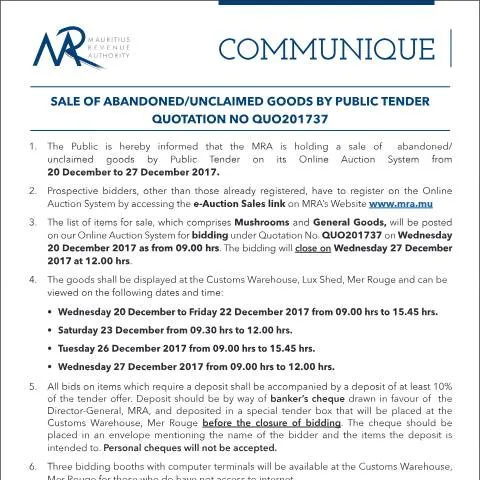
Navigating the intricacies of acquiring abandoned or unclaimed goods through public tender can seem daunting, yet it presents an opportunity for astute bidders to acquire valuable items at potentially lower prices. The sale governed by the Quotation No. QUO201737 is an official process orchestrated by the Mauritius Revenue Authority (MRA), enabling individuals and businesses to bid on a variety of goods that have been left unclaimed. This article will provide a comprehensive guide on how to effectively participate in this public tender, with detailed steps and insights into the requirements and processes involved.
Key Dates and Timeline for the Tender Process
Understanding the timeline is crucial for interested bidders. The public tender for abandoned and unclaimed goods is structured around specific dates that dictate when actions must be taken. The timeline for this tender is as follows:
- Sale Dates: The public tender begins on December 20, 2017, and concludes on December 27, 2017.
- Viewing Period: Goods can be viewed during specific hours from December 20 to December 27, 2017, at the Customs Warehouse, Lux Shed, Mer Rouge.
- Bidding Closure: All bids must be submitted by 12:00 hrs on December 27, 2017.
It is vital for prospective bidders to familiarise themselves with these dates to avoid missing out on any crucial steps in the bidding process.
The Role of the MRA in the Tender Process
The Mauritius Revenue Authority plays an essential role in facilitating this tender process, acting as the overseer and administrator of the sale. The MRA is responsible for:
- Organising the public auction and ensuring that it meets all regulatory requirements.
- Providing a platform for bidders to register and submit their bids through the Online Auction System.
- Collecting deposits and managing the tender box for successful bids.
This structured approach ensures transparency and fairness in the bidding process, allowing bidders to engage in the sale with confidence.
How to Register and Participate in the Tender
Registration Steps
For those new to the online auction system, registering is the first essential step. New registrants must:
- Access the MRA's website and navigate to the e-Auction Sales link.
- Complete the registration form, providing all necessary personal information, including a valid email address.
- Submit the registration and await confirmation from MRA regarding successful registration.
Placing Bids
Once registered, bidders can place their bids on the items available for sale. The process includes:
- Reviewing the list of items available for bidding, which is published on the Online Auction System.
- Selecting the desired items and submitting bids according to the guidelines provided.
- Ensuring all bids requiring a deposit are backed by a banker’s cheque of at least 10% of the bid amount.
Understanding the Requirements and Conditions for Bidding
Before diving into the bidding process, bidders must be aware of the specific requirements for submitting bids, which include:
- Deposit Requirement: A mandatory deposit of 10% of the tender amount must accompany bids for certain items.
- Cheque Specifications: Only banker’s cheques are accepted; personal cheques will not be considered valid.
- Identification: Bidders must present their identity cards for access to the Customs Warehouse where the goods are displayed.
Completing these requirements accurately will ensure that your bid is valid and will not face any disqualifications due to technicalities.
Viewing and Inspecting Items Before Bidding
The inspection phase is crucial for making informed bids. The following guidelines must be observed during the viewing period:
- Viewing Schedule: Goods are available for view from December 20 to December 27, 2017, during set hours.
- Location: All items can be inspected at the Customs Warehouse, Lux Shed, Mer Rouge.
- Accessibility: Three computer terminals will be available for those without internet access.
Prospective bidders should take full advantage of the viewing period to assess the condition and value of the items before placing their bids, as this can significantly impact the bidding outcome.
Navigating Issues: Handling Errors and Missing Documents
While the bidding process is designed to be straightforward, issues may arise, such as missing documents or inadvertent errors in bid submissions. Here’s how to navigate these challenges:
- Addressing Bid Rejections: If a bid is rejected due to documentation issues, bidders should promptly contact the MRA to identify the reason and rectify any discrepancies.
- Resubmitting Bids: Bidders have the option to correct any mistakes and resubmit within the bidding period, provided they adhere to the original timelines.
- Documentation Verification: It is advisable to double-check all required documents, including the banker’s cheque and identification, to avoid common pitfalls that could lead to disqualification.
Taking proactive measures to ensure all documentation is complete will enhance the chances of a successful bid.
The Significance of the Public Tender in Promoting Fair Trade
The public tender process for the sale of abandoned or unclaimed goods serves multiple community interests:
- Economic Opportunities: It opens avenues for individuals and businesses to acquire goods at competitive rates, enhancing market participation.
- Transparent Procedures: The structured nature of the tender promotes transparency in how abandoned goods are sold, deterring any potential misappropriation.
- Community Engagement: Engaging the public in such tenders fosters a sense of community ownership and responsibility towards unclaimed assets.
Final Steps Post-Bidding: What Happens Next?
Upon the closure of the bidding process, there are several subsequent actions that bidders should be aware of:
- Bid Review: The MRA will review all submitted bids and validate the deposits. Successful bids will be notified accordingly.
- Payment Process: Accepted bidders will need to complete the payment process for the items won within a stipulated period.
- Collection of Goods: After payment finalisation, arrangements can be made to collect the purchased goods from the Customs Warehouse.
Understanding these final steps ensures that bidders are prepared for what follows once the bidding phase concludes, ultimately leading to a smooth transaction process.
Understanding the Legal Framework for Sale of Abandoned Goods
The sale of abandoned or unclaimed goods by public tender in Mauritius is governed by specific legal provisions that aim to protect both the rights of the owners and the interests of the public. The primary legislation guiding this process is found within the framework of the Public Procurement Act and relevant sections of the Civil Code, which delineates the rights to property. The process is designed to ensure transparency and fairness in the disposal of goods that have been left unclaimed for a certain period, typically defined as three months from the date of abandonment.
To initiate the sale process, authorities must first ascertain the ownership of the goods through documentation and any applicable registration records. If owners cannot be identified or if the goods remain unclaimed, public authorities, such as the Ministry of Finance or the relevant local government bodies, may take steps to auction these items officially.
The procedure typically involves notifying the public through official channels, including local newspapers and government websites. This notification must include details about the items, their estimated value, and auction guidelines, which must comply with established public tender regulations. Additionally, any person or entity participating in the tender must meet specific criteria, including the submission of a deposit that demonstrates their seriousness in acquiring the goods.
Fill in your form directly online
No printing: type your details into the boxes of the official form, tick, then download the PDF ready to send.
- 1Type into the form boxes
- 2Tick in one click
- 3Save and download the PDF
Steps Involved in the Tender Process
The tender process for the sale of abandoned or unclaimed goods involves several crucial steps aimed at ensuring compliance with legal standards and protecting the interests of both the bidders and the public. The first step typically involves an inventory assessment, where a comprehensive list of the goods is compiled. This assessment must be conducted by qualified personnel to accurately ascertain the condition and value of the items.
Once the inventory is complete, the next step is to prepare a public notice, which must include the date, time, and location of the tender opening, as well as a detailed description of each item being auctioned. This notice is then disseminated through various media channels, including local newspapers and the government e-portal, ensuring maximum public awareness.
Interested bidders must then submit their applications through the prescribed format, usually accompanied by required documents such as proof of identity, residential address, and a deposit, which is commonly set at a percentage of the estimated value of the goods. After the submission deadline, a public opening of tenders is conducted, where bids are reviewed, and the highest bidder is declared the winner, subject to approval by the relevant authorities.
It's essential for bidders to be aware of the conditions attached to the sale. For instance, the sale may be “as is,” meaning that the responsibility for inspecting the goods and determining their condition lies solely with the bidder. Additionally, successful bidders are typically required to clear the goods from the premises within a specified timeframe, or they may incur additional charges.
Impact on Local Communities and Economies
The sale of abandoned goods through public tender can have significant implications for local communities and economies in Mauritius. By providing an avenue for the disposal of unclaimed items, the process not only helps to declutter public spaces and warehouses but also offers opportunities for local entrepreneurs and residents to acquire goods at potentially lower prices.
This initiative can stimulate economic activity, especially in areas where access to affordable goods is limited. For instance, local businesses can benefit from purchasing items at auctions to resell them, contributing to the local economy and reducing waste. Additionally, the public tender process can serve as a form of recycling, where usable items are salvaged and redistributed rather than discarded.
Moreover, the transparency and competitive nature of public tenders can foster trust within communities, as residents can see that the government is taking proactive steps in managing abandoned properties. This approach can lead to improved community relations and a greater willingness among citizens to engage with local authorities during future initiatives.
However, it’s also essential to consider potential drawbacks, such as the risk of auctions attracting buyers who may not have the best interest of the community at heart, leading to hoarding or speculative buying practices. To mitigate these risks, authorities may need to implement guidelines that encourage responsible bidding and the prioritization of local community needs.