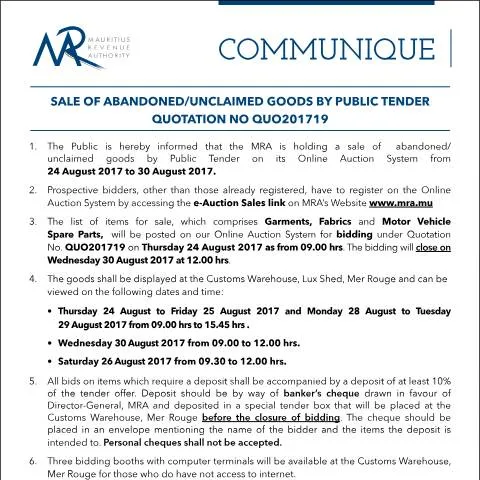
Navigating the Sale of Abandoned or Unclaimed Goods: A Guide to Public Tender Form QUO201719
Imagine you come across an advertisement for a public tender to purchase unclaimed goods. You’re intrigued—and perhaps even excited—by the prospect of acquiring second-hand items at potentially great prices. However, without a clear understanding of how to navigate the process, you might find yourself overwhelmed. This guide delves deeply into the intricacies of the Sale of Abandoned/Unclaimed Goods by Public Tender, specifically the Communique Q19 of 2017, and outlines the necessary steps to participate effectively in this auction.
Understanding the Tender Process for Unclaimed Goods
In Mauritius, the procedure for acquiring abandoned or unclaimed goods follows a well-structured framework aimed at ensuring transparency and fairness. The Mauritius Revenue Authority (MRA) oversees this process, which is crucial for both the public and the government. The sale allows individuals and businesses to bid on items that have been left unclaimed, often due to abandonment or failure of previous owners to collect their goods.
The Role of the Mauritius Revenue Authority (MRA)
The MRA plays a pivotal role in regulating these sales. They are responsible for organizing the auction and ensuring that all steps from bid submission to final awarding of items are conducted in accordance with legal standards. By centralizing this process, the MRA not only helps to declutter storage facilities but also provides a unique opportunity for the public to acquire valuable items.
What Does the Public Tender Entail?
The public tender allows individuals or entities to place bids on a variety of goods, which may include garments, fabrics, and motor vehicle spare parts. The auction operates within a specified timeframe, during which participants can place their bids through the MRA’s Online Auction System, accessible via their official website.
Step-by-Step Instructions for Participating in the Tender
Before you can place a bid, it's crucial to understand the steps involved in completing the associated form and participating in the tender. Below is a comprehensive breakdown:
- Registration: If you are not already registered, you'll need to sign up on the MRA's Online Auction System. This involves providing personal details such as your name, address, and National ID number.
- Review the Item List: On the specified date, the list of items available for bidding will be published online. Ensure you check this list thoroughly to identify which items you are interested in.
- View the Items: Potential bidders have the opportunity to inspect the items at the Customs Warehouse. This step is crucial as it allows you to assess the condition of goods before committing to a bid.
- Prepare Your Bid: When crafting your bid, ensure you are aware of the deposit requirements. Bids for certain goods require a deposit of at least 10% of the tender offer, which must be submitted via a banker’s cheque.
- Submit Your Bid: Place your bid electronically through the online platform or, if you lack internet access, visit one of the bidding booths set up at the Customs Warehouse.
Completing the Form: What to Watch Out For
The form associated with the public tender is critical in determining the success of your bid. It is essential to fill out all required fields comprehensively to avoid any delays or disqualifications. Below, we've outlined the key sections of the form and potential pitfalls to avoid:
Form Sections Breakdown
| Section | Description | Common Mistakes |
|---|---|---|
| Applicant Details | Enter your full name, address, and contact information. | Missing or incomplete contact information. |
| Bid Items | List the items you wish to bid on with corresponding lot numbers. | Incorrect lot numbers or neglecting to specify all desired items. |
| Deposit Information | Include details of the banker’s cheque as your bid deposit. | Submitting personal cheques instead of banker’s cheques. |
| Signature | Sign the document to validate your participation. | Forgetting to sign or using a stamp in place of a signature. |
Unique Features of the QUO201719 Form
The QUO201719 form is distinct in that it not only serves as a bidding form but also encompasses legal responsibilities associated with the tender process. Unlike other forms that may simply gather information, this form creates a binding agreement between the bidder and the MRA upon submission. Understanding this distinction helps underscore the importance of accuracy and completeness in your application.
Dealing with Unexpected Situations
Occasionally, participants may encounter issues ranging from incomplete submissions to being outbid. Understanding how to navigate these scenarios can save you time and frustration.
What to Do If Your Bid is Rejected
If your bid is rejected, the first step is to communicate directly with the MRA to understand the reasons for the rejection. Often, it might pertain to missing details or documentation. It’s crucial to address these issues promptly, as opportunities for re-bidding may be limited.
Handling Bid Withdrawals
If you wish to withdraw your bid, it's important to act quickly. Contact the MRA immediately and refer to their guidelines on bid withdrawal. Keep in mind that withdrawing can affect your future participation in tenders.
Fill in your form directly online
No printing: type your details into the boxes of the official form, tick, then download the PDF ready to send.
- 1Type into the form boxes
- 2Tick in one click
- 3Save and download the PDF
The Broader Context of Goods Auctions in Mauritius
The sale of abandoned or unclaimed goods should be seen within the context of broader governmental efforts to manage public assets efficiently. Auctions of this nature not only recirculate goods back into the community but also ensure that government entities can free up storage space and generate revenue.
How This Auction Ties into National Regulations
The process is governed by a framework that integrates both French civil law and English common law traditions, ensuring that the sales maintain a level of legitimacy and accountability. By participating, bidders engage in a civic duty, contributing to national economic activity while gaining access to unique items.
Concluding Thoughts: The Opportunity Awaits
Engaging in the public tender for abandoned or unclaimed goods presents a unique opportunity for both individual consumers and businesses. By understanding the intricacies of the QUO201719 form and the entire bidding process, you position yourself for success in this auction. Always keep in mind the need for thorough preparation, clear communication, and adherence to the guidelines set forth by the MRA.
As you embark on this journey, remember that each bid you place not only represents a potential acquisition but also an integral part of a larger system that promotes responsible management of abandoned goods. Happy bidding!