Understanding the Framework of Abandoned Goods Sales
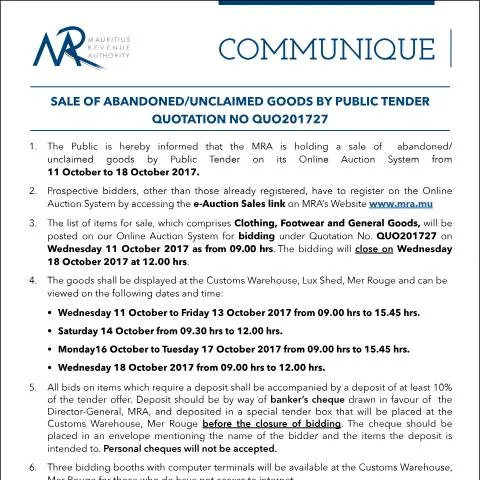
The sale of abandoned or unclaimed goods by public tender is an essential process for managing items that have been left without ownership. The Mauritius Revenue Authority (MRA) oversees this process, providing a system that allows the public to bid on such goods legally and transparently. This initiative is geared towards the effective recycling of goods while also generating revenue for the state.
The Regulatory Framework Behind the Sale
The legal basis for this process is encapsulated in the MRA's operational guidelines. The sale of unclaimed goods aligns with the principles established under the Public Procurement Act of Mauritius, which seeks to ensure that government resources, including abandoned items, are utilized efficiently. The specific public tender referred to as Quotation No. QUO201727 is rooted in the need for transparency, fairness, and public participation.
Who Engages with This Process?
This public tender is primarily aimed at prospective bidders interested in acquiring various goods. Such individuals may include:
- Individuals seeking affordable clothing and general goods
- Small business owners looking for stock
- Collective auction agents
In essence, the auction is open to anyone registered on the MRA's online auction system. However, prior registration is mandatory for those not already enrolled.
Navigating the Bidding Process
The bidding process is conducted online, with specific timelines and procedures to follow. The MRA has taken significant strides towards digitalization, making it imperative for participants to familiarize themselves with the online auction system, accessible via the MRA's official website. Bidders must register and familiarize themselves with the auction platform to ensure a seamless experience.
Step-by-Step Guide to Participating in the Auction
To participate successfully in the public tender, here’s a detailed guide on the necessary steps:
- Registration: For new bidders, registration on the MRA's online auction system must be completed prior to the auction dates.
- Reviewing Goods: A list of available items will be published on the system for review starting from October 11, 2017.
- Depositing Funds: Each bid requires a deposit of at least 10% of the proposed tender amount, made via a banker’s cheque.
- Submitting Bids: Bids must be submitted online before the deadline, ensuring compliance with all requirements.
Deciphering the Tender Details
The specific tender, Quotation No. QUO201727, includes an array of goods such as clothing, footwear, and general goods. The auction system will display these items for public viewing during assigned hours:
- Wednesday, October 11 to Friday, October 13, 2017: 09.00 hrs - 15.45 hrs
- Saturday, October 14, 2017: 09.30 hrs - 12.00 hrs
- Monday, October 16 to Tuesday, October 17, 2017: 09.00 hrs - 15.45 hrs
- Wednesday, October 18, 2017: 09.00 hrs - 12.00 hrs
What to Expect from Bidding
Participants should be prepared to engage actively during the auction period. The bidding process will close at precisely 12.00 hrs on October 18, 2017. It is crucial that bidders remain vigilant and may even benefit from attending the physical display at the Customs Warehouse to inspect the goods personally.
Challenges and Solutions: Overcoming Common Hurdles
While the process is designed to be straightforward, various issues may emerge:
- Missing Documents: Ensure that your banker’s cheque is correctly filled and that you register online beforehand.
- Error in Bidding: Double-check bid amounts, as mistakes cannot be rectified post-submission.
- Deposit Issues: Personal cheques are not accepted; always use a banker’s cheque for your bids.
What Happens If You Face a Refusal?
In the event of bid rejections, bidders may seek clarification through the MRA's contact details provided on their official website. Transparency is key, and any reasons for refusal can be discussed directly with customer service.
The Importance of Timeliness
Participants in the public tender must adhere strictly to the timelines provided. Late submissions are not entertained, and deposit deadlines are critical. Failure to submit documentation on time could lead to disqualification from the bidding process.
Consequences of Missing Out
Missing any part of the bidding process can have significant repercussions:
- Loss of Opportunity: Items may be sold to other bidders if you're unprepared.
- Financial Setbacks: You may incur unnecessary costs if you have to wait for the next auction.
Understanding the Distinctions within Tender Processes
It is vital to recognize what sets the Sale of Abandoned/Unclaimed Goods by Public Tender apart from other tender processes. Unlike standard procurement bids, this sale focuses specifically on unclaimed goods rather than fresh stock or new services. This distinction must be understood by all potential bidders to avoid confusion.
Comparative Overview: Abandoned Goods vs. Regular Tendering
| Aspect | Abandoned Goods Sale | Regular Tendering |
|---|---|---|
| Nature of Goods | Unclaimed items | Newly procured items or services |
| Usage Requirement | Must be assessed for condition | Must meet specific project needs |
| Regulatory Oversight | Managed by MRA | Managed by various governmental departments |
Utility of the MRA's Online Auction System
The MRA's Online Auction System serves as a central hub for managing bids, facilitating both visibility and transparency. Bidders can log in, view available items, and place their bids in real-time, making the entire process efficient. Computer terminals are also available at the Customs Warehouse for those who may not have internet access, ensuring inclusivity in participation.
Accessing the Auction: Practical Tips
As a bidder, ensure you have the following at hand:
- Your Identity Card for access verification at the warehouse.
- A confirmed registration on the online platform.
- The necessary funds in the form of a banker’s cheque for deposits.
Final Thoughts: Engaging with the Auction
The sale of abandoned and unclaimed goods provides a unique opportunity for citizens to acquire valuable items while supporting state initiatives for recycling and revenue generation. Understanding the procedural intricacies involved is essential for a successful bidding experience. By following the outlined steps and guidelines, bidders can navigate this process with confidence and efficiency.