Diving into the Sale of Abandoned/Unclaimed Goods: A Practical Guide
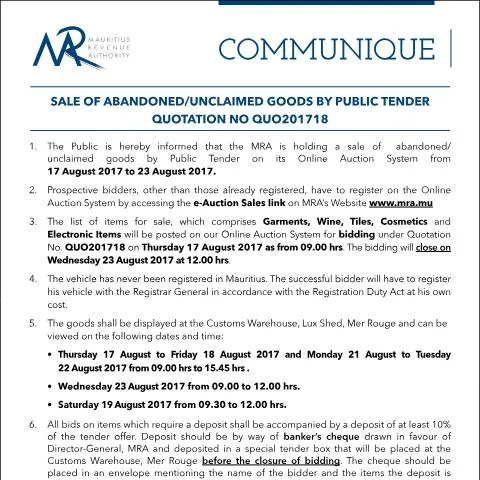
In Mauritius, the disposal of abandoned or unclaimed goods is a structured process that allows the government to sell items that have been left behind or are unclaimed through public tender. This procedure not only clears up space in storage facilities but also offers the public an opportunity to purchase a variety of goods at competitive prices. Understanding the intricacies of the Form CommuniqueQ18of2017, which pertains to this public tender, is essential for anyone looking to engage in the bidding process.
The Procedural Role of the CommuniqueQ18 of 2017
The CommuniqueQ18 of 2017 serves as the official announcement regarding the sale of abandoned or unclaimed goods. This document outlines the timeline, procedures, and requirements for prospective bidders. Within the context of the Mauritius Revenue Authority (MRA), it plays a crucial role by:
- Providing necessary information about the goods available for sale.
- Outlining the bidding process, including deposit requirements and deadlines.
- Specifying the viewing times and locations for prospective bidders.
Understanding the content and implications of this document ensures that bidders can navigate the process smoothly, maximizing their chances of successful participation in the auction.
Who Needs to Submit This Document?
This document impacts various stakeholders, including:
- Individual Bidders: Anyone interested in purchasing unclaimed goods must understand their responsibilities and the registration process.
- Businesses: Companies looking to acquire goods for resale or operational purposes.
- Government Agencies: Entities involved in managing the auction process and ensuring compliance with legal regulations.
It is essential for bidders to recognize that the auction is open to all who meet the registration requirements, including those not already registered on the Online Auction System.
Understanding the Bidding Process: Step by Step
Participating in the public tender process involves several critical steps:
Registration on the Online Auction System
Prospective bidders must register on the MRA's Online Auction System. This can be done by accessing the e-Auction Sales link on the MRA’s official website. Registration is mandatory for those who are not already members of the system and should be completed before the bidding begins.
Viewing the Goods Before Bidding
To make informed decisions, bidders should view the items beforehand. The displayed goods will be located at the Customs Warehouse, Lux Shed, Mer Rouge. The viewing times are:
- Thursday, 17 August to Friday, 18 August 2017: 09:00 - 15:45
- Monday, 21 August to Tuesday, 22 August 2017: 09:00 - 15:45
- Wednesday, 23 August 2017: 09:00 - 12:00
- Saturday, 19 August 2017: 09:30 - 12:00
It is important to note that bidders must bring their Identity Cards for access at the Port Main Gate during their visits.
Making a Bid: Deposit Requirements and Bid Submission
Once a bidder selects the items of interest, they must prepare to place a bid. An essential requirement is the deposit of at least 10% of the tender offer, which must be submitted alongside the bid. Here’s how to proceed:
- Prepare a banker’s cheque drawn in favour of the Director-General, MRA. Personal cheques will not be accepted.
- The cheque should be enclosed in an envelope clearly marked with the bidder's name and the items associated with the deposit.
- This envelope must be deposited in a special tender box located at the Customs Warehouse before the closure of bidding.
Bidding Procedures and Closure
The auction will take place from 17 August 2017 to 23 August 2017, with bids closing precisely at 12:00 on the final day. Bidders will have the opportunity to place bids during this timeframe, and three bidding booths will be available at the Customs Warehouse for those who lack internet access.
The Calendar of Events: Key Dates to Note
Understanding the timeline is crucial for prospective bidders. Here are the key dates associated with the public tender:
| Date | Event |
|---|---|
| 17 August 2017 | Start of bidding; online auction opens |
| 19 August 2017 | Viewing day for interested bidders |
| 22 August 2017 | Final day for viewing goods |
| 23 August 2017, 12:00 | Bidding closes; final bids to be submitted |
Failure to adhere to these dates can result in the inability to participate in the auction, so it’s imperative for bidders to mark their calendars and plan accordingly.
Implications of Participation: Rights and Obligations
Engaging in this bidding process opens avenues for bidders but also carries specific obligations:
- Rights: Bidders have the right to purchase goods under the conditions set by the MRA. Successful bidders will gain ownership of the items once payment is completed and all necessary documentation is submitted.
- Obligations: Bidders must ensure that their bids comply with the auction's regulations, including deposit requirements and submission timelines. Non-compliance may lead to disqualification from the tender.
Moreover, successful bidders should be aware of additional steps post-auction, including the registration of vehicles if applicable, as outlined in the document.
Post-Auction Procedures: What Happens Next?
Once the bidding process concludes, successful bidders must complete the following steps:
- Finalize payment for the goods purchased, ensuring all fees are settled promptly.
- For vehicle purchases, proceed to register the vehicle with the Registrar General in accordance with the Registration Duty Act.
- Collect the purchased goods from the Customs Warehouse as per the specified regulations.
Failure to complete these post-auction requirements may result in the loss of the purchased items or additional penalties, underscoring the importance of adhering to all guidelines laid out in the CommuniqueQ18 of 2017.
Staying Informed: Keeping Track of Your Bidding Activities
For bidders, it is essential to keep track of all communication and updates issued by the MRA during the auction process. This can include:
- Checking the MRA's official website regularly for updates on the auction.
- Maintaining a record of all bid submissions and deposits made.
- Staying connected with customer service channels for inquiries or clarifications.
Organizing this information helps ensure that bidders remain diligent and prepared throughout the auction process.
Understanding the Public Tender Process for Unclaimed Goods
The sale of abandoned or unclaimed goods by public tender in Mauritius is a structured process governed by specific regulations. Typically, such goods are those that remain unclaimed for an extended period, often due to their previous owners’ inability to retrieve them or a lack of interest. The procedures surrounding these sales are primarily handled by the relevant government departments, ensuring transparency and fairness in the bidding process.
To initiate a public tender, the relevant authority must first conduct an inventory of the goods. This inventory should detail the nature, condition, and estimated value of each item. Once this inventory is completed, the authority can proceed to publish a public notice, inviting bids from interested parties. The notice must clearly outline the terms of sale, including the location of the goods, the deadline for submissions, and the necessary bidding procedures.
Potential bidders are often required to submit a deposit or a guaranty, which serves as a commitment to purchase should they win the tender. The deposit is typically a percentage of the estimated value of the goods, ensuring that only serious bidders participate.
Moreover, it’s essential for bidders to be aware of any additional costs that may arise during the procurement process, such as taxes or transfer fees. Understanding these factors is crucial for making informed bids that align with one's budgetary constraints.
In Mauritius, the sale of unclaimed goods can be conducted through various forms of public announcements, including but not limited to, notices in local newspapers, and online platforms. This multi-channel approach aims at maximizing visibility and attracting a diverse pool of bidders, ultimately fostering competitive pricing for the state.
Legal Framework Governing the Sale of Abandoned Goods
The legal framework surrounding the sale of abandoned or unclaimed goods in Mauritius is primarily defined by the Public Procurement Act and the relevant regulations set forth by the Ministry of Finance. The framework is designed to ensure accountability and transparency in government dealings, thus safeguarding public interests.
Key legal provisions include the requirement for a thorough assessment of items prior to sale. This assessment must be conducted in compliance with the established guidelines, which outline the responsibilities of various stakeholders, including government officials and potential buyers. Mismanagement or failure to adhere to these protocols can result in legal repercussions for the individuals involved.
Fill in your form directly online
No printing: type your details into the boxes of the official form, tick, then download the PDF ready to send.
- 1Type into the form boxes
- 2Tick in one click
- 3Save and download the PDF
Additionally, the legislation stipulates that all sales must be conducted in a public forum, ensuring that the process remains open and transparent. This requirement not only fosters trust between the government and the public but also encourages greater community participation.
It is also pertinent to note that the government retains the right to reject any bids that do not meet the established criteria. This includes bids that are excessively low or do not reflect the actual market value of the goods. Such measures are in place to prevent potential exploitation of the tendering process.
Moreover, once the tender has concluded, the successful bidder is typically required to fulfil all contractual obligations within a specified timeframe. Failure to comply may lead to forfeiture of the deposit and further legal action, highlighting the importance of understanding the terms of the tender before submission.
Steps for Entities Interested in Participating in the Tender
For entities or individuals looking to participate in the public tender for unclaimed goods, understanding the procedural steps is crucial. Here’s a breakdown of the process:
Research and Familiarization: Interested parties should begin by familiarizing themselves with the relevant government announcements regarding upcoming tenders. This can typically be found on official government websites or local newspapers.
Attend Information Sessions: Often, the relevant authorities conduct informational briefings or sessions explaining the tender process. Attending these sessions can provide valuable insights, such as specifics about the types of goods available, the condition of the items, and any legal stipulations surrounding the sale.
Prepare Documentation: Proper documentation is vital for tender participation. Potential bidders will usually need to prepare financial statements, proof of identity, and, depending on the goods, even specialized licenses or permits. Ensuring all documents are in order will facilitate a smooth bidding process.
Submit a Bid: Once all preparations are in place, the next step is to formally submit a bid within the specified timeframe. This submission will often include the tender form (which can be downloaded from the official government site), a cover letter, and financial guarantees.
Attend the Opening Ceremony: When the tender closes, the public opening of bids is conducted. Interested bidders can attend this event to witness the proceedings and ensure transparency.
Notification of Results: After the tender process concludes, successful bidders will receive official notification, including details on payment procedures and any additional steps needed to complete the transaction.
Understanding these steps can significantly enhance the chances of successfully bidding for unclaimed goods while ensuring compliance with all legal requirements and procedures.