Understanding the Sale of Abandoned Goods: A Detailed Journey
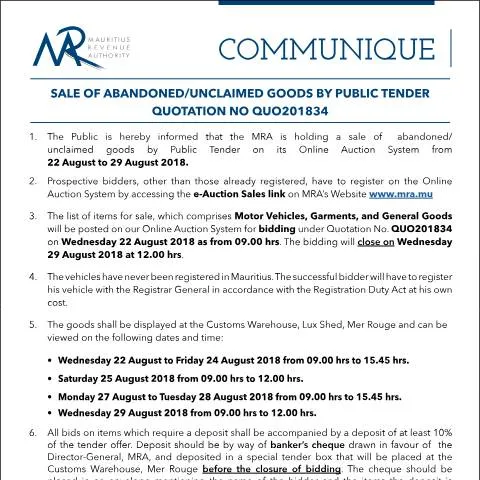
The process surrounding the sale of abandoned or unclaimed goods in Mauritius is pivotal for both the authorities and potential bidders. Navigating this procedure can be intricate, particularly given the unique nuances of the laws governing public tenders and auctions. This article dissects the Communique No. QUO201834 issued by the Mauritius Revenue Authority (MRA) regarding this sale, highlighting essential details, processes, and considerations for prospective bidders.
Key Dates: Timeline of the Auction
The sale of abandoned and unclaimed goods is occurring over a concise time frame, which is critical for participants to understand. The auction runs from August 22 to August 29, 2018. Below is a structured timeline for the entire process:
- August 22, 2018: Auction begins at 09:00 hrs.
- August 22-24, 2018: Viewing of items from 09:00 hrs to 15:45 hrs.
- August 25, 2018: Viewing from 09:00 hrs to 12:00 hrs.
- August 27-28, 2018: Viewing resumes from 09:00 hrs to 15:45 hrs.
- August 29, 2018: Bidding closes at 12:00 hrs.
The importance of adhering to these dates cannot be overstated, as any failure to participate within this timeframe may result in missed opportunities.
The Bidding Process: Steps to Follow
Participating in the auction involves several critical steps. Here’s a chronological breakdown of the bidding process:
- Registration: Prospective bidders must register on the MRA’s Online Auction System. Access the e-Auction Sales link on the MRA website.
- Viewing Goods: Inspect the items listed for sale. This includes motor vehicles, garments, and general goods. Viewing dates are specified, and it’s advisable to visit the Customs Warehouse to ascertain the condition of items.
- Preparing Bids: Bids must be accompanied by a deposit of at least 10% of the tender offer. This deposit must be a banker’s cheque made out to the Director-General, MRA.
- Submission of Bids: Submit your bids and corresponding deposit before the bidding closes. Cheques must be placed in an envelope with your name and the items you are bidding on.
Each of these steps is designed to ensure a transparent and fair auction process, allowing all participants the chance to acquire goods in an orderly fashion.
Decoding the Form: Key Sections and Common Pitfalls
The Form associated with this auction is structured to capture essential information. Below is a breakdown of critical sections that bidders must complete, along with potential pitfalls:
| Form Section | Details Required | Common Errors |
|---|---|---|
| Bidder Information | Name, Address, National ID | Missing ID or incorrect address format. |
| Item Selection | Items being bid on | Not specifying all items or errors in item codes. |
| Deposit Information | Details of the deposit cheque | Using personal cheques instead of banker’s cheques. |
Attention to detail in completing this form is vital, as inaccuracies may lead to disqualification from the bidding process.
Understanding the Aftermath: What Happens Post-Bidding?
Once the bidding concludes, bidders are left wondering what the next steps are. Here’s a guide to understanding the aftermath:
- Auction Results: Results will be published shortly after the auction closes. Successful bidders will be notified promptly.
- Payment and Collection: Winning bidders must ensure that payment for the goods is completed swiftly. Provisions for vehicle registration and associated costs will need to be addressed, especially for vehicles not previously registered in Mauritius.
- Registration Duties: Successful bidders of motor vehicles must register these with the Registrar General in accordance with the Registration Duty Act at their own expense.
Understanding these subsequent steps is crucial for a smooth transition from bidding to ownership.
Distinctives: How This Communique Differs from Other Forms
While various official forms exist within the Mauritian administrative system, Communique No. QUO201834 stands apart due to its specific context surrounding auctions of unclaimed goods. Unlike other forms, this document focuses exclusively on:
- The mechanism of public tendering for abandoned goods.
- Specific deposit requirements for bids, which differ from typical payment processes in other transactions.
- Clearly delineated responsibilities for bidders post-purchase, especially concerning vehicle registration.
This differentiation ensures that bidders have clarity about their obligations and the uniqueness of the auction process.
Navigating Complex Situations: Unique Considerations for Bidders
Particular circumstances may arise that necessitate a deeper understanding of the auction process. Here are some scenarios:
- Foreign Bidders: Foreign nationals interested in participating may face additional verification processes during registration. It’s essential to prepare all necessary documentation, including proof of identity and residency.
- Minor Bidders: For individuals under 18, parental or guardian consent may be required to participate in the auction. Ensuring proper documentation upfront can streamline the bidding process.
- Urgent Bids: If a bidder identifies a particularly valuable item and wishes to expedite their bid, they must be aware of the deadlines and adhere rigorously to submission timelines.
Being proactive and prepared for these unique situations can significantly enhance the bidding experience.
Staying Updated: Following Up with the Administration
After submission, it’s prudent for bidders to remain engaged with the administration regarding their bid status. Here’s how to effectively communicate with the MRA:
- Contact Information: Utilize the MRA’s official contact channels — phone or email — to inquire about bid status. Always reference your bidding information for prompt assistance.
- Online Platform Monitoring: Regularly check the MRA’s Online Auction System for updates regarding auction results and other relevant notices.
- In-Person Visits: If necessary, visiting the Customs Warehouse can provide direct insights and clarity regarding any uncertainties related to the bidding process.
Maintaining a proactive stance in communication ensures that bidders are kept in the loop regarding their bids.
Conclusion: Embracing the Auction Experience
Participating in the sale of abandoned or unclaimed goods through public tender can be an enriching experience, provided one is well-informed and methodical. By understanding the nuances of the process, key dates, the form's structure, and potential pitfalls, bidders can navigate the auction with confidence. Whether you are a seasoned bidder or new to this, being prepared is the cornerstone of success in such endeavors.
Understanding the Public Tender Process for Unclaimed Goods
The sale of abandoned or unclaimed goods by public tender in Mauritius is governed by a structured and transparent process aimed at ensuring fairness and accountability. The Public Procurement Act 2006 provides the legal framework for public tenders, including those related to unclaimed goods. It is vital for potential bidders to familiarize themselves with the specific requirements and procedures involved in this process.
Before participating in a public tender for unclaimed goods, it is crucial to understand how the tender is advertised. Notices are typically published in national newspapers and on official government portals such as govmu.org, detailing the items available for tender, the conditions of sale, and the deadline for submission. Interested parties must ensure they submit their bids within the specified timeframe to avoid disqualification.
Moreover, potential bidders should prepare by gathering all necessary documentation, which may include proof of identity, tax compliance certificates, and any other relevant permits. This preparation is essential to demonstrate eligibility and to ensure a smooth bidding process. Failure to provide the required documents may result in the rejection of your bid.
Another important aspect to consider is the evaluation criteria that will be used to assess the submitted tenders. Typically, bids are evaluated based on price, compliance with the tender specifications, and the bidder’s ability to fulfill the contract terms. Understanding these criteria can significantly increase your chances of success in securing the desired items during the tender process.
Fill in your form directly online
No printing: type your details into the boxes of the official form, tick, then download the PDF ready to send.
- 1Type into the form boxes
- 2Tick in one click
- 3Save and download the PDF
Legal Implications of Bidding on Abandoned Goods
Bidding on abandoned or unclaimed goods carries several legal implications that bidders must be aware of to protect their interests. First and foremost, it is essential to recognize that the sale of these goods must comply with applicable laws and regulations to ensure a legitimate transaction.
One of the key legal considerations is the ownership of the goods. When goods are deemed abandoned, they often enter the public domain, and the government assumes the responsibility of selling them. However, bidders should conduct due diligence to verify the authenticity of the goods being sold and ensure that there are no existing claims by previous owners. This may involve checking the history of the items, including any relevant documentation or previous ownership records.
Furthermore, bidders must be mindful of the terms and conditions outlined in the tender documents. These documents may include specific clauses that define the responsibilities of the buyer post-purchase, such as the need for removal of items within a stipulated timeframe or accepting the goods 'as is' with no warranty or guarantee. Understanding these terms is essential to avoid potential disputes after the sale.
Additionally, bidders should consider the implications of non-compliance with the auction terms, which could lead to penalties or forfeiture of the bid deposit. Engaging in this process without a clear understanding of the legal ramifications can result in unintended consequences.
Post-Tender Considerations and Responsibilities
Once the public tender for unclaimed goods has concluded and successful bidders have been notified, there are several post-tender responsibilities that need to be addressed. Bidders who win the auction must comply with the payment instructions provided in the notification. Payments must typically be made within a specific period, and failure to do so may result in forfeiture of the winning bid.
After completing the payment process, successful bidders are required to coordinate the collection of their purchased goods. It is essential to adhere to the collection timelines specified in the tender documents. Items must be collected from the designated location, and this should be done in compliance with any regulations regarding vehicle access or loading processes at the site.
Moreover, bidders should be aware of their responsibilities regarding the disposal or usage of the acquired goods. If the items are found to be hazardous or restricted under local laws, the buyer may be held liable for proper disposal. It is advisable to consult local regulations concerning the handling and usage of specific types of goods acquired through public tenders.
In situations where buyers encounter issues with the purchased items post-collection, such as defects or discrepancies from the tender description, they may have limited recourse for refunds or exchanges due to the 'as is' nature of public tenders. Therefore, thorough inspection of the goods at the time of collection is highly recommended to mitigate future risks.