Understanding the Sale of Abandoned and Unclaimed Goods: A Thorough Insight
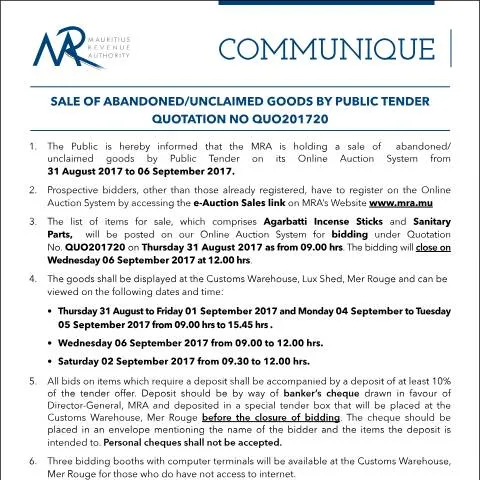
The Sale of Abandoned and Unclaimed Goods by Public Tender, as detailed in the official communiqué (CommuniqueQ20of2017), presents a significant opportunity for both the Mauritius Revenue Authority (MRA) and prospective bidders. This document outlines the procedures, requirements, and implications tied to the public tender process, paving the way for various stakeholders to engage in this unique auction. Understanding the nuances embedded within this process is paramount for anyone looking to participate effectively.
Who Can Submit Bids? Identifying Eligible Participants
Engagement in the bidding process is not limited to a specific demographic, yet certain criteria exist to delineate eligible participants. Generally, the key profiles include:
- Registered Bidders: Individuals or entities who have previously registered on the MRA’s Online Auction System can participate seamlessly.
- New Bidders: Those who have not registered must complete the registration process prior to bidding. This involves accessing the e-Auction Sales link on the MRA's official website.
- Legal Entities: Companies or organizations looking to acquire goods must designate an authorized representative to bid on their behalf.
It is essential to note that specific restrictions may apply based on the nature of the goods and the bidding process, particularly if the items for sale are regulated or subject to special conditions. Furthermore, non-residents wishing to participate must ensure they comply with local regulations regarding foreign ownership and procurement.
Preparation for Bidding: Gathering Necessary Documentation
Before embarking on the bidding journey, prospective bidders must prepare specific documentation to substantiate their eligibility and ensure compliance with the tendering process. The following preparations are crucial:
Identity Verification
Participants must present valid identity documentation, such as:
- National Identity Card for Mauritian citizens
- Passport for foreign participants
Financial Preparedness
As part of the bidding requirements, a deposit of at least 10% of the tender offer is mandatory. This deposit must be made via a banker’s cheque drawn in favour of the Director-General, MRA, and is designed to secure the bidder's commitment. Here's how to prepare your deposit:
- Obtain a banker’s cheque from your bank.
- Ensure the cheque is correctly addressed, including your name and the items you intend to bid on.
- Deposit the cheque in the specified tender box before the closure of bidding.
Understanding the Goods on Offer
Familiarizing oneself with the list of abandoned or unclaimed goods is essential. In the context of CommuniqueQ20of2017, the items listed include Agarbatti Incense Sticks and Sanitary Parts. Prospective bidders should:
- Review the online auction listings, available from 31 August 2017.
- Inspect the goods physically at the designated Customs Warehouse during viewing periods.
All About the Auction Process: From Bidding to Acquisition
The auction process itself is a critical aspect of the sale of abandoned and unclaimed goods. Understanding the timeline and procedures involved can significantly enhance a bidder's experience. Key steps include:
Viewing the Goods
Before placing a bid, potential bidders can examine the items at the Customs Warehouse, Lux Shed, Mer Rouge. The viewing schedule is critical:
- Thursday 31 August to Friday 01 September 2017
- Monday 04 September to Tuesday 05 September 2017
- Wednesday 06 September 2017 from 09.00 to 12.00 hrs
- Saturday 02 September 2017 from 09.30 to 12.00 hrs
The Bidding Window
Bidding opens on 31 August 2017 and concludes on 06 September 2017 at 12.00 hrs. Bidders must be aware of:
- Timed bids: The auction operates on a strict schedule, and late entries will not be entertained.
- Computer terminals: For those lacking internet access, bidding booths with computer terminals are available at the Customs Warehouse.
Post-Bid Procedures
Once bidding concludes, successful bidders must follow through with necessary payments and arrangements to claim their goods. Important considerations include:
- Payments must be made promptly as per the instructions provided after the bidding process.
- Failure to complete payment on time may result in forfeiture of the contract and deposit.
| Action | Date | Notes |
|---|---|---|
| Viewing of Goods | 31 Aug - 01 Sept, 04 - 05 Sept, 06 Sept | Check condition before bidding |
| Bidding Opens | 31 August 2017 | Start of online auction |
| Bidding Closes | 06 September 2017, 12.00 hrs | Final opportunity to place bids |
Why This Document Matters: Implications for Bidders
Engaging in the bidding process for abandoned and unclaimed goods carries significant implications, both positive and negative. Understanding these implications can help bidders navigate the auction landscape effectively:
Consumer Rights and Responsibilities
Participants must be cognizant of their rights and responsibilities throughout the process:
- Transparency: Bidders have the right to receive clear information about the auction and the items being sold.
- Obligations: Successful bidders are obliged to follow through with payment and collection as stipulated.
Consequences of Non-Compliance
Failure to adhere to the auction guidelines and requirements can lead to severe repercussions, including:
- Loss of deposit
- Ineligibility for future auctions
- Legal actions for breaches of contract
Distinctive Features of the Auction Process: What Sets It Apart
The sale of abandoned and unclaimed goods differs from typical auctions in several key aspects, which are essential for potential bidders to grasp:
Regulatory Oversight
Unlike private auctions, this process is regulated by the MRA, ensuring fairness and adherence to legal standards. This oversight includes:
Fill in your form directly online
No printing: type your details into the boxes of the official form, tick, then download the PDF ready to send.
- 1Type into the form boxes
- 2Tick in one click
- 3Save and download the PDF
- Documentation verification
- Monitoring of bid submissions
Physical Inspection Requirement
The regulation mandates that bidders inspect goods before bidding, which is less common in conventional auctions. This requirement serves to:
- Ensure bidders make informed decisions
- Reduce disputes over the condition of sold items
Online Bid Submission
The integration of technology through the Online Auction System allows for streamlined bidding processes. However, bidders should also consider:
- Technical issues: Be prepared with backup plans in case of connectivity issues.
- Registration requirements: Ensure timely registration online to avoid last-minute complications.
Next Steps for Interested Bidders: Practical Guidance
For those ready to take the plunge into the auction of abandoned and unclaimed goods, the following practical steps are recommended:
Step-by-Step Registration
For new bidders, the registration process is straightforward but requires careful attention:
- Visit the MRA's website and navigate to the e-Auction Sales link.
- Complete the registration form with accurate personal or business details.
- Submit the form and await confirmation of your registration.
Preparation for Auction Day
As the auction day approaches, ensure you have:
- Your identity documents ready for verification.
- Banker’s cheque securely prepared, addressed, and correctly filled.
- Knowledge of the auction items you intend to bid on.
Final Reminders
On the day of the auction, remember to:
- Arrive early to avoid last-minute rush and verify your registration.
- Participate actively in the bidding process and adhere to all auction rules.
Engaging in the Sale of Abandoned and Unclaimed Goods by Public Tender can yield remarkable opportunities for savvy bidders. However, preparation, attention to detail, and adherence to regulations are crucial to ensure a successful acquisition. By understanding the intricacies of this process, participants can make informed decisions and navigate the auction landscape with confidence.