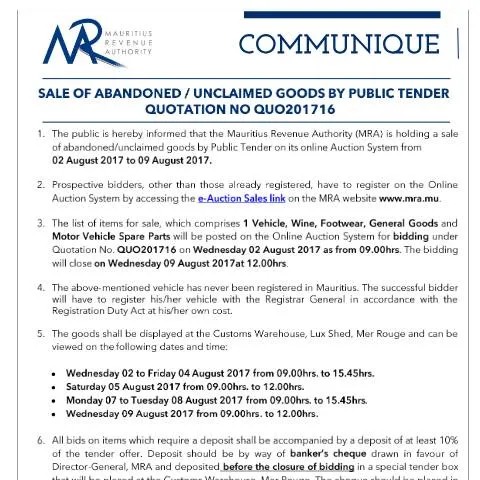
A Deep Dive into the Sale of Abandoned or Unclaimed Goods: Understanding the Official Process
The sale of abandoned or unclaimed goods via public tender can seem like an intricate process, especially for those unfamiliar with the administrative procedures in Mauritius. This process is governed by the Mauritius Revenue Authority (MRA) under the official document known as Communique Q16 of 2017, specifically aimed at streamlining the sale of goods that have been left unclaimed. For potential sellers and bidders, understanding this process is crucial, not only to ensure compliance with legal obligations but also to seize opportunities that may arise from the sale of such goods.
Who Takes the Initiative? Identifying Key Players
The initiation of this procedure is typically taken by various entities, including:
- Government Departments: Various public sector entities may have goods that are unclaimed or abandoned.
- Private Individuals: Citizens who have goods that fit the criteria may also play a role in the tender process.
However, the most common initiators are public bodies that manage unclaimed goods, which can include everything from lost property to items that have been seized and not claimed by their owners.
It is important to note that the tender process is open to both local and international bidders, although certain restrictions may apply based on the nature of the goods.
Key Characteristics of Involved Parties
While the process is generally open, specific profiles of individuals or entities that can participate include:
- Registered Businesses: Companies that are registered and compliant with local laws can submit tenders.
- Individuals Over 18: Adult citizens can also take part in the bidding process.
- Foreign Bidders: Non-residents may participate under particular conditions, usually requiring local representation.
The MRA ensures that each participant is vetted properly to maintain the integrity of the tender process.
From Application to Auction: The Lifecycle of the Form
The process begins when an interested party decides to engage in the tender process to sell unclaimed goods. The official form must be filled accurately and submitted to the relevant authority. This initiates a series of administrative steps that lead to the auction of the goods.
Once the form is submitted, the following steps typically take place:
- Review of Application: The MRA reviews the submitted application for completeness and compliance.
- Verification: A verification process follows to ensure that the goods are indeed unclaimed and can legally be sold.
- Public Notice: A public notice is issued to announce the tender, providing details such as the auction date and the nature of the goods.
This structured approach helps maintain transparency in the process and allows potential bidders to prepare adequately.
Completing the Official Form: Details Matter
Accurate completion of the official form is paramount, as any errors could lead to delays or even disqualification from the tender process. The key sections of the form include:
- Personal Information: Full name, address, and contact details of the applicant.
- Details of Goods: A comprehensive description of the unclaimed goods, including their condition and any identifying marks.
- Declaration: A statement affirming that the goods are unclaimed and the applicant has the legal right to sell them.
Each of these sections requires meticulous attention to detail. Incomplete forms or inaccuracies can hinder the process.
Timelines: From Submission to Sale
Understanding the timeline associated with this process is crucial for both sellers and bidders. Key dates include:
| Phase | Typical Duration |
|---|---|
| Submission of Form | Ongoing |
| Review and Verification | 15-30 days |
| Public Tender Announcement | Subsequent to verification |
| Auction Date | Varies based on goods availability |
These phases are influenced by various factors, including the volume of applications received and the complexity of the goods being sold.
Post-Auction Responsibilities
After the auction, successful bidders are required to fulfill certain obligations:
- Payment: Payment must be made immediately following the auction as per the terms outlined in the public notice.
- Collection of Goods: Successful bidders must arrange for the collection of the goods within a stipulated timeframe, typically within 7 days.
- Adherence to Regulations: All auction participants must comply with any additional regulations or local laws regarding the sale and ownership transfer of goods.
Unique Aspects of the Sale Process: Differentiating from Similar Procedures
While the sale of abandoned or unclaimed goods might seem similar to other public sales, there are critical distinctions. This process is specifically tailored to address goods that have been deemed unclaimed for a certain period, thereby ensuring that public interests are protected. Unlike regular auctions, which may be for new or owned goods, this process involves goods that have a specific administrative history, often leading to unique considerations for potential purchasers.
Additionally, the formalities involved—such as the requirement for public notices and the use of official forms—set this process apart from less regulated events like garage sales or informal auctions.
Exceptional Cases: Navigating Complex Situations
While most participants will follow the standard procedures outlined above, certain exceptional cases warrant special consideration:
- Foreign Entities: Non-Mauritian entities must adhere to additional regulatory frameworks and may require local representation during the tender process.
- Minors: Individuals under 18 may need parental or guardian consent, and their applications may require additional documentation.
- Disputes Over Ownership: In cases where ownership of the goods is contested, the process may be delayed pending resolution of the dispute.
Understanding these exceptional cases is vital for anyone considering entering the tender process.
Following Up: The Importance of Communication
After submitting the official form, it is essential for applicants to maintain communication with the MRA. This can be achieved through:
- Direct Contact: Reach out via phone or email for any inquiries regarding the status of your application.
- Online Portals: Utilize the government’s online services to track your application or tender status.
Maintaining an active line of communication ensures that potential issues are addressed promptly, allowing for a smoother process overall.
Conclusion: Empowering Individuals Through Knowledge
The process of selling abandoned or unclaimed goods via public tender in Mauritius is not just a bureaucratic necessity; it presents unique opportunities for individuals and businesses alike. By understanding the intricacies of the official form, the responsibilities involved, and the timeline for each phase, participants can navigate the process with confidence. The sheer variety of goods that can emerge from these tenders can lead to remarkable finds, fulfilling both a practical need and offering a glimpse into the unexpected treasures that unclaimed property can hold.
Understanding the Public Tender Process for Abandoned and Unclaimed Goods
The public tender process for the sale of abandoned and unclaimed goods in Mauritius is governed by specific regulations and procedures, primarily aimed at ensuring transparency and fairness in the disposal of such items. When a good is declared abandoned or unclaimed, it typically undergoes a systematic approach before being put up for public tender. This section outlines the key stages involved in this process.
Initially, goods must be assessed and verified to determine their status. This verification is typically conducted by the authorities, such as the Ministry of Finance or relevant local government bodies, depending on the nature of the goods in question. The assessment will establish whether the goods have been genuinely left unclaimed or abandoned, which can range from vehicles and bicycles to electronic equipment and furniture.
Once verified, the goods are cataloged, and appropriate documentation is prepared. This documentation generally includes a list of items to be auctioned, along with detailed descriptions and any relevant photographs to aid in the tendering process. It is crucial to ensure all details provided are accurate to uphold the integrity of the auction.
Following this, a public notice is published, which details the auction date, the location where it will take place, and the procedures for participation. This notice is typically disseminated through various channels, including local newspapers and official government websites to maximize outreach. Interested bidders are encouraged to register and submit their bids through the prescribed channels, ensuring they meet all required criteria.
During the auction process, bidders must adhere to specific guidelines, including payment procedures and bid submission methods. It's essential for participants to be aware of the terms and conditions attached to their bids, including any applicable taxes or fees that may arise out of the final sale price.
Legal Considerations and Rights of Bidders
The sale of abandoned and unclaimed goods through public tender in Mauritius is subject to various legal considerations that bidders should be aware of. Understanding these legal frameworks can significantly impact the bidding experience and protect participants’ rights throughout the tendering process.
Firstly, it is vital to recognize that all transactions are conducted under the stipulations laid out by the Public Procurement Act 2006 and other relevant legislation. This ensures that the process remains fair and competitive. Bidders must familiarize themselves with the specific legal provisions, as these can influence eligibility criteria, bid evaluation methods, and the overall conduct of the auction.
Additionally, bidders have rights that safeguard their interests. For instance, they have the right to receive clear and comprehensive information about the goods they intend to bid on, including any liabilities or encumbrances that may exist. If a bidder discovers that the information provided was misleading or inaccurate, they may have grounds for a complaint or a legal recourse, depending on the severity of the misinformation.
Moreover, bidders need to be attentive to the payment terms associated with their bids. Contractually, they are often obliged to make a full payment within a specified timeframe following the successful bid. Failure to comply could lead to disqualification and the forfeiture of any deposits made. Legal recourse can also be initiated by the authorities against non-compliant bidders, emphasizing the importance of reading and understanding all auction documents thoroughly.
Post-Tender Procedures and Ownership Transfer
After the public tender concludes, several essential steps must occur to facilitate the transfer of ownership for the items sold. This process is crucial not only for the successful bidders but also for the authorities managing the auction.
Once bids are finalized, the auctioning authority will typically notify the winning bidders to confirm their successful bids. This communication often includes detailed instructions regarding payment methods and timelines. Successful bidders are usually required to make payments promptly to avoid delays in the transfer process. It's important for bidders to keep all payment receipts, as these documents serve as proof of transaction and can be required for future reference or disputes.
Following payment, the next step involves the formal transfer of ownership. Authorities will issue a transfer document or certificate that officially recognizes the change in ownership for the goods. This document is essential, especially if the goods are registered items, such as vehicles. Bidders should ensure they receive this document to avoid any future complications regarding ownership claims.
Transfer of ownership documentation must be accompanied by other relevant legal documents, such as proof of payment and any forms required by local authorities. Bidders must be diligent in gathering and submitting these documents to ensure a smooth transition of ownership. Failure to provide complete documentation may result in delays or complications in the acquisition of the goods.
Finally, it is advisable for bidders to inspect the purchased items thoroughly after the ownership transfer. This practice allows them to confirm that the goods match the descriptions provided during the tender process. If any discrepancies are observed, they should be reported to the auctioning authority immediately to seek resolution.