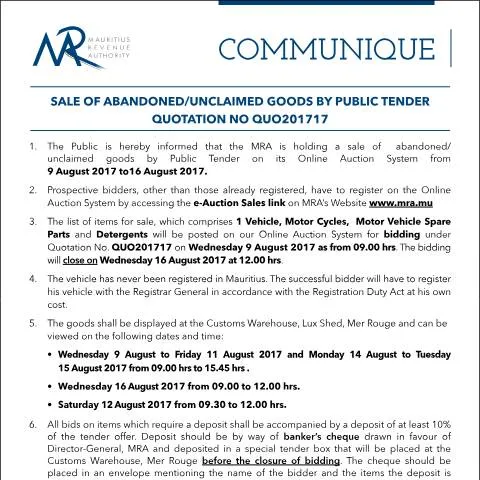
A Comprehensive Guide to the Sale of Abandoned Goods by Public Tender
The sale of abandoned or unclaimed goods presents a unique opportunity for interested bidders in Mauritius. Conducted by the Mauritius Revenue Authority (MRA), this process allows the public to acquire various items, including vehicles and spare parts, through an official public tender system. Understanding the nuances of this process can facilitate a smooth bidding experience and ensure compliance with all regulatory requirements.
Understanding the Context: Why Goods Become Abandoned
Goods may be deemed abandoned for several reasons, ranging from unclaimed personal property to unregistered vehicles. In many cases, these items have been left in customs warehouses following an inability to pay taxes or duties by the original owners. The MRA then steps in to facilitate the sale of such items, ensuring that they do not remain unutilized indefinitely.
Legal Framework Governing Abandoned Goods
The process is guided by various legal statutes that govern public sales in Mauritius. Notably, the MRA operates under the authority granted by the Customs Act and follows the procedures outlined in the Public Tender Regulations. This regulatory backdrop ensures a transparent and fair auction process, providing confidence to prospective bidders.
The Timeline of the Tender Process: What to Expect
The bidding procedure is structured into a well-defined timeline. The most recent auction, as per the Communique Q17 of 2017, was scheduled from August 9 to August 16, 2017.
Key Dates to Note
- Registration Period: Prospective bidders must register on the MRA's Online Auction System before participating.
- Viewing Days: Items are available for inspection from August 9-11 and August 14-15, 2017.
- Bidding Period: Bidding commenced on August 9 and concluded on August 16, 2017, at noon.
Understanding these critical dates is essential for potential bidders to participate effectively.
Distinct Features of the Sale Process
Unlike other forms of auctions or sales, the public tender for abandoned goods has specific characteristics that set it apart:
- Regulatory Compliance: All transactions must adhere strictly to MRA guidelines.
- Deposit Requirements: A mandatory deposit of at least 10% of the bid amount must accompany bids on certain items, which safeguards the auction process against frivolous bidding.
- Display Locations: Goods are physically displayed at designated customs warehouses, allowing bidders to inspect items prior to bidding.
Such features emphasize the seriousness and formal nature of the public tender process.
Preparing Your Documents: What You Need
Preparation is key when it comes to participating in the auction. Prospective bidders must be ready with the following:
Identification and Registration
To gain access to the bidding process, individuals must provide a valid Identity Card when visiting the Customs Warehouse. Additionally, registration on the MRA's Online Auction System is required for those not previously registered.
Deposit Conditions
For certain items, bidders must submit a banker’s cheque as their deposit. Personal cheques are not accepted under any circumstances. The deposit should be directed to the Director-General, MRA, and placed in a special tender box at the Customs Warehouse.
| Item | Deposit Requirement | Remarks |
|---|---|---|
| Motor Vehicle | 10% of Bid Amount | Must be registered post-purchase |
| Motor Cycles | 10% of Bid Amount | Registration required |
| Spare Parts | No Deposit Required | Immediate acquisition |
This table delineates the necessary deposit requirements, assisting bidders in planning their bids appropriately.
Technical Steps: Bidding Process Explained
Once registered, bidders can participate in the auction either online or at designated booths at the Customs Warehouse. MRA provides three computer terminals for individuals who may lack internet access.
How to Bid
- Access the MRA Online Auction System once registration is complete.
- Review the list of available items, which will be posted on August 9, 2017, under Quotation No. QUO201717.
- Place your bids before the auction closes on August 16, 2017, at noon.
Each of these steps must be adhered to for a valid bidding experience.
Who Can Participate: Profiles and Exceptions
Participation is open to all members of the public, although certain restrictions may apply in specific scenarios.
Eligibility Criteria
- Individuals must be of legal age (18 years or older).
- Non-residents may participate but should ensure compliance with MRA regulations.
- Entities such as businesses or organizations can also place bids, provided they have proper representation.
Exceptions and Special Cases
In some cases, individuals with outstanding debts to the MRA may be ineligible to participate in the auction. Additionally, those representing others (such as a minor or incapacitated person) must provide legal authorization to bid on their behalf.
Decoding the Form: Insights into Each Section
Completing the form correctly is crucial for a successful bid. Let's break down the key sections of the official document used in this process.
Form Structure Overview
- Personal Information: Fill in accurate details such as name, address, and contact information.
- Item Selection: Clearly indicate the item(s) you wish to bid on, referencing the catalogue number.
- Bid Amount: Enter your proposed bid, ensuring it meets or exceeds the minimum requirement.
- Deposit Details: Include information regarding your deposit cheque.
Special attention should be paid to accurately complete all sections to prevent disqualification.
What Happens Post-Bidding: The Next Steps
Once the bidding concludes, the MRA evaluates all bids and announces successful candidates. The winning bidder is then responsible for:
- Paying any remaining balance on the bid amount.
- Arranging for the collection of purchased items from the Customs Warehouse.
- Registering any vehicles purchased in accordance with the Registration Duty Act.
Post-Auction Communication
Successful bidders will receive notifications via the contact details provided on their forms, which will include further instructions on payment and collection procedures.
Real Stories: Testimonials from Previous Bidders
Reflecting on the experiences of past participants can provide valuable insights into the auction process. Numerous bidders have praised the transparency and efficiency exhibited by the MRA during past auctions.
Success Story: A New Owner's Perspective
"I attended the auction with a bit of apprehension, but the staff at the MRA made everything straightforward. I was able to secure a motorcycle for a fraction of its market value. The entire process was seamless, from registration to bidding and finally possession. Highly recommended!" – Jean Dupuis
Such testimonials underline the importance of being well-prepared and informed when participating in the auction.
Final Thoughts on Your Auction Journey
The sale of abandoned goods through public tender is a regulated yet accessible process that provides bidders with an opportunity to acquire valuable items. By adhering to the outlined steps and understanding the requirements, participants can navigate the auction smoothly and emerge as successful bidders. Prepare diligently, be aware of timelines, and ensure to follow all regulations set forth by the MRA.
For any further inquiries, bidders are encouraged to reach out directly to the MRA via their official channels provided in the Communique Q17 of 2017. Embrace the opportunity that this public tender presents and happy bidding!
Understanding the Legal Framework for Public Tenders on Abandoned Goods
The sale of abandoned or unclaimed goods in Mauritius is governed by specific legal provisions that ensure transparency and fairness in the process. Primarily, the framework is established through the Public Procurement Act 2006, which outlines the procedures and guidelines for conducting public tenders. Additionally, the provisions regarding abandoned goods fall under the jurisdiction of the Ministry of Finance and Economic Development. Understanding these legal requirements is crucial for both potential bidders and the authorities managing these sales.
When an item is classified as abandoned, it usually means that the original owner has not claimed it within a designated period, often set by the relevant authorities. This period may vary depending on the type of good and the governing body overseeing the item in question. The local government bodies, such as the relevant district councils, may also have their own procedures and timelines regarding unclaimed goods.
To facilitate the sale process, a public announcement is typically made, highlighting the nature of the goods, their estimated value, and the terms of the tender. This is usually published in prominent local newspapers and on government portals such as govmu.org. This announcement plays a crucial role in attracting potential buyers and ensuring that the process is competitive and fair.
Fill in your form directly online
No printing: type your details into the boxes of the official form, tick, then download the PDF ready to send.
- 1Type into the form boxes
- 2Tick in one click
- 3Save and download the PDF
Steps Involved in Participating in Public Tenders for Unclaimed Goods
For individuals or businesses interested in participating in the tendering process for abandoned or unclaimed goods, there are specific steps that must be followed to ensure compliance with local regulations and maximize the chances of a successful bid.
1. Research and Notification: First and foremost, it is essential to stay informed about upcoming tenders. The Ministry of Finance and Economic Development, along with local councils, usually publishes details of unclaimed goods for sale. Interested parties should regularly check the official government website and local newspapers for announcements.
2. Registration: Interested bidders are often required to register their interest in participating in the tender. This might involve filling out a specific registration form, which can usually be obtained from the relevant authority's website. This step is important as it allows the authorities to communicate vital information regarding the tender process to all registered participants.
3. Tender Submission: Once registered, bidders must prepare their tender submissions. This typically involves completing the required tender forms, such as the PSC Form 7, and providing supporting documentation, including proof of identity and financial capability. It's essential to ensure that all documents are submitted in the specified format and by the deadline, as late submissions may lead to disqualification.
4. Evaluation of Tenders: After the submission deadline, the authorities will evaluate all received tenders based on predetermined criteria, including the bid amount, compliance with legal requirements, and the potential bidder's reliability. The evaluation is conducted with transparency to ensure that the most suitable bids are selected.
5. Award Notification: Successful bidders will receive a notification of their successful tender, which will outline the next steps to complete the transaction. This may include payment instructions and arrangements for the collection of the purchased goods.
Potential Issues and Considerations in the Tender Process
Participating in public tenders for abandoned goods can come with its own set of challenges. Understanding these potential issues can help bidders navigate the process more effectively.
1. Transparency and Fairness: One of the main concerns in public tenders is ensuring transparency and fairness in the bidding process. Interested parties may sometimes question the integrity of the evaluation process or the criteria used to select winning bids. It is essential for the authorities to maintain clear communication and provide detailed information regarding the evaluation process to build trust among bidders.
2. Legal and Financial Risks: Bidders should also be aware of the legal and financial implications of their bids. Engaging in a public tender means committing to a purchase. If a bidder fails to follow through—such as not paying the required amount or not collecting the goods—they may face penalties or legal actions. It is, therefore, crucial to assess one's ability to complete the transaction before submitting a bid.
3. Condition of Goods: Often, abandoned goods may not be in optimal condition. Potential bidders should be prepared for this reality and consider the costs involved in restoring or disposing of items that may not meet their expectations. It is advisable to request detailed descriptions of the goods, including photographs and condition reports, during the tender announcement phase.
By understanding the legal framework, following the proper steps, and being aware of potential challenges, bidders can enhance their chances of successfully acquiring abandoned or unclaimed goods through public tenders in Mauritius.