The Significance of the Sale of Abandoned and Unclaimed Goods
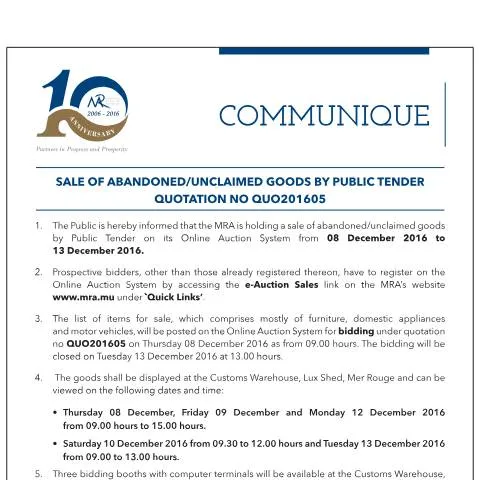
In the world of public administration, opportunities often arise unexpectedly. One such opportunity is the Sale of Abandoned/Unclaimed Goods by Public Tender, a process administered by the Mauritius Revenue Authority (MRA). This procedure not only serves to clear out items that have been left behind or never claimed but also offers citizens a chance to acquire valuable goods at potentially low prices. Whether you are a seasoned bidder or a first-time participant, understanding the nuances of this process can make a significant difference in your experience and outcomes.
A Deep Dive into Form EAuctionQuo201605
The designated Form EAuctionQuo201605 is essential for engaging in this public tender. This form provides the framework for registering and participating in the bidding process for unclaimed goods, which typically includes furniture, domestic appliances, and sometimes even motor vehicles. Recognising the unique attributes of this form is crucial, particularly when compared to other forms often associated with public tenders or auctions.
Form Structure and Requirements
The layout of Form EAuctionQuo201605 is straightforward yet detailed. When completing this form, bidders must ensure that all sections are filled accurately to avoid delays or disqualification. Here are some key components of the form:
- Personal Information: Bidders must provide their full name, address, and contact details. Accuracy is paramount—ensure that your identity card number matches.
- Item Specification: This section requires bidders to specify which items they are interested in. Be precise, as ambiguity can lead to confusion during the auction.
- Bid Amount: Enter the amount you are willing to bid, keeping in mind the minimum starting price for each item.
- Declaration: The form concludes with a declaration confirming that the information provided is accurate. Misrepresentation here can lead to legal repercussions.
The Journey from Application to Auction Day
Understanding the chronological process from registration to the final auction day is crucial for potential bidders. Here’s a step-by-step outline:
- Registration: Interested candidates must first register on the MRA’s Online Auction System, accessible via the e-Auction Sales link.
- Completion of Form EAuctionQuo201605: Fill out the form with the required details, ensuring all sections are completed accurately.
- Submission of Bids: Once your form is complete, submit it through the designated online platform or at the physical location if you do not have internet access.
- Viewing Days: Before the auction, you have the opportunity to inspect the goods. This is crucial in determining the actual condition and value of items.
- Auction Day: Be present either online or at the Customs Warehouse to participate in the bidding process.
Understanding Bidding Logistics
On the days leading up to the auction, specific logistical arrangements are put in place to facilitate the bidding process. Bidders are encouraged to view items firsthand to gauge their condition and to ensure that they are making informed bids. Goods are displayed at the Customs Warehouse, Lux Shed, Mer Rouge, allowing participants to inspect:
- On 08 and 09 December 2016: 09:00 to 15:00 hours
- On 10 December 2016: 09:30 to 12:00 hours
- On 12 December 2016: 09:00 to 15:00 hours
- On 13 December 2016: 09:00 to 13:00 hours
For those unable to register online, the MRA provides three bidding booths equipped with computer terminals at the Customs Warehouse, ensuring accessibility for all potential bidders.
Handling Errors and Disqualifications
Despite best efforts, mistakes can occur during the completion of Form EAuctionQuo201605. It is essential to address any errors or omissions promptly:
- What to do if your bid is rejected: Contact the MRA’s customer service hotline immediately to inquire about the nature of the rejection. Corrective actions may be necessary to resubmit.
- Missing documents: If any required documents are not included, the form may be deemed incomplete and thus disqualified. Always ensure you have copies of your identity card and any other necessary documentation ready.
Special Cases and Unique Circumstances
Certain situations might require special considerations when participating in the public tender. These can include:
- International Bidders: If you are not a resident of Mauritius, ensure that you understand the legal requirements for bidding, including any additional documentation or approvals you may need.
- Bidding on behalf of a minor: If you wish to participate on behalf of a minor, special permissions may be needed, along with proper documentation to validate your authority.
- Urgent circumstances: If time is of the essence, contact the MRA directly to discuss your situation and see if expedited processes are available.
Channels for Submission: Online vs. In-Person
Understanding the different channels for submitting Form EAuctionQuo201605 can greatly affect your experience. Here’s a comparison:
| Submission Method | Advantages | Disadvantages |
|---|---|---|
| Online Submission | Convenient, accessible anytime, minimal waiting. | Requires internet access; potential technical issues. |
| In-Person Submission | Immediate assistance available; no technical issues. | May face long queues; limited hours of operation. |
The Larger Context of Government Auctions in Mauritius
Form EAuctionQuo201605 does not exist in a vacuum. It is part of a broader framework involving the disposal of government assets and unclaimed property. Understanding how this form ties into larger initiatives can enhance your bidding strategy. The MRA conducts such auctions periodically, ensuring that abandoned goods are either repurposed for public sale or disposed of properly. This process not only aids in environmental sustainability but also fosters economic activity by opening up goods to the public.
Engaging with Form EAuctionQuo201605 effectively empowers citizens to take part in government processes, potentially providing them with goods they may not have otherwise encountered.
Final Thoughts on Your Bidding Experience
As the bidding day approaches, ensure that all your preparations are in place. Double-check your registration, confirm your bidding strategy, and make note of all the viewing days. Remember that knowledge is power—being well-informed about the auction items and the bidding process will significantly enhance your chances of success.
Whether you’re bidding for personal use or looking to resell items, the Sale of Abandoned/Unclaimed Goods by Public Tender is a valuable opportunity. Every detail counts, from filling out Form EAuctionQuo201605 accurately to selecting the right items to bid on. This auction process is not merely a transaction; it is an engagement with the resources the government offers, fostering a sense of community participation in the stewardship of public assets.
Understanding the Process of Public Tender for Abandoned/Unclaimed Goods
The process of selling abandoned or unclaimed goods in Mauritius through public tender is governed by specific regulations that ensure transparency and fairness. The Ministry of Finance and Economic Development, in conjunction with the relevant local authorities, oversees this process. Understanding how this procedure works can empower individuals and businesses to participate effectively.
Initially, the authorities responsible for the management of these goods must conduct a thorough evaluation to confirm the status of the goods as abandoned or unclaimed. This typically includes a mandatory waiting period where attempts to notify the owner are made. If ownership cannot be established within the stipulated time frame, the goods are deemed unclaimed. The next step involves the preparation of a detailed inventory which will be made available during the tender process.
Individuals interested in bidding on these unclaimed goods must first register with the appropriate authority. This is typically done through an online portal, where potential bidders can create an account using their National ID Card linked to the MauPass system. Documentation such as proof of identity and residence may be required to complete the registration. Once registered, bidders will receive notifications regarding upcoming tenders through the official portal.
During the tender submission period, participants are required to submit their bids electronically, alongside any necessary documentation, via the designated government portal (govmu.org). Specific tender documents, outlining the terms of sale, conditions for bidding, and the deadline for submission, are accessible through the portal. It is crucial for bidders to read these documents carefully, as they contain important details concerning the condition of the goods, any liabilities associated with them, and payment methods.
Fill in your form directly online
No printing: type your details into the boxes of the official form, tick, then download the PDF ready to send.
- 1Type into the form boxes
- 2Tick in one click
- 3Save and download the PDF
Legal Implications of Purchasing Abandoned Goods
When purchasing abandoned or unclaimed goods through public tender, bidders must be aware of the legal implications and responsibilities that come with the acquisition. The sale of these goods is typically final, and buyers must understand that they are purchasing the items “as is.” Consequently, no warranties or guarantees are provided by the authorities regarding the condition or functionality of the goods.
Moreover, buyers should be aware of potential liabilities that may arise post-purchase. For instance, if the goods were previously linked to legal claims or if they hold any regulatory compliance requirements, the new owner will be responsible for addressing these issues. It is advisable for prospective buyers to conduct their due diligence prior to bidding, ensuring that they fully understand any legal ramifications associated with the goods they intend to purchase.
Additionally, there may be specific guidelines or restrictions regarding the resale of these goods. It is essential to familiarize oneself with the local laws pertaining to the resale of abandoned items, especially if they are of substantial value or if there are intellectual property considerations involved. Consulting with a legal advisor could provide clarity on these matters, potentially saving future legal troubles.
Environmental and Ethical Considerations in the Disposal of Unclaimed Goods
The sale of abandoned or unclaimed goods is not solely an economic transaction; it also raises important environmental and ethical considerations that the authorities and participants must address. Through proper management of unclaimed goods, Mauritius aims to promote environmental sustainability by minimizing waste and encouraging the reuse of materials. Goods that might otherwise end up in landfills can be efficiently repurposed or resold, contributing to a circular economy.
Authorities are encouraged to implement recycling protocols for items that are beyond repair or use, thereby reducing the environmental impact of disposal. Moreover, buyers have a role to play in this scenario; they should consider the environmental footprint of the goods they are purchasing and strive to make responsible choices. For instance, opting for items that can be refurbished or recycled is a step towards reducing waste.
Ethically, the public tender process aims to ensure that transactions are conducted with integrity and fairness. Transparency in the bidding process helps to foster trust among bidders and the general public. It is also imperative for the authorities to consider social responsibility when disposing of unclaimed goods. While maximizing revenue through sales is one objective, authorities must balance this with their duty to serve the community ethically and equitably.
In conclusion, as prospective bidders engage with the public tender process for unclaimed goods, they should remain mindful of the multifaceted implications of their purchases. By understanding the underlying processes, legal responsibilities, and environmental impacts, individuals and businesses can navigate this complex landscape more effectively while contributing positively to Mauritius’ economy and environment.