The Context of Abandoned Goods Sales in Mauritius
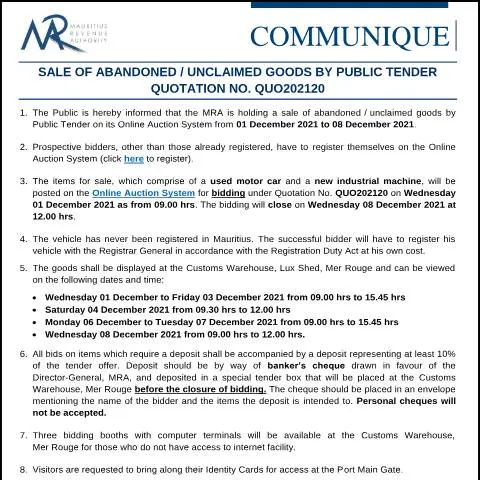
In the dynamic landscape of Mauritius, the sale of abandoned or unclaimed goods is not merely a procedural formality; it serves a vital role in addressing economic and social challenges. The Mauritius Revenue Authority (MRA) holds such sales to manage goods that have languished, unclaimed, within customs warehouses. The latest instance is marked by Quotation No. QUO202120, indicating a structured approach to dealing with unclaimed goods, ensuring transparency and accessibility for prospective bidders.
Understanding the Role of the MRA in Public Tenders
The MRA is tasked with the administration of customs and tax regulations in Mauritius. One of its significant roles includes overseeing auctions for abandoned or unclaimed goods. This is not only a means to clear warehouse space but also a strategy to promote economic activity through public engagement in the bidding process.
By leveraging technology, such as the Online Auction System, the MRA enhances the efficiency of these sales while ensuring that they remain accessible to a broad audience. This is particularly relevant for those who may otherwise find it challenging to participate in traditional bidding scenarios.
Who Can Participate: Profiles of Potential Bidders
Participation in these public tenders is open to a wide array of individuals and entities. However, understanding the eligibility criteria is crucial for ensuring a successful bidding experience. Here are some profiles of prospective bidders:
- Individual Bidders: Any Mauritian citizen or resident aged 18 or above. Identification is required to access bidding venues.
- Business Entities: Companies looking to acquire industrial equipment or vehicles for operational purposes can also participate, provided they register appropriately.
- International Bidders: Foreigners may need to satisfy additional conditions regarding the registration of vehicles or equipment in Mauritius.
It’s important to note that each profile may encounter specific requirements, particularly regarding registration and payment methods.
Registration: A Vital Step Before Bidding
For those who have yet to register on the Online Auction System, this step is non-negotiable. Registration must occur before the auction begins on December 1, 2021. This process involves:
- Accessing the Online Auction System via the MRA’s website.
- Filling out the necessary registration form, where bidders must provide personal identification and contact details.
- Confirming registration through an email verification step to ensure the authenticity of the bidders.
While registration is straightforward, potential bidders should ensure they complete it well ahead of the auction start date to avoid last-minute complications.
Key Dates and Timelines for the Auction Process
The timeline for Quotation No. QUO202120 is tightly structured and requires bidders to adhere to specific dates:
| Action | Date | Timeframe |
|---|---|---|
| Start of Online Bidding | December 1, 2021 | 09:00 hrs |
| End of Online Bidding | December 8, 2021 | 12:00 hrs |
| Viewing of Goods | December 1-3, December 4, December 6-7, and December 8, 2021 | 09:00-15:45 hrs; Saturday 09:30-12:00 hrs |
Adhering to this schedule is essential for those interested in participating, as missing any of these critical dates can preclude their ability to bid.
The Auction: What to Expect During Bidding
The bidding process itself is designed to be user-friendly while maintaining the integrity of the auction. On December 1, bidders can begin to place their bids on the items listed, which include a used motor car and a new industrial machine. The bidding will take place online, but for those without internet access, the MRA has set up three physical booths equipped with computers at the Customs Warehouse in Mer Rouge.
Deposits and Payment Mechanisms
Prior to submitting bids on items that require a deposit, bidders should be aware of the following:
- Deposit Requirement: A deposit of 10% of the bid amount is mandatory. This deposit must be made via a banker’s cheque addressed to the Director-General of the MRA.
- Special Tender Box: Cheques are to be placed in a designated tender box at the Customs Warehouse prior to the bidding closing time.
- No Personal Cheques: Bidders should be informed that personal cheques will not be accepted under any circumstances, ensuring a streamlined and professional bidding environment.
Viewing the Goods: Insights into the Auction Items
Before diving into the bidding process, bidders have the opportunity to inspect the goods on offer. The viewing schedule is crucial for making informed decisions and includes several dates leading up to the auction. The goods will be displayed at the Customs Warehouse, Lux Shed, Mer Rouge, during which bidders should take the time to assess the condition and suitability of items for their needs.
Access Protocols for Viewing
To gain access to the viewing area, participants must adhere to the following guidelines:
- Bring a valid Identity Card for entry at the Port Main Gate.
- Observe all public health guidelines that may be in place, including social distancing measures if applicable.
- Take note of the operating hours to maximize the viewing opportunity.
This preparation is essential not only for understanding the items but also for ensuring potential bidders are in a strong position to bid effectively during the auction.
Post-Auction Procedures and What Happens Next
Once the bidding concludes on December 8, 2021, successful bidders will receive notifications regarding their bids and subsequent steps. Following the auction, several important activities will take place:
- Payment of Remaining Balance: Successful bidders must pay the remaining balance of the bid amount promptly, as specified in their notifications.
- Registration of Goods: For the vehicle won in the auction, the new owner will need to register it with the Registrar General. This task is at the bidder's expense and must comply with the Registration Duty Act.
- Collection of Goods: Details regarding the collection of the won items will be communicated to successful bidders, ensuring a smooth transition from auction to ownership.
Monitoring the Status of Bids
It is advisable for bidders to actively monitor their bids through the Online Auction System. This enables them to track any changes and ensure they are prepared for the next steps, especially concerning payment deadlines and collection arrangements.
The Legal Framework Underpinning the Auction Process
The entire process of selling abandoned and unclaimed goods through public tender is governed by a robust legal framework, merging French civil law and English common law principles. The operational guidelines surrounding the MRA’s auctions are rooted in various acts and regulations that dictate how unclaimed goods may be processed and sold.
Key Legislative References
Some of the critical pieces of legislation that inform this process include:
- Customs Act: Regulates the handling and disposal of goods that have not been claimed.
- Registration Duty Act: Sets out the requirements for vehicle registration, essential for bidders acquiring vehicles in the auction.
- Public Procurement Act: Ensures that the auction process remains transparent and competitive.
Understanding this legal backdrop not only enhances a bidder's confidence but is crucial for compliance with all applicable regulations during the bidding and acquisition process.
Final Thoughts for Bidders: Navigating the Auction Successfully
For those looking to engage in the auction for abandoned and unclaimed goods, preparation is key. Every bidder must ensure they are familiar with the steps involved—from registering online and making the necessary deposits to understanding the auction rules and relevant legislation. Keeping detailed records, adhering to deadlines, and following protocols will position bidders for success during the auction process.
As Mauritius embraces digital transformation, events like these serve to bridge gaps in accessibility and engagement, enabling citizens to participate actively in economic opportunities. With this knowledge in hand, prospective bidders can confidently approach the auction, ready to make informed decisions that may lead to advantageous acquisitions.