The Significance of the Sale of Abandoned/Unclaimed Goods
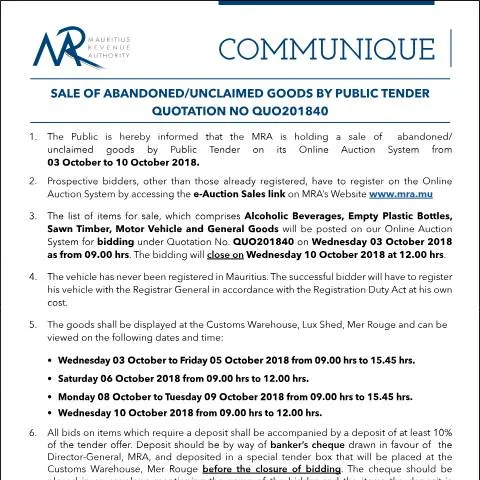
Abandoned or unclaimed goods can accumulate in various public domains, often leading to inefficient storage and management. The Sale of Abandoned/Unclaimed Goods by Public Tender, as per Communique No Quo201840, serves a crucial role in redistributing these items while benefiting the public and the authorities involved. This document outlines the method through which the Mauritius Revenue Authority (MRA) executes this process, ensuring transparency and fairness in the bidding system.
The Bidding Process: An Overview
The public tender for the sale of abandoned goods operates on a structured timeline and procedure. The important dates for the bidding process are as follows:
- Bidding Opening Date: 03 October 2018, from 09:00 hrs.
- Bidding Closing Date: 10 October 2018, at 12:00 hrs.
During this period, prospective bidders have the opportunity to place their offers on a variety of items, which include:
- Alcoholic Beverages
- Empty Plastic Bottles
- Sawn Timber
- Motor Vehicles
- General Goods
Each item listed will be available for public viewing at the Customs Warehouse, Lux Shed, Mer Rouge, during specific times outlined in the communique. This allows potential bidders to inspect the items before making their offers.
Registration to Bid
For those who wish to participate in the auction, registration is a prerequisite. Bidders need to access the MRA’s Online Auction System via the e-Auction Sales link on the official website. This step is critical for individuals who are not yet registered and ensures that all bidders are accounted for before the auction begins. Proper documentation, typically including a valid National ID, is necessary for this online registration.
Understanding the Financial Commitments
One of the essential components of participating in the public tender is understanding the financial obligations associated with bidding. Bids placed on certain items require an accompanying deposit of at least 10% of the tender offer. This deposit safeguards the auction process and confirms the bidder's intent.
The deposit must be provided in the form of a banker’s cheque drawn in favor of the Director-General of the MRA. Personal cheques will not be accepted. Bidders should place their cheques in a sealed envelope, clearly stating their name and the item related to the deposit, which should then be submitted to a dedicated tender box located at the Customs Warehouse prior to the bidding closure.
Inspection of Goods
Viewing the items is crucial for bidders to make informed decisions. The MRA provides specific times for the public to inspect the abandoned or unclaimed goods:
| Date | Time |
|---|---|
| 03 October 2018 | 09:00 hrs - 15:45 hrs |
| 04 October 2018 | 09:00 hrs - 15:45 hrs |
| 05 October 2018 | 09:00 hrs - 15:45 hrs |
| 06 October 2018 | 09:00 hrs - 12:00 hrs |
| 08 October 2018 | 09:00 hrs - 15:45 hrs |
| 09 October 2018 | 09:00 hrs - 15:45 hrs |
| 10 October 2018 | 09:00 hrs - 12:00 hrs |
Proper identification is required for entry to the premises, emphasizing the importance of carrying an Identity Card to access the Port Main Gate during these inspection periods.
Administrative Handling of Bids
Once the bidding closes, the MRA takes on the responsibility of evaluating the bids submitted. Successful bidders will be notified according to the internal protocols established by the MRA. It is important to note that the goods sold are often unregistered, particularly in the case of vehicles, which means that successful bidders will need to register them with the Registrar General. This registration process incurs additional costs that the bidder must plan for ahead of time.
Post-Bidding Procedures
After the bidding process, the MRA will communicate with the successful bidders regarding the next steps. This includes details on payment procedures, collection of goods, and any other legal requirements necessary to finalize the acquisition of the purchased items.
Should a bidder not receive the expected communication, it is advisable to follow up with the MRA using the contact details provided in the official communique. Proactive engagement can help clarify any uncertainties regarding the status of the bids.
Regulatory Framework and Historical Context
The framework governing the sale of abandoned and unclaimed goods is rooted in Mauritius's regulatory systems and general principles of public procurement. The legal foundation for this process is established within the context of Mauritius's mixed legal system, combining elements of French civil law and English common law. The Public Service Commission Act 1955 and subsequent amendments have shaped the operational landscape for public tenders.
This tendering process is part of a broader strategy to ensure that public resources are utilized efficiently and transparently. Over the years, this practice has evolved, reflecting changes in societal needs, technological advancements, and administrative efficiency. The MRA's initiative to adopt an online auction system signifies a shift towards embracing digital solutions, enhancing accessibility for potential bidders.
Challenges and Considerations for Bidders
- Technical Issues: Ensuring a stable internet connection when placing bids online is critical. Bidders should have contingency plans in case of technical difficulties.
- Financial Preparedness: Potential bidders must be aware of their financial commitments, including deposits and final prices, to avoid unforeseen challenges during the bidding process.
- Legal Compliance: Adherence to all rules and regulations set forth by the MRA is essential. Failure to comply may result in disqualification from the tender.
Addressing Discrepancies and Appeals
In the event of a refusal or issues arising from the tendering process, such as incorrect information or missing documents, bidders have the right to seek clarification. Direct communication with the MRA is encouraged to resolve any disputes amicably.
The MRA has established protocols for handling complaints and appeals related to the bidding process. Bidders should retain all documentation related to their bid submissions, including proof of payment for deposits, in case any issues arise that require formal review.
Preparation for Future Auctions
For those eager to participate in future auctions, it is beneficial to stay informed. Regularly checking the MRA’s announcements, subscribing to updates via their official channels, and engaging with community forums can provide insights into upcoming sales.
Understanding the nuances of the auction system, such as types of goods usually available and the bidding culture within Mauritius, can significantly enhance one’s chances of success in subsequent tenders.
Final Insights on the Sale of Abandoned/Unclaimed Goods
The Sale of Abandoned/Unclaimed Goods by Public Tender is a vital component of public resource management in Mauritius, enabling citizens to acquire valuable goods while supporting the efficient use of government resources. Mastery of the bidding process, understanding procedural requirements, and preparation are key to ensuring a successful experience for all prospective bidders. With a strong emphasis on transparency and fairness, the MRA continues to enhance its operations, reaffirming its commitment to serving the public effectively.
Understanding the Process of Public Tender for Abandoned Goods
In Mauritius, the sale of abandoned or unclaimed goods through public tender is a systematic process governed by specific regulations that aim to manage such properties efficiently while generating revenue for the state. The uplifting of these goods often involves several steps, starting from identification and valuation to the final sale via a transparent tendering process.
Initially, the local authorities or relevant government bodies identify items that have been abandoned or left unclaimed for a specified duration. Typically, this period is based on regulations stipulating that goods must remain unclaimed for a minimum of six months before they can be considered for public tender. The Goods must be listed, and an inventory is prepared, which is crucial for the subsequent stages in the tender process.
Once the inventory is compiled, the responsible authority, often the Ministry of Finance or a designated local council, must evaluate the condition and value of the goods. This evaluation step is important, as it establishes a baseline for the minimum bid expected during the tender process. In this phase, goods may be appraised by authorized personnel to ensure that an accurate valuation is presented to potential bidders.
Next, the authority will prepare a public notice detailing the items available for tender, the conditions of sale, and any specific regulations. This notice is published in compliant local newspapers and may also be posted on official government portals, providing equal access to all interested parties. The notice will typically contain the following information:
- Description of the goods.
- Terms and conditions of the tender.
- Deadline for submission of tenders.
- Contact information for inquiries.
The submission of tenders is often done electronically through dedicated platforms, reflecting Mauritius's commitment to digital transformation in public services. Tenderers need to complete the appropriate form, usually designated by a specific number (e.g., Tender Form 01/2023), and submit it along with the required documentation. The requirements may include proof of identity, tax compliance certificate from the MRA, and any other documents as stipulated in the tender notice.
After the submission deadline, the tenders are evaluated, and the criteria for selection are typically based on the highest bid, adherence to submission guidelines, and financial capability. This ensures that the selected bidder can adequately complete the transaction, making the process both equitable and transparent.
Legal Framework Surrounding the Sale of Unclaimed Goods
The legal framework guiding the sale of abandoned or unclaimed goods in Mauritius is largely influenced by the country’s hybrid legal system. The primary legislation governing this process includes the Public Procurement Act, which enforces principles of fairness, transparency, and competition.
Additionally, the Civil Code of Mauritius plays a significant role in addressing issues related to ownership, abandonment, and the rights of the original owners. For instance, the law stipulates that if an owner can prove ownership within a given timeframe post-tender announcement, they may reclaim their goods prior to the completion of the sale. This provision serves as a safeguard for owners and underscores the legal principle that abandoned does not equate to forfeited without due process.
Moreover, all tenders must adhere to the principles outlined in the Public Procurement Guidelines, which encompass ethical standards, fairness in the evaluation process, and protection of public interest. As such, any tender awarded must be justified and recorded to prevent any potential disputes or claims of favoritism.
Another important legal aspect includes the requirement for the relevant authority to conduct a public auction or sealed tender to maintain transparency. The process must be documented clearly, providing a paper trail for accountability. The terms of sale, including payment deadlines and consequences for defaulting bidders, are also clearly outlined according to legal standards. It is crucial for bidders to be aware of these conditions to avoid any legal repercussions.
Implications for Local Communities and the Economy
The public tendering of abandoned or unclaimed goods has significant implications for local communities and the broader economy in Mauritius. Firstly, it provides an opportunity for local entrepreneurs and businesses to acquire items at potentially lower prices, which can then be repurposed or resold for profit. This process stimulates local commerce and encourages a culture of recycling and reuse.
Moreover, the revenue generated from these public sales is often redirected towards community development projects, enhancing public infrastructure, services, and amenities. This cyclical benefit to the community is a clear indicator of how the management of abandoned goods can have a positive impact beyond mere transactions. Furthermore, as the government pushes for a digital economy, the online tendering process can attract broader participation from various sectors, including small businesses and startups.
However, it raises questions about the equitable distribution of access to these tenders. There is a necessity for ongoing education and outreach to inform the public about available opportunities. Ensuring that all community members, regardless of their socioeconomic background, have knowledge of and access to participate in the tendering process is essential to leverage these economic opportunities fully.
In addition, the social implications of abandoned goods sales can play a role in enhancing community pride and responsibility. By involving local residents in the tendering process, awareness about the value of personal property increases, fostering a greater sense of accountability towards ownership and upkeep.