Understanding the Sale of Abandoned/Unclaimed Goods: A Guide to Public Tender
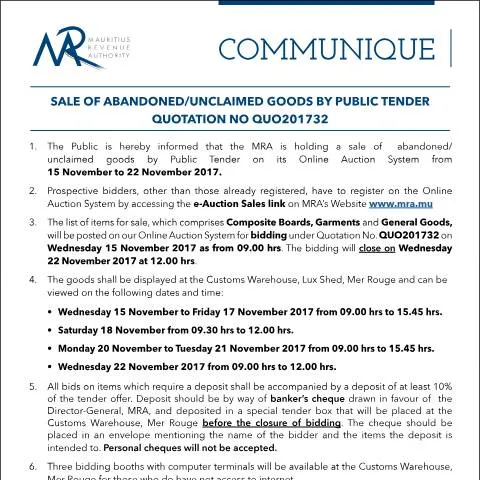
The sale of abandoned or unclaimed goods by public tender represents a unique opportunity for prospective bidders to acquire items that have been left unattended or not claimed by their original owners. This process is crucial for the Mauritius Revenue Authority (MRA) to manage unclaimed items effectively while also allowing citizens to participate in public auctions, thereby fostering transparency and community engagement.
Initiating the Tender Process: Key Dates and Steps
The tender process for the sale of these goods is meticulously organized, with clear timelines that bidders must adhere to. The current cycle of sales occurs from November 15 to November 22, 2017. Here’s how it unfolds chronologically:
- Announcement of Sale: The MRA announces the sale of items through public notification. Potential bidders are informed of the auction dates and the list of items available for bidding.
- Registration: Interested individuals who are not yet part of the MRA's Online Auction System must complete their registration by accessing the e-Auction Sales link on the MRA website.
- Bidding Window: Bidding starts on November 15, 2017, at 09:00 hrs and will close on November 22, 2017, at 12:00 hrs.
This timeline is crucial, as failing to adhere to the specified dates may result in missing out on bidding opportunities. Always check for any updates or changes on the MRA’s official website.
Registering for the Auction: Essential Steps
For those wishing to participate in the auction, registration is a necessary initial step. Here’s how to navigate through it:
- Access the Registration Portal: Go to the MRA’s official website and locate the e-Auction Sales section.
- Provide Required Information: Input personal details such as your full name, National ID number, contact information, and any other required fields.
- Complete Verification: After submitting your information, ensure you receive a confirmation of your registration via email.
Remember, only registered users will be able to place bids during the public auction, making this step non-negotiable.
Exploring the Auction Items: Viewing Opportunities
Before placing a bid, it’s essential to have a comprehensive understanding of the items available. The following details are pertinent when planning your visit to view the goods:
Items will be on display at the Customs Warehouse, Lux Shed, Mer Rouge, open for inspection during specified times:
| Date | Time |
|---|---|
| November 15 - November 17, 2017 | 09:00 hrs - 15:45 hrs |
| November 18, 2017 | 09:30 hrs - 12:00 hrs |
| November 20 - November 21, 2017 | 09:00 hrs - 15:45 hrs |
| November 22, 2017 | 09:00 hrs - 12:00 hrs |
It is advisable to arrive early for viewing, as this will give you ample time to assess the items before placing a bid.
Bidding on Items: Deposits and Procedures
When you decide to bid on any item, understanding the financial requirements and procedures is paramount. Each bid requiring a deposit must adhere to the following rules:
- Deposit Requirement: A minimum deposit of 10% of your tender offer must accompany bids on certain items. This deposit will confirm your seriousness as a bidder.
- Payment Method: The deposit must be made via a banker’s cheque drawn in favor of the Director-General of the MRA. Personal cheques are not accepted.
- Submission of Deposit: Place your cheque in an envelope specifying your name and the items related to the deposit. This must be submitted in a designated tender box at the Customs Warehouse before the bidding closes.
Failure to comply with these deposit requirements may result in the disqualification of your bid, underscoring the importance of meticulous attention to detail.
The Bidding Process: How to Place Your Bid
Once registered and prepared with your deposit, you can proceed to place bids either online or in person. Here’s what to do:
- Online Bidding: Log in to the Online Auction System during the bidding window to place your offer.
- In-Person Bidding: For those without internet access, the MRA provides three bidding booths equipped with computer terminals at the Customs Warehouse.
- Identification Requirements: Remember to bring your Identity Card to gain access to the bidding area.
Inspecting the items and placing bids in real-time can enhance your chances of success in acquiring goods.
Post-Bid Procedures: What Happens Next
After submitting your bids, an important process ensues involving evaluation and potential acquisition of the goods:
- Bid Evaluation: The MRA will assess all received bids and determine the highest bid for each item.
- Notification: Successful bidders will receive notifications regarding the acceptance of their bids.
- Payment Process: Bid winners must complete the payment for their items within a specified timeframe post-auction.
- Item Collection: Once payment is confirmed, arrangements can be made for item collection from the Customs Warehouse.
Being proactive in following up after bidding can ensure that you stay informed about the status of your offers. Engaging with the MRA’s customer service can provide clarity if any issues arise.
Potential Pitfalls: Common Missteps to Avoid
As with any administrative process, bidders may encounter challenges. Understanding these potential pitfalls can enhance your experience:
- Late Registration: Failing to register before the bidding window opens can exclude you from participation.
- Incorrect Deposit Amounts: Ensure that your deposit meets the minimum percentage requirement; otherwise, your bid may not be considered.
- Insufficient Identification: Always bring your National ID; without it, access may be denied.
- Ignore Updates: Keep an eye on any announcements or changes from the MRA regarding the auction schedule or procedures.
Awareness of these common issues can make a significant difference in your bidding experience, allowing for a smoother process from start to finish.
Final Observations: The Impact of Public Tenders on Local Economy
The public tendering process for the sale of abandoned or unclaimed goods not only allows citizens to obtain valuable items but also contributes positively to the local economy. By engaging in this process, you are participating in a system that promotes:
- Resource Reallocation: Abandoned goods find new homes, reducing waste and encouraging re-use.
- Community Engagement: Public tenders foster a sense of community as citizens come together to bid and acquire goods.
- Transparency in Government: The auction process is conducted transparently, allowing citizens to witness how government agencies handle unclaimed items.
Participating in the public tendering process can be a rewarding experience, providing both personal benefits and contributing to broader economic and social goals.
Fill in your form directly online
No printing: type your details into the boxes of the official form, tick, then download the PDF ready to send.
- 1Type into the form boxes
- 2Tick in one click
- 3Save and download the PDF
Understanding the Legal Framework for Abandoned Goods
In Mauritius, the sale of abandoned or unclaimed goods is primarily governed by specific regulations and administrative practices set forth by the relevant authorities. The legal foundation for these sales falls under the Mauritius Civil Code, which outlines the principles of ownership and possession, particularly concerning unclaimed property. Furthermore, the Public Procurement Act may also come into play, as it establishes guidelines for public tenders, ensuring that the process of selling such goods remains transparent and equitable.
Additionally, the Public Service Commission (PSC) and related government bodies may have internal procedures that dictate how abandoned goods are catalogued, assessed, and finally put up for public tender. Often, goods that have been unclaimed for a period exceeding a certain threshold—typically defined by the relevant statute or local government ordinance—are evaluated for their potential sale. Prospective bidders must be aware that the legal status of the goods, particularly regarding any encumbrances or claims, will be clarified prior to the sale. This legal backdrop is essential for ensuring that the sale process adheres to established norms and protects the interests of all stakeholders involved.
Process of Auctioning Abandoned Goods
The process for auctioning abandoned or unclaimed goods in Mauritius involves several structured steps, starting from the identification of the goods to the final sale. Initially, goods must be clearly classified as 'abandoned' by the responsible authorities, such as the local police, customs, or specific governmental departments that have encountered these items during their operations. This classification is critical as it legitimizes the subsequent steps of handling and disposition.
Once goods are identified as abandoned, they are usually inventoried and appraised to determine their value and condition. This inventory must be meticulously documented, typically in an official register that is accessible for public inspection. Next, an announcement is made to inform potential bidders about the upcoming tender. This announcement often details the nature of the goods, the location for viewing, and the terms of the auction.
The auction itself is conducted in a public forum, allowing for transparency. Bidders are required to submit deposits, and the highest bid at the conclusion of the auction secures the sale. It's important to note that bidders should possess a good understanding of the auction process—understanding bidding increments, the implications of placing a bid, and potential additional costs, such as taxes or fees associated with the transfer of ownership. Only in compliance with all stipulated conditions can a successful bidder take possession of the goods.
Considerations for Bidders in Public Tenders
For individuals or businesses looking to participate in the public tender for abandoned goods, there are several key considerations to keep in mind. Firstly, prospective bidders should conduct thorough research on the types of goods being auctioned. Understanding the market value of similar items can provide a competitive edge during bidding, ensuring that bids are placed strategically rather than impulsively. Additionally, potential bidders should familiarize themselves with the terms and conditions set out in the tender notice, as these details can include stipulations regarding payment methods, collection times, and responsibilities regarding the goods post-purchase.
It's also advisable for bidders to attend viewings of the goods prior to the auction. This allows for a closer examination of the items, helping bidders to make informed decisions about their bids. Moreover, understanding the legal implications of purchasing abandoned goods is vital; bidders must be aware of any potential liabilities or previous claims on the goods that could arise after purchase.
Finally, participating in public tenders for abandoned goods can often be an excellent opportunity for businesses seeking to acquire inventory at reduced prices. However, it is essential to approach the auction with careful planning and due diligence, ensuring compliance with all legal requirements and mitigating risks associated with such acquisitions.